A Knight’s Tale (76: ‘Issues Of Loss, Change, And Resilience’)

Sometime in 1973 I began to make a book for Becky, then my youngest daughter. It was planned for her fourth birthday the following year. I used water-colour pencils on a pad of thick cartridge paper, leaving the spiralled spine in place and binding the boards with a William Morris furnishing fabric, sealed by a press-stud on a flap. Taking a little longer than anticipated, this labour of love was not finished until my little girl’s seventh birthday by which time she could read it for herself.

Here it is:

For Christmas 2020

among other gifts Becky gave me this book. She had amended the title with the 101 sticker, and inserted

in the appropriate place her analysis of her Book of Seasons in the style of the reviews in 100 Great Children’s Pictures Books. Her last paragraph, “Whilst reinforcing the cycle of nature with cleverly repetitive and charming sequences, the book has been viewed as the perfect vehicle to address issues of loss, change, and resilience” demonstrates a perfect understanding of the work.

A Knight’s Tale (75: Trips Around The Neighbourhood)

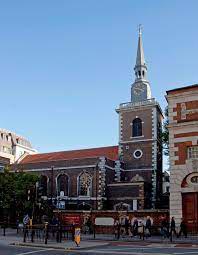
Brass-rubbing was a feature of St James’s Church, Piccadilly in the 1970s. 

 This image was taken from https://www.ebth.com/items/8199847-1976-brass-rubbing-from-st-james-church-london.

I once took Matthew and Becky there for the afternoon.  At £5, which was still quite a lot of money in those days, I thought this quite a reasonable outlay for an afternoon’s activity.  The two excited children rampaged around the crypt, gathering reams of large paper with a rub rub here, a rub rub there, everywhere a rub rub.  Eventually I got the bill.  It was £5 for each rubbing.  After a lengthy debate with the staff we came to a compromise.

Trafalgar Square was another local attraction. In September 1976, Matthew attempted to scale one of the lions around the base of Nelson’s Column.

In December 1979 it was still permitted to feed the feral pigeons in the square. This is no longer possible. Matthew and Becky brought their own bread, although seed was sold in the square in those days.

We would often walk to the Jubilee Sports Hall in Covent Garden for them to have fun on the trampoline.  Seeking an activity for myself, I chose once more to pick up weights, with which I had trained in The Wimbledon YMCA gym during my twenties.  The hall’s availabilty as a sporting venue was under threat, and, as part of the campaign to preserve it, a Chinese photographer produced a superb set of large illustrations which lined the entrance staircase.  I featured in one, pushing up a bench press.  Michael’s friend Eddie, was playing football in another.  It was in this hall that I played my first game of Badminton.  An ungainly pit-a-pat performance.  I happened, rashly, to mention this to Carol Elstub, my deputy at the time.  She informed Ken Coleman, one of the Assistant Directors of Social Services.  Ken, she said, played Badminton.  She told Ken I played Badminton.  She flattered me.  A game was arranged.  Ken turned out to be a Middlesex County Coach.  Never mind, he taught me the game.  We played regularly for some years.  I would never beat him, but I did often manage to make him angry with himself.  Our games took place in Queen’s Park Jubilee Hall, a short walk from my office.  This particular venue is bound to be mentioned again.

When we lived in Soho, the old Covent Garden was ripe for speculators who moved in steadily to change what had become a daily craft market, where people sold their own work, into an outlet for more manufactured goods; and to convert some of the old buildings into classy shops and restaurants. It remains a thriving area, if lacking the old world charm of the ’70s and ’80s. Bustling cafes have open-air seating, and buskers,

like my guitarist, still perform to

enthralled crowds, such as those I pictured in September 1982. 

Three years earlier Matthew and Becky would scour the stalls for presents to take home with them.

Pandering to my penchant for visual puns my image of these home crafted slips was framed and hung on the wall of the dining room in Newark.

A Knight’s Tale (74: If You Know This Dog, Please Return Him To His Owner)

There was just one newsagent in Soho who offered home deliveries. The shop was managed by the father of Simon who jumped through the skylight featured in https://derrickjknight.com/2021/11/17/a-knights-tale-66-horse-and-dolphin-yard/

Simon’s Dad later admitted that he had only agreed to deliver our papers because he had thought Jessica was my daughter. I wasn’t sure whether to be pleased about that or not. When the previous deliverer, who was an adult man, gave up the job Michael was given it. This was a real bonus for my son because he was paid as much as the man – namely £10 per week, which was rather a lot in 1975.

One morning Michael had returned from his paper round with a mongrel dog of uncertain age.  Naturally he wished to keep him.  It seemed to me that it was unreasonable to keep a dog in a tiny first floor flat in the middle of Chinatown.  I was, however, outnumbered by two to one.  Here was I, doing my best to have a quiet uninterrupted bath, and I had both Jessica and Michael in tears pleading with me for my agreement.  Feeling a heel (not one of those in the bath), I stuck to my guns for a while, but eventually reached the following compromise:  Michael was instructed to take the dog back where he found him and to attach a note to his collar, and if an owner couldn’t be traced we would keep him.  Silly me, I didn’t tell the boy what the note should say.  The note, which Jessica kept for the rest of her life, read: ‘If you know this dog, please return him to his owner.’  This was followed by our telephone number.  Michael much later confessed that he had not left Piper at all, but simply brought him back home saying he wouldn’t stop following him.  The dog was well cared for and had clearly been loved.  I often wondered whether something had happened to his original owner, and, if not, what the loss meant to him or her.

Where did he get his name from?  Well, he had been found on a paper round, so what better than the Cockney version of paper?  Piper he was.  Piper was a wanderer, well used to negotiating West End traffic.  He always used zebra crossings.  Off he would go walkabout, on his solitary expeditions, safely trotting across the striped paths at which all the cars had to stop.  One day we had a telephone call (yes, a telephone on a landline, as was usual in those days) from the police.  He had turned up in Hyde Park.  Would we come and collect him?  We explained that he knew his own way home and could safely negotiate the traffic.

After we moved to Gracedale Road in Furzedown Piper continued his wanderings, although at this time only when he could escape.  He was by now very old, deaf and blind.  One night we received a call from someone who told us that he had been run over on a zebra crossing.  Michael and I collected the body and buried him in the garden.  A sad end, indeed, but Piper had enjoyed a long and healthy life and perhaps would have chosen this way to go.

He is, of course, Michael’s companion featured in https://derrickjknight.com/2021/11/29/a-knights-tale-72-upstaged/

A Knight’s Tale (73: Mine Was Bent)

A fair was first held in Soho in 1883, and then intermittently, including a fair and market held in aid of the Soho Hospital for Women in 1939. When we lived in Horse and Dolphin Yard The Soho Festival as it was then, and is now, called had recently been reconstituted as an annual event organised by the Soho Society (currently each July) in the grounds of St Anne’s Garden.

In September 1976, then only 7 years old, Ondekoza the stunning Japanese band of timpanists entertained the Soho Festival.  These images are from my original colour slides. ‘Founded in 1969 by Den Tagayasu, in Sado Island, Japan. Ondekoza was influential in the rise of the kumi-daiko (group taiko) style of taiko.[1] Not a taiko player himself, Tagayasu helped transform taiko from a festival-based music form to a virtuosic performance art performed on stage. Ondekoza’s performances in North America in 1975 was the first exposure for many and helped spread interest in taiko through North America. The now widely recognized style of wearing only a ‘shimekomi’ (‘fundoshi loincloth) was originally started by Ondekoza when Pierre Cardin suggested that the physique of the drummer be exposed. The traditional Japanese drummers do not play only in underwear.'(Wikipedia)

Punch & Judy audience, Soho Festival, 9.76 (1)

A Punch and Judy show in 1976 gave entertainment for all ages. One photograph I took of the audience featured on the cover of the Social Care Association’s monthly magazine.  

Becky, on this occasion, was distracted from the puppets by the sight of my lens.  A little boy nearby, was engaged in that familiar comforting exercise of thumb-sucking combined with ear-twiddling.  Another had lost one of his front incisors.

The first family member to have the courage to enter a spaghetti eating competition was Michael.

As the dry spaghetti was ladled onto his plate, he looked as if he was about to bite off more that he could chew.  The thin coating of tomato sauce, looking no more appetising than ketchup, didn’t seem to do much to improve the digestion.  My son soon got stuck in.  He and one of his rivals seemed to think the nearer the dish they got, the better their chances.

The booted Gypsy Joe was a very good professional photographer who befriended Michael and produced some excellent images of the boy and his dog, Piper.

Old man.001

An elderly gentleman, eating at a leisurely pace, had probably just come along for his dinner.

Derrick cigar smoking competition 1976

The large Romeo y Julieta samples for the cigar smoking contest had coincidentally been provided by a supplier called Knight.  The idea was that you smoked one of these lengthy monsters for as long as you could without losing the ash.  When I entered in 1977, I actually had the longest ash, but mine was bent.  I therefore came second to a woman whose was straight.  You can imagine the ribaldry that provoked. My vanquisher is seated on the right of the newspaper cutting above. I am prone on the floor.

A Knight’s Tale (72: Upstaged)

The Tokyo Diner at the corner of Newport Street now occupies the site of the laundrette featured in a television film, as far as I remember, about a search for accommodation by a young mother with two small children.

Back in the 1970s I had been sitting in my local Soho launderette watching our washing circulating when a film crew came in, ushered everyone else out, and asked me to remain to stay in shot for a particular sequence.  On transmission evening we all sat in front of the telly eagerly awaiting my star performance.  In the launderette scene it was momentarily possible, unless you blinked, to see an elbow which could just possibly have been mine.  

Shortly afterwards, filling the screen, was my son Michael, with his dog Piper, striding down Dean Street with a huge grin on his face.  I think you could say I had been upstaged.

Michael & Piper 6.77

A Knight’s Tale (71: Chinese Boxes)

From our sitting room we could peer through two windows into a kitchen that appeared also to contain bunk beds.

I photographed the scene in November 1976. Chopping of food took place all through the night.  This somewhat interfered with sleep.  In the early hours of one morning Jessica lost patience and rather politely called out asking the choppers to desist.  The reply was: ‘We’ve been here fifty years.  If you don’t like it, move.’ We did so in 1980, but before then,

this was our sitting room. I still have the rocking chair which was a favourite seat. The brown velvet trousers mentioned in https://derrickjknight.com/2021/11/07/a-knights-tale-60-i-come-a-cropper/, much patched, are now long gone.

Michael’s use of Chinese boxes is featured in https://derrickjknight.com/2021/11/17/a-knights-tale-66-horse-and-dolphin-yard/

I used them as bookshelves. My collection was moved to our next home in Gracedale Road, SW16.

Here Jessica, Louisa, and Sam are seen in front of them in 1984. When our son was about the age that Louisa is here, my Dad, concerned about having witnessed the toddler’s one attempt to scale the stacks, arrived with a drill and a set of screws with which he fixed the rather higgledy piggledy shelves to the wall. We learned later that our purchaser, when he sold the house some years afterwards, claimed to have constructed my library repository himself, and turned it into a selling point.

A Knight’s Tale (70: Earning The Gratitude Of Neighbours)

On the outside of a shop on the corner of Shaftesbury Avenue and Macclefield Street, very close to our bedroom window, sat a burglar alarm constantly being set off by spiders and such.  Once activated it would not desist from ringing.  The police could never either trace a keyholder or get one to come out and turn off the noise.  One of their problems was that the establishment often changed hands.  On one occasion when it was doing my head in, and the police were unable to help, I decided to take it off the wall.  Armed with a screwdriver and a hammer, I climbed a ladder, hoping no-one was looking up my dressing gown, and set about it.  This was a very complicated procedure in which I had to completely dismantle the offending article and prise apart some wires before the shrill noise would stop.  Fortunately I had no need of the hammer.  When I returned to bed, hoping to sleep, Jessica suggested that I should tell the police what I had done.  I did.  Five minutes later I was arrested.  On being escorted into the police station I was greeted with calls of ‘ ‘ere, that bloke rings a bell’, and ‘don’t get alarmed mate.’  I think it was the highlight of their evening.  The sergeant informed me that they were not prepared to charge me with criminal damage, but they had to give the owner the opportunity to do so.  And I hadn’t actually damaged anything.  I’d carefully collected up all the bits.  I’d have had more sleep if I’d stayed indoors.  Unsurprisingly, the owner was not interested in pursuing the matter.

Some while later, intent on repeating my misdemeanour, I was halfway up the ladder when a policeman politely asked me what I was doing.  When I told him, he said I wasn’t.  ‘Oh, OK’, I replied, and went back to bed.  Eventually I tried a more subtle solution.  By this time the outlet was selling clothes.  After a particularly bad three nights in succession, I persuaded a shop assistant to give me the phone number of the current owner.  The next occasion on which our sleep was disturbed, I telephoned him.  ‘Whoooaahr’, said I, with a sharp outlet of breath, ‘I think you’d better come out here’.  Now he was alarmed.  I went on to tell him that his shop had been burgled.  In their haste to get away the perpetrators had strewn jeans all over Shaftesbury Avenue.  Naturally, in telling this little white lie, I remained anonymous.  We were never troubled again.  Our neighbours were quite grateful.

A Knight’s Tale (69: Soho’s Seamy Side)

It was probably meths that the dead man was drinking.

On Sunday mornings, after the wild life of the night before, Soho was generally calm and civilised. The small garden squares, like

Soho Square in which a visitor photographed me in October 2017, were tranquil places in which to settle with a book.

In 1975 it was in one of these that I encountered another such imbiber, who settled himself beside me, picked up my specs which, never needing them for reading, I had placed on the previously empty bench, and menacingly told me what he could do with them. I politely asked for their return. A bottle of meths in his other hand, he stretched out the arm holding my glasses and proceeded to simulate crushing. I grabbed his arm. With dismay I found I could not move it. He calmly put down my optical aids, staggered to his feet, and wandered off chuckling.

Perhaps equally alarming was the night two alleged soldiers rang our doorbell. It was not unusual that male visitors would seek an available woman in our yard. I told these two that they were out of luck. One became seriously threatening. Keeping my hand on the door, I responded with my usual quietly determined tone. His friend warned me not to take him on because he would kill me. Quick as a flash, I slammed the door. Sometimes I can exercise discretion.

On another occasion I discovered a gentleman exploring drawers in our bedroom. He was unable to tell me what he was doing there. Fortunately he was more scared than I was, so he did not resist when I escorted him down the stairs and back outside.

It was Jessica who received an offer she could easily refuse. It was not unusual for ladies of the night to avail themselves of the corners of the yard for various cosmetic or clothing purposes. On one instance it was relief that one such visitor sought in the very corner in which the man had died. My then partner called out of the window explaining that this was not a public lavatory. The woman offered to urinate in Jessica’s mouth.

Our relationship with De Hems, the pub whose rear entrance virtually faced our front door, was very good. One night, however, a very noisy party continued well after closing time. I rang the back door and asked for the decibels to be lowered. The reply was that the event was being held by the local CID branch of the Metropolitan Police. I said that if the row did not stop I would enquire as to whether the uniformed branch would be interested in a complaint. Silence ensued almost immediately.

We did see the seamy side of Soho, but I will not dwell on it again.

A Knight’s Tale (67: “Don’t Turn Round”)

Following the captured boy featured in my last episode I found another reason for a foray into neighbouring premises.

As shown in this very small header picture taken from Wikipedia, Horse and Dolphin Yard is entered beneath an extension of the corner building which spans the De Hems pub and what, in those days was a blue cinema.  In the room above, Chinese men played Mah Jongg whilst Michael and his friend Eddie played football in the yard.  The window to the room where the men played was usually open, and the clattering of the tiles went on all night.  We were quite used to it so it wasn’t a problem.  One day one of the boys kicked the ball through the window.  It came back slashed.  This rather upset me, so, carrying the deflated rubber, I marched round into Gerrard Street, steaming.  These buildings are veritable rabbit warrens, so I had to find the room.  I did this by entering an open door and wending my way up stairs and through dingy corridors full of doors containing individual yale locks.  The clattering of tiles led me to my goal.  Football in hand I strode in.  The room was bare, with a few chairs against an unpapered wall.  In the centre was the games table which contained what seemed a great deal of currency notes piled up by the tiles.  It was surrounded by Chinese men who met my question ‘who did this?’ with determined silence.  David, one of the oriental gentlemen who was very friendly in the pub remained deadpan when I appealed directly to him. After several repetitions and no alteration in the stony faces, I hurled the ball into the centre of the table scattering both money and tiles.  As I turned round and marched away, the hairs stood up on the back of my neck.  I realised I had probably been asking for trouble.  ‘Don’t turn round.  Don’t turn round’, I said to myself.  Miraculously I was unmolested, and Matthew and I have been able to dine out on the story ever since.

A Knight’s Tale (66: Horse And Dolphin Yard)

In 1975 Jessica, Michael, and I settled in Horse and Dolphin Yard in the centre of London’s Chinatown.

This photograph of Jessica reflected in the Peel Boys’ Club taken in July that year suggests that our move took place in the summer. The flat was one of two in an historic courtyard building owned by the City of Westminster, and obtained for me by Bill Ritchie, then Director of Social Services. The ground floor was dedicated as a storeroom to the parks and gardens department. There followed five Soho years during which a mine of stories was quarried.

It was probably in 1976 that Jessica photographed me with, from left to right, Pete, Michael, Matthew, and Becky. This was the one occasion on which I visited a favourite family holiday resort mentioned in my last episode – too basic for me. There was no running water, which was gained by means of a cold pipe on the hillside; everything was damp; you had to walk past next door’s chained up snarling dogs straining to get at you, and dig a pit every morning in which to bury the contents of the primitive Elsan. The family loved it.

Pete lived in an estate opposite us at The Peel. He and Michael became friends there and continued their relationship afterwards.

In no particular chronological order, there will follow a series of Soho stories.

Michael, in his early teens decided to keep and breed rabbits.  Now, there isn’t much room in Chinatown, so there was nothing for it but a rooftop farm.  Michael, always inventive, built a runway across the roofs in the Yard, using ladders to circumvent the different heights of the various roofs he had to pass before reaching his chosen site.  This was the flat roof of the then offices of Boosey & Hawkes, the largest sheet music publishers in the world. The staff there, incredibly, had no problem with what was happening. In those days produce for the myriad of Chinese restaurants in Gerrard Street came in wooden boxes which were discarded and left for the binmen.  These boxes made good firewood, but Michael had other uses for them.  He used them to build rabbit hutches and to make a safety barrier for his pets around the perimeter of the roof.

An elderly woman in an upper floor of a block of flats overlooking the area received so much pleasure  from watching the rabbits frolicking in the sunlight that she took to leaving vegetable scraps on our doorstep to supplement their diet.

One of the ladders reaching from our roof to the next one spanned a skylight which was so begrimed as to be invisible.  That is why, when one of Michael’s friends decided to jump instead of using the ladder which Michael had carefully placed to avoid such an eventuality, he went clean through it.  I was summoned, peered through the smashed window, and saw Simon in the clutches of a gentleman who had no intention of letting him go.  I rushed round into Gerrard Street, managed to work out in which building the boy was being held, searched through the warren of rooms until I came to the right one, and persuaded the man to release him. The lad was unharmed.

Years later, Becky sent me this photograph of her own daughter,

Florence, outside the entrance to this yard, which, now containing up-market

eating places has totally changed from even then. In the mid-seventies £1 could buy you a good set meal in Gerrard Street