How Would You Do?

Last night Becky and Alda returned to Emsworth, while Mat, Tess, and Poppy stayed the night, returning to their home just after mid-day.

Aaron continued his painting of the woodwork on the stairs and landing.

During the morning we spoke about the UK Citizenship Test which Tess passed on 5th September, 2014. This is the Government examination that working age immigrants wishing to become British citizens are required to pass with a mark of at least 75%.

I had expressed the opinion that many UK born people would fail this test.

In order to obtain Indefinite Leave to Remain in the UK, or naturalisation as a British citizen, candidates have to answer 24 questions in the 45 minutes allowed. These are based on chapters 1-5 of a handbook third edition 2013 “Life in the UK Handbook 3rd Edition: A Guide for New Residents” and it is still valid for 2016 exams.

logo3

http://www.theuktest.com/ is just one of the websites offering test questions. These are all multiple choice, and the time-span generous . We jointly had a go at them this morning. Later this afternoon, over six sample tests I scored an average of 81%, the lowest of which was 75%. Had that lowest one been my only chance, I would have scraped in by the skin of my teeth. Jackie also rated 81%.

How would you do? Should you be interested you could find out by logging on to the site.

After lunch I watched recordings of yesterday’s first two matches in the Six Nations Rugby tournament. These were Italy v, France, and England v. Scotland. in case anyone has yet to view them, I will make no further observation.

This evening we dined on pizza and salad, followed by custard tart. Jackie drank Hoegaarden and I finished the bourgogne.

Self Service

Becky rang me early this morning to check that we would be at home for a visit from her and her friend Alda. Almost as soon as I had put the phone down I received a text from Tess saying that she, Mat, and Poppy were in Poole. They all therefore visited at lunchtime when we were treated to one of Jackie’s delicious cauliflower and Stilton soups.

Poppy 1Poppy 2Poppy 3Poppy 4Poppy 5Poppy 6

Poppy, at first assisted by her mother, insisted on self service. Not much food ended up on her face. Note the grip on her plate.

Jackie and Poppy

Soon after this she took a nap on Grannie’s lap.

Among other activities this afternoon, I gave Tess a photograph album and printed up most of the pictures I have taken of our granddaughter. Tess happily laid them out in the book.

This evening we all dined at Dynasty in Brockenhurst. My choice of meal was venison jalfrezi, special fried rice, and onion bhaji. I drank Kingfisher. Waiters served the adults and Poppy reached out for poppadoms on which she chomped.

Phases Of The Moon

Last night I finished reading Josephine Tey’s finely crafted novel ‘Brat Farrar’. What was intriguing about this work was that we knew from the outset that the eponymous character  was a fraudulently claiming to be a long lost, presumed dead, scion of the Ashby family. The mystery was how long he would be able to carry it off. Having been well-schooled in the final twists of the wonderful little stories of Bruce Goodman at weaveaweb.wordpress.com I was quite pleased to have guessed the two in this one that made sense of the whole story. Tey is an accomplished writer whose prose flows most elegantly. Her sentences are of appropriately varied lengths, her characterisation insightful, and her construction impeccable.

Brat Farrar006My Folio Society edition features an introduction by Ruth Rendell and illustrations by J. Richard Allen, one of which graces the front board.

Grandfather Clock

Martin Fairhurst of Dials brought and set up Jackie’s grandfather clock this morning. The chime has a very pretty tinkling sound.

It is great fun to have the man-in-the moon lurking behind clouds on the face of our newly acquired clock. But, as made apparent in an essay dated 3/99 by Charles Probst, on the website of Charles Edwin Inc, these representations of the phases of the moon had a valuable practical purpose.  I have paraphrased extracts from Mr. Probst’s work, and adapted the text to our specific example.

Using a mechanical clock’s display to mark the state of the moon’s phase is an old and common tradition among makers of clocks from virtually every country.  Lunar displays on clocks are known in Germany from the end of the 16th century. When long-case clocks for homeowners in England became popular in the late 17th century, street and road lighting for travel at night hardly existed anywhere. If one wanted to have friends over or travel out, one had to know when moonlight would be available. Also near the end of the 17th century, the English Astronomer Royal, John Flamsteed, worked out his tables showing that the moon’s phases were closely linked to the regular rise and fall of the tides. Since few coastal streams had bridges, it was useful to know when a coach could ford a stream and keep the owner and his powder dry, and a clock could provide the information.

The lunar cycle starts at the new moon with no man-in-the-moon face showing on the clock, and progresses to the full face showing on the 15th day, the full moon, and back to no face again as the moon wanes.

Our lunar dial is partially concealed on each side of its opening in the main dial plate by semi-circular “humps” that allow the painted face to emerge slowly just as the real moon goes out of and back into the earth’s shadow. The humps contain maps of the eastern and western hemispheres. Today’s moon being a 12.3% waning crescent, it is barely visible behind the right hand hump.

Brass had been engraved to produce the dials until painted ones emerged in England about 1772.

Woman on clock face

The young lady decorating our example, made by Thomas de Grachy of Jersey between 1822 and 1834, sports a contemporary period dress.

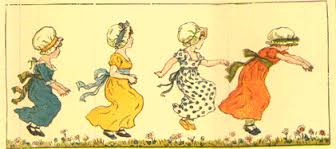
images

such as those still favoured by Kate Greenaway in her book illustrations some fifty or so years later.

The bottom dial is a calendar one. We are not sure how to read it.

This evening we dined on Jackie’s spicy Thai chicken with sweet potato, runner beans and carrots, followed by custard tarts. She finished the sauvignon blanc and I drank Jean Truffot bourgogne hautes cotes de suits 2012.

Another View Of Lower Marsh

Jackie drove me to and from New Milton today for my lunch date with Norman at Tas.

Lower Marsh sign

On reaching Waterloo, I walked along Station Approach Road, taking steps down to Lower Marsh and back along the lower road to The Cut and Tas. Lower Marsh has featured before, notably in ‘A Beautiful Setting‘, which tells of my earlier knowledge of this thriving little unpretentious London Street of market stalls and cheap eating places, the ethnic origins of which have changed so much since the early 1960s when I spent my Luncheon Vouchers in the cafes.

Station Approach Road

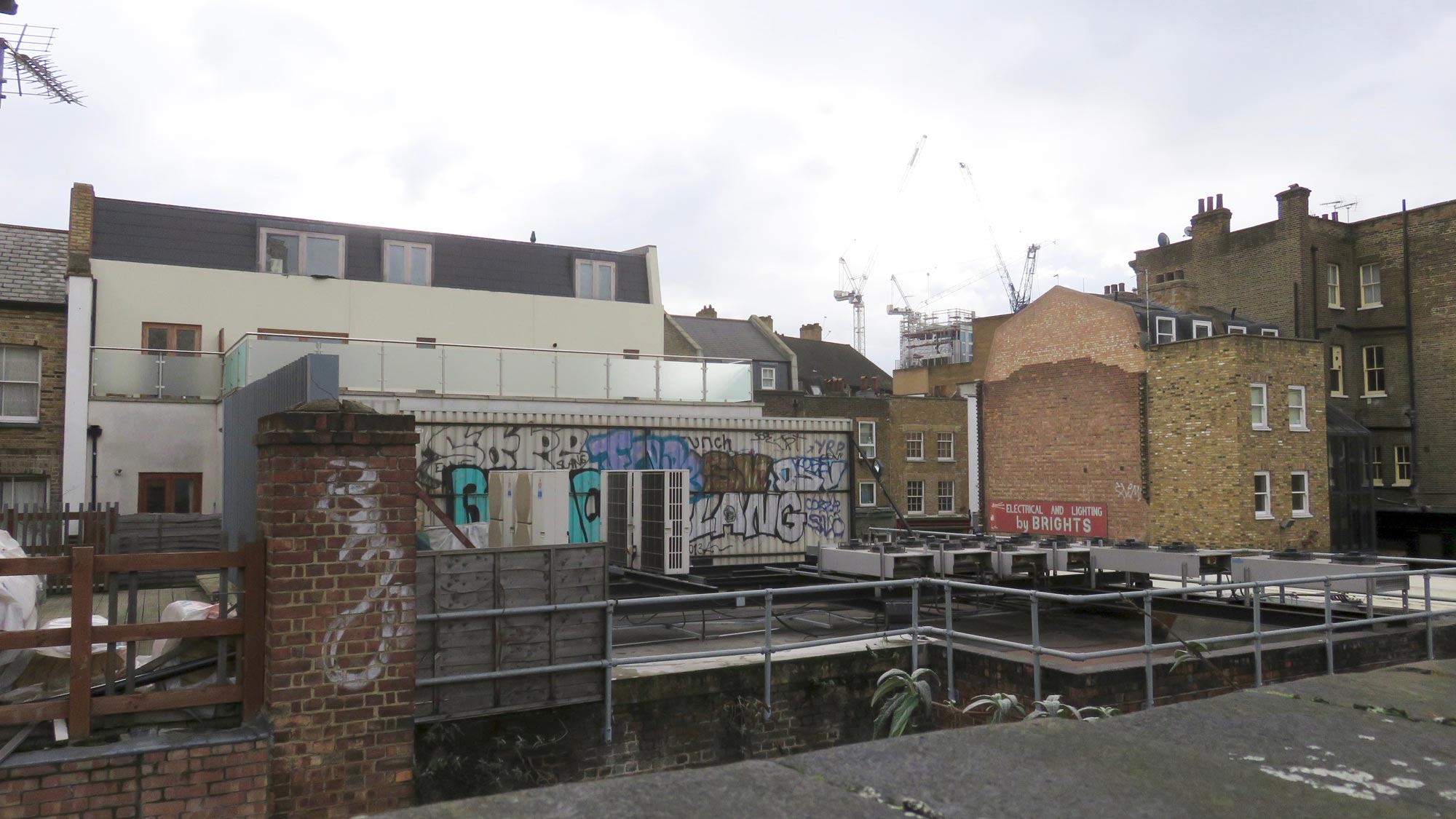
The approach road is on two levels, and it is possible to look down on one section from the wall in the first photograph above. The right hand section of this picture shows the backs of Lower Marsh buildings.

Lower Marsh 1

Others may be seen before descending the steps.

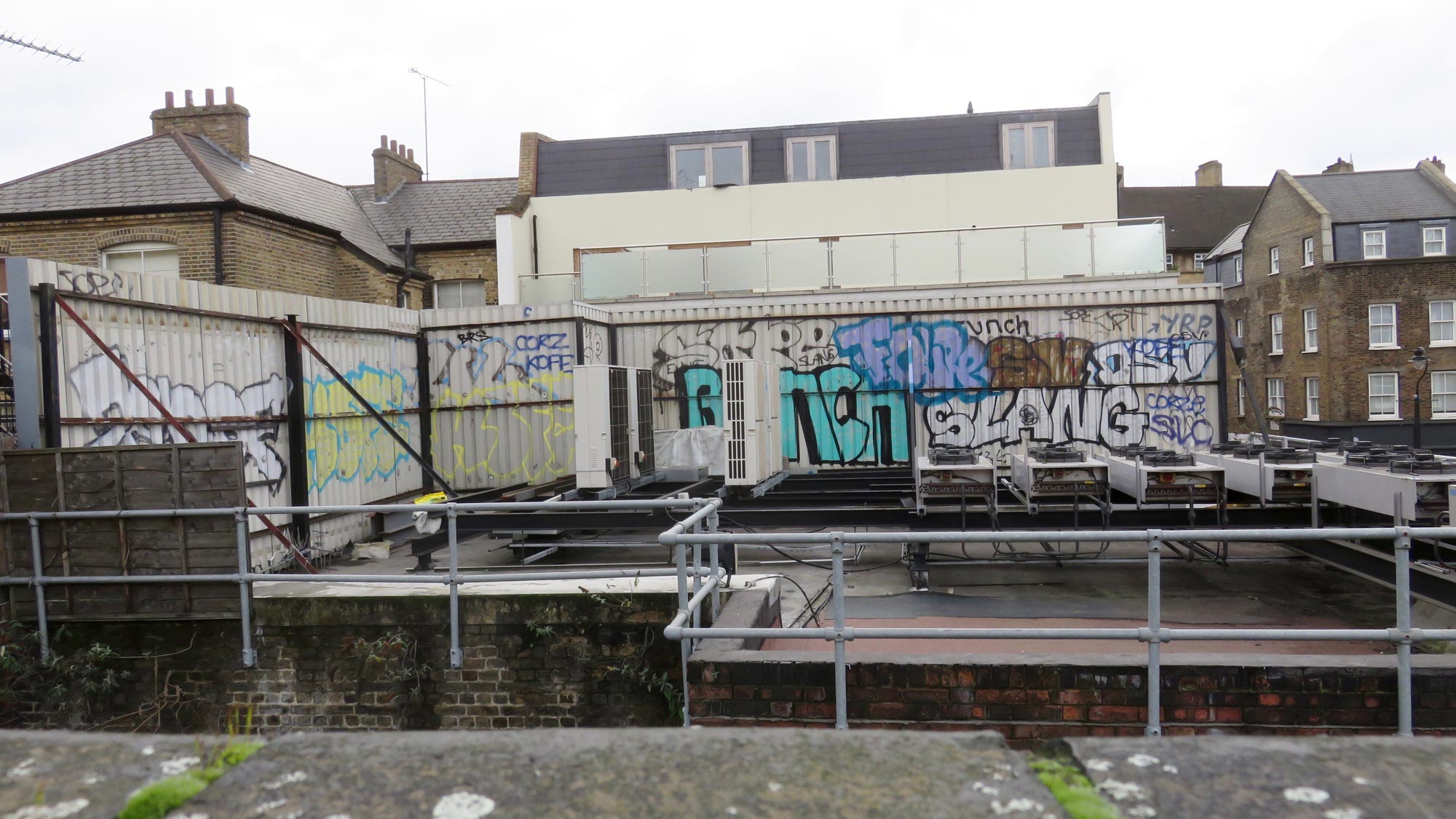
Lower Marsh 2Lower Marsh 3

Graffiti is, of course, in evidence.

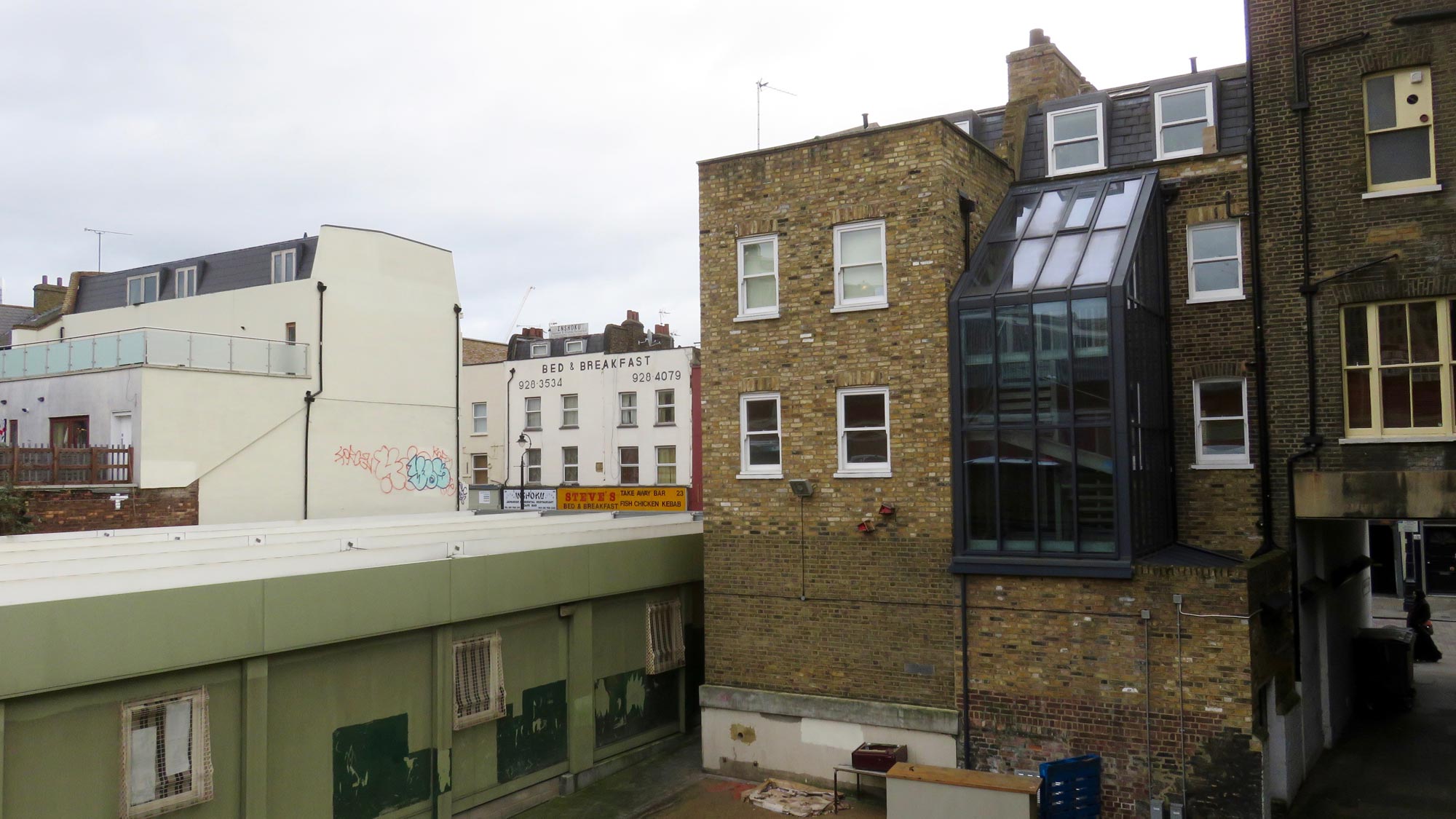
Lower Marsh 4Inshoku and Steve's

Inshoku and Steve’s, visible alongside the graffiti in this picture stand side by side, being examples of the indigenous and incoming cuisines. In the bottom right hand corner of the back view can be glimpsed the alley that is Granby Place,

Camel & Artichoke

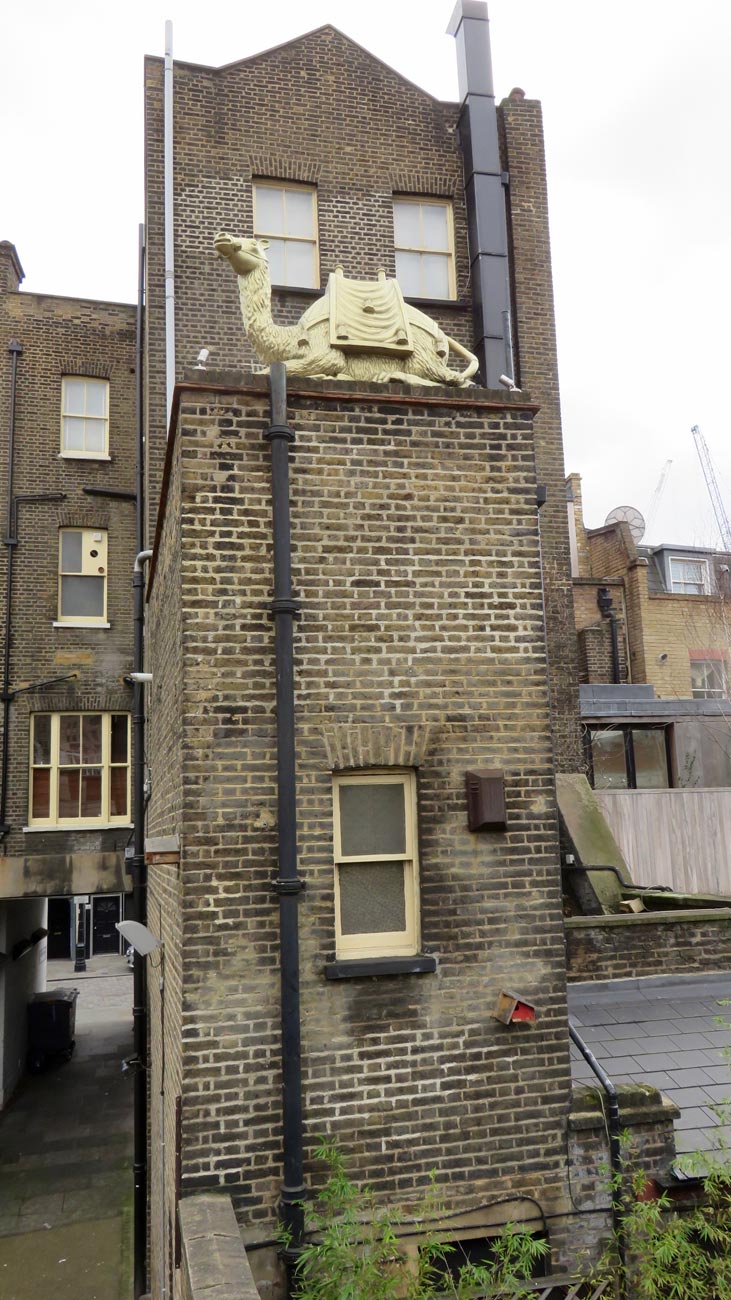
running alongside the Camel & Artichoke,

Camel

whose ship of the desert rests high up on the later extension to the Victorian building. The nesting box on the wall is probably an optimistic gesture.

Frazier Street SE1Greensmith's 2

At the corner of Frazier Street lies Greensmiths ‘A local supermarket with a real difference’. Peering through the windows suggests the boast is not in vain.

Barbecue stall

A barbecue queue still forms in Waterloo Millennium Gardens, the ‘beautiful setting’ of the above linked post.

Norman and I enjoyed our lunch. My choice was a kalamar starter, followed by a tasty sea food casserole, and baklava. We shared a bottle of the house red wine. I needed nothing more after my return home.

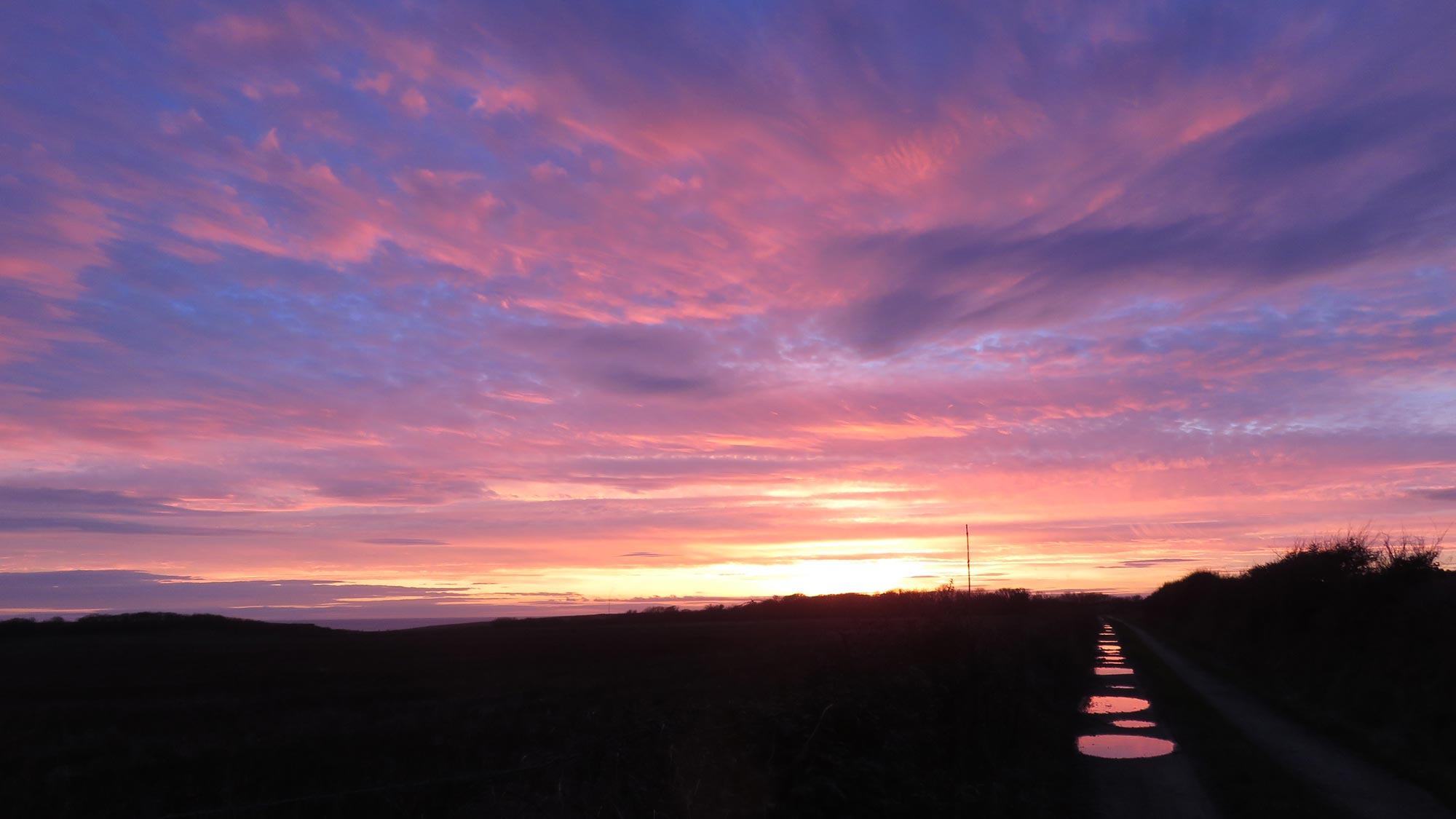
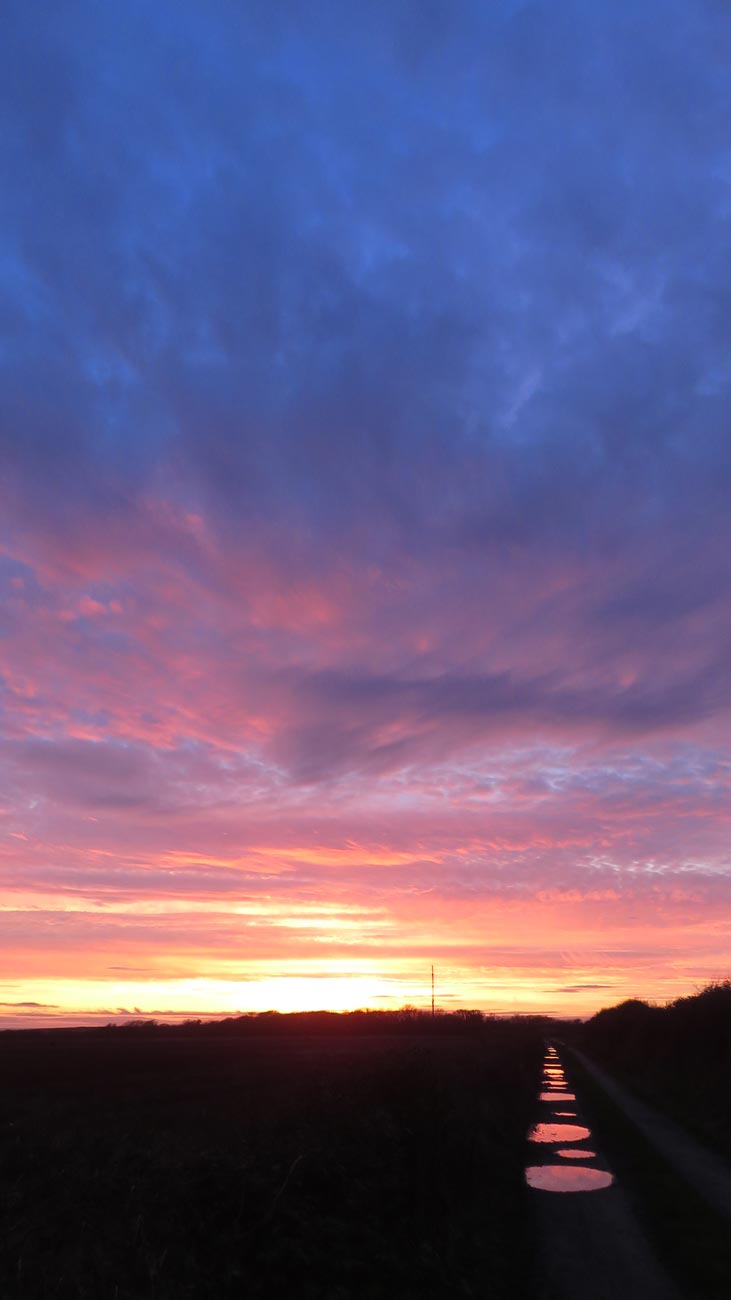
It will be apparent from the above photographs that it was a drab morning in an un-beautiful part of London. It was therefore a positive idea of my Driver’s that we should have a look at the sunset at

Walker, sunset on sea 1

Barton on Sea,

Sunset 1Sunset 2Sunset on pools

and across Roger’s field in Downton Lane.

Clocks And Whelks

This afternoon Jackie drove us to Lymington, where our two clocks were now ready.

Gosport Street

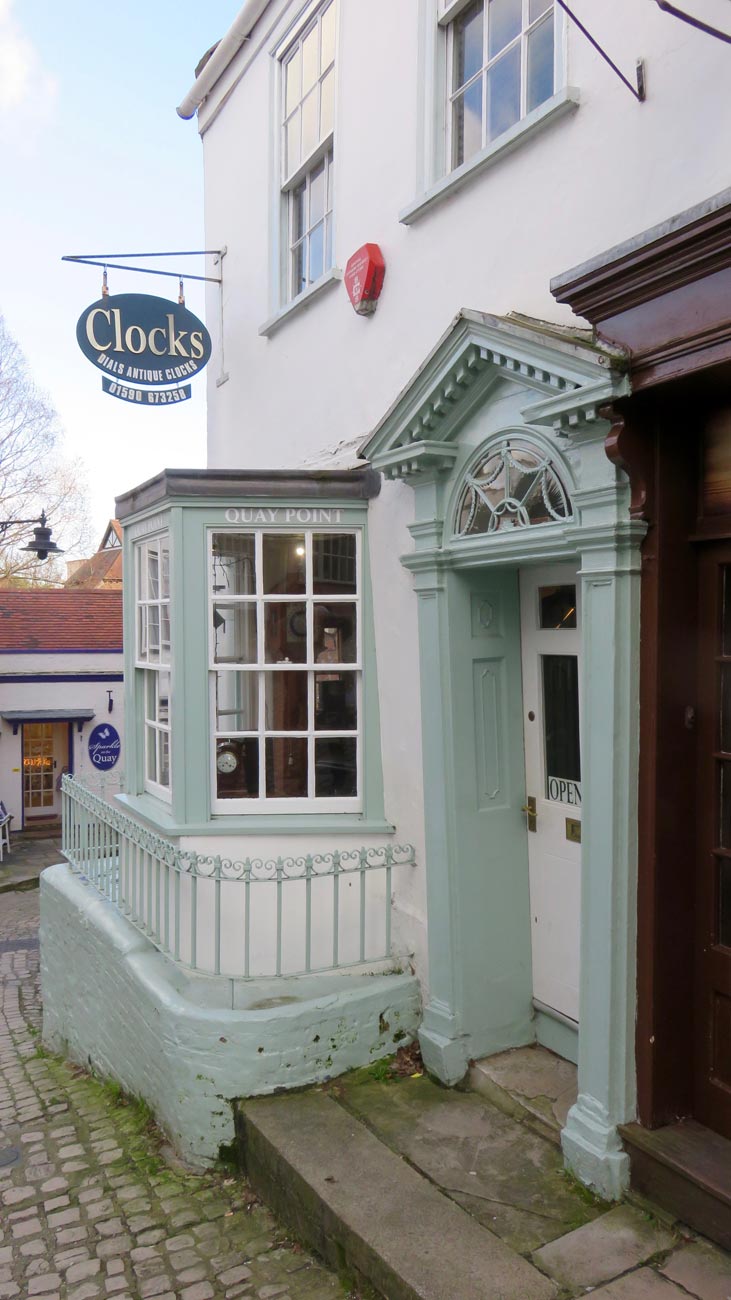
We parked in Gosport Street and walked down Quay Hill to Dials. The iron barriers on the kerbside ensure that careless photographers cannot step back into the road for wider close-ups.

Loose Ends and New Forest Ice Cream Parlour

Loose Ends, in the left foreground of this photograph, stands next to New Forest Ice Cream Parlour. The ice cream is sold all around the forest.

Jack Rabbits Barber & Shop

Next in line is Jack Rabbits Barber & Shop. Much of the town centre dates from Georgian and Victorian times, the buildings of which have been retained.

Quay HillQuay Hill 2

The quaintly cobbled Quay Hill runs steeply down to the left of this street. Dials is situated at the bottom right hand corner.

Quay Hill

Fascinating as are the shops, some of the buildings, like these, are private houses.

Quay Hill

At the bottom of the hill, next to Dials, is The Old Alarm, where, obscured by the gentleman’s head, is a notice advertising a flat in the building. From the early 19th century, Lymington had a thriving shipbuilding industry, particularly associated with Thomas Inman, builder of the schooner Alarm, which famously raced the American yacht America in 1851. 

Dials

This was the first time Jackie had accompanied me to the clock shop. She liked the inside as much as I did, and I had a sneaky plan.

I knew she would fall in love with the grandfather clocks. I left her to do just that while I settled up for Mum’s carriage clock, and Martin returned the wall clock in which he had secured the face which had caused the problem, and for which he made no charge.

Grandfather clocks

Then I bought her favourite, the one with the moon’s phases charted. This marvel was made in Jersey in 1822. It will be delivered and set up in two days time. That’s birthday and Christmas sorted.

After this, Jackie carried the repaired clocks back up the hill to the car whilst I wandered down to the quay, where

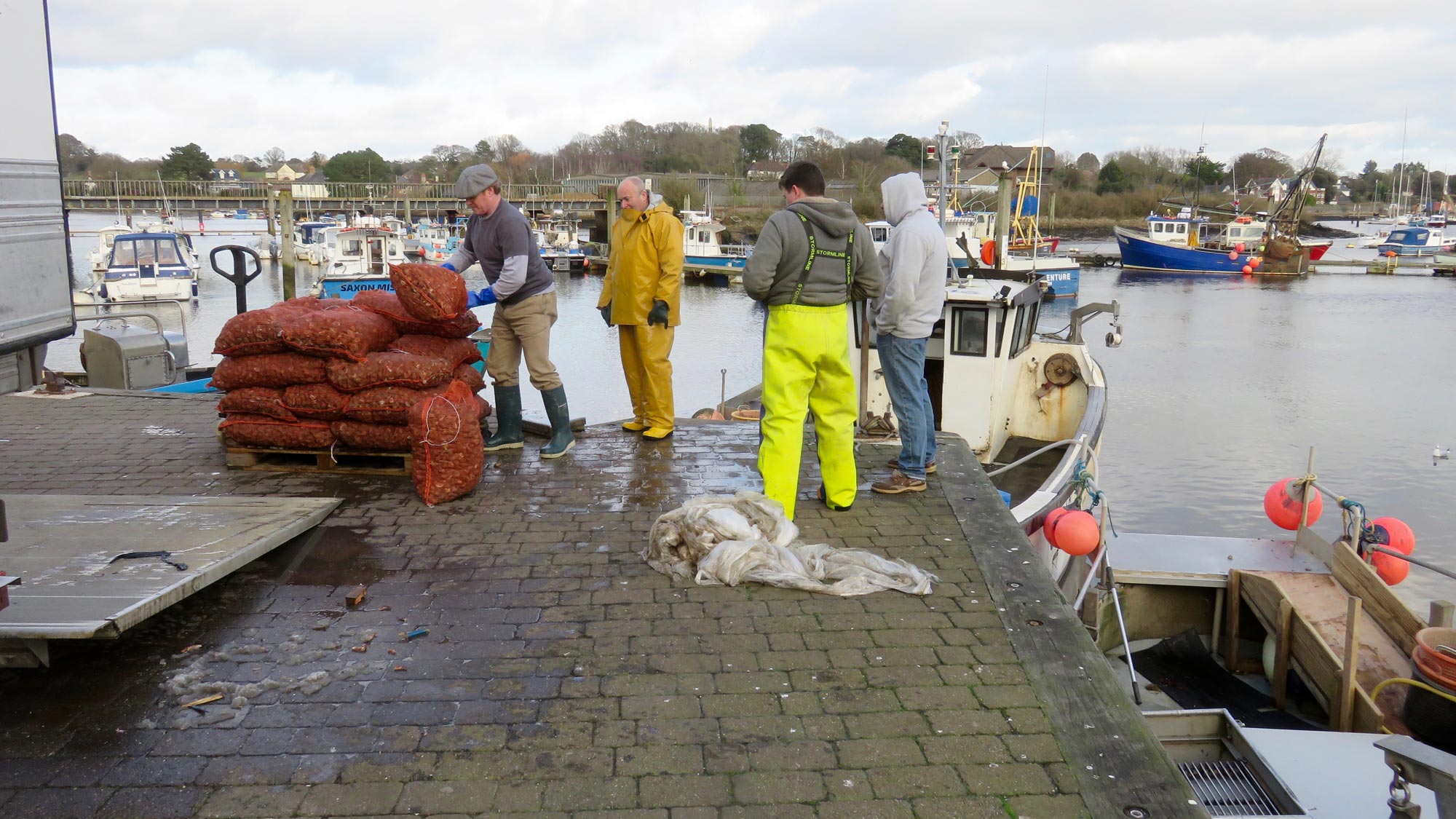
Unloading whelks

I once again met the young fisherman in yellow trousers who I had photographed at Mudeford Quay. This time, he and his colleagues were unloading bags of whelks.

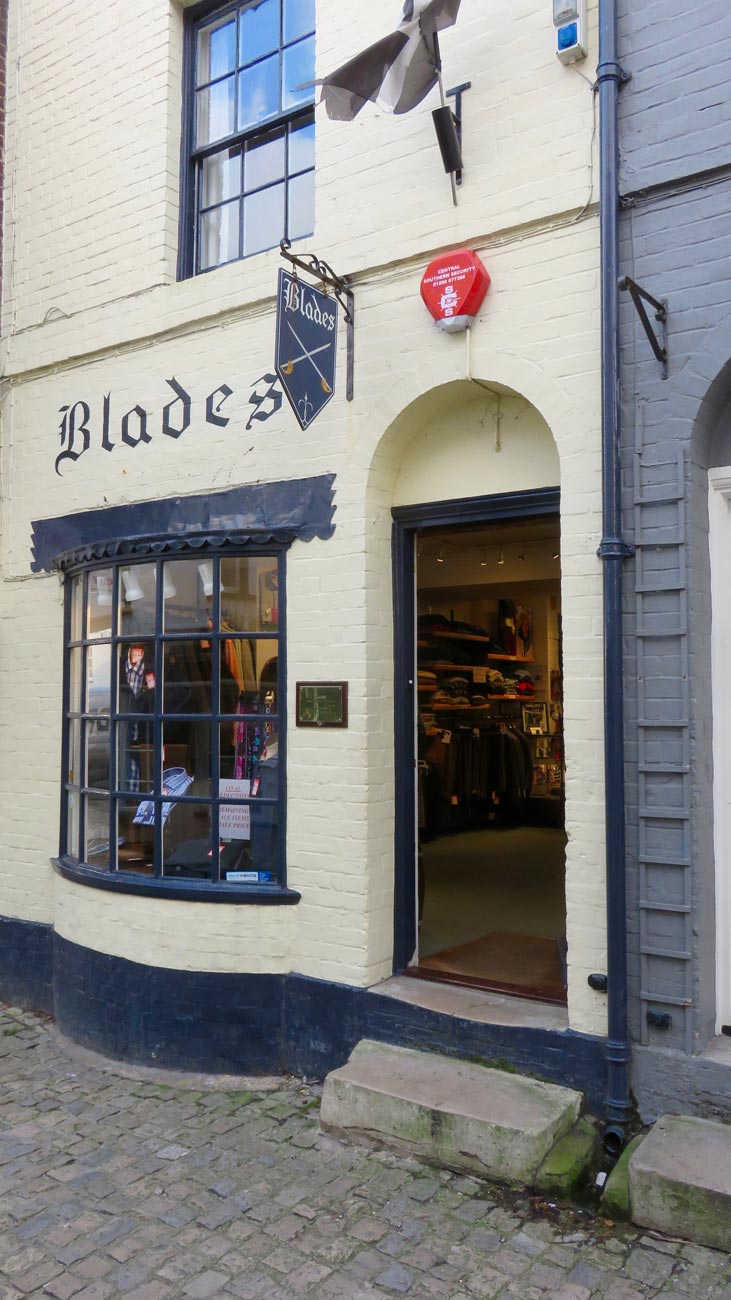
Blades

I then took advantage of the sale at Blades and bought myself a pair of trousers. They were navy blue, not yellow.

This evening we enjoyed second helpings of Hordle Chinese Take Away’s meal, with which we both drank Cimarosa sauvignon blanc 2014.

‘I Wouldn’t Dare’

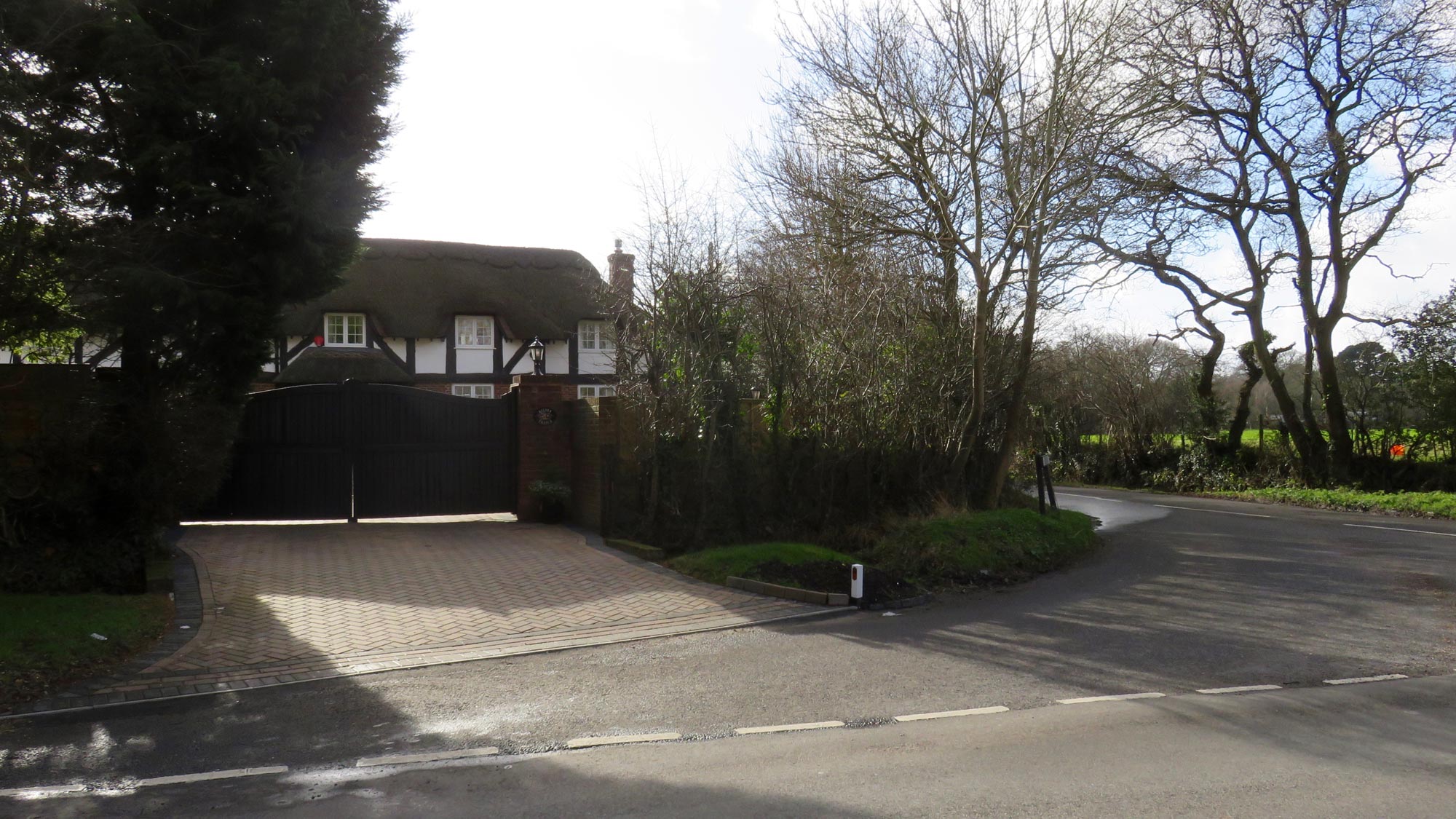
My friend Geoff Le Pard, this time, gave me the correct location of the former Gosling home. It is actually on the corner of Woodcock Lane and Silver Street. Jackie drove me out there this morning.

Silver Thatch 1

I would imagine the gates are rather different than those Geoff would have known.

Agars Lane

Although very convenient for photographing Agars Lane, opposite, the strong sun immediately above the central gable militated against a head-on shot, so

Silver Thatch 2Silver Thatch 3

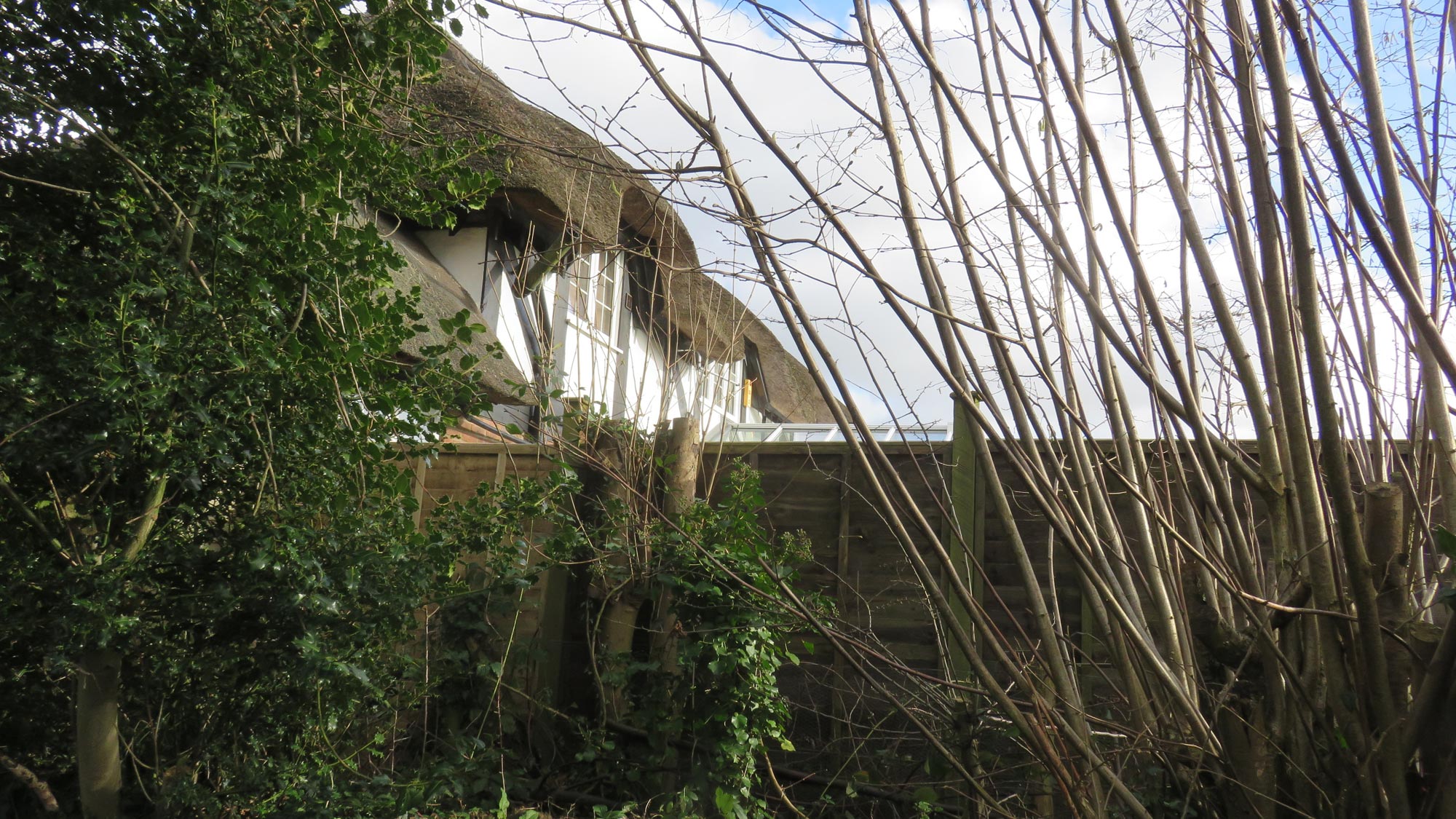
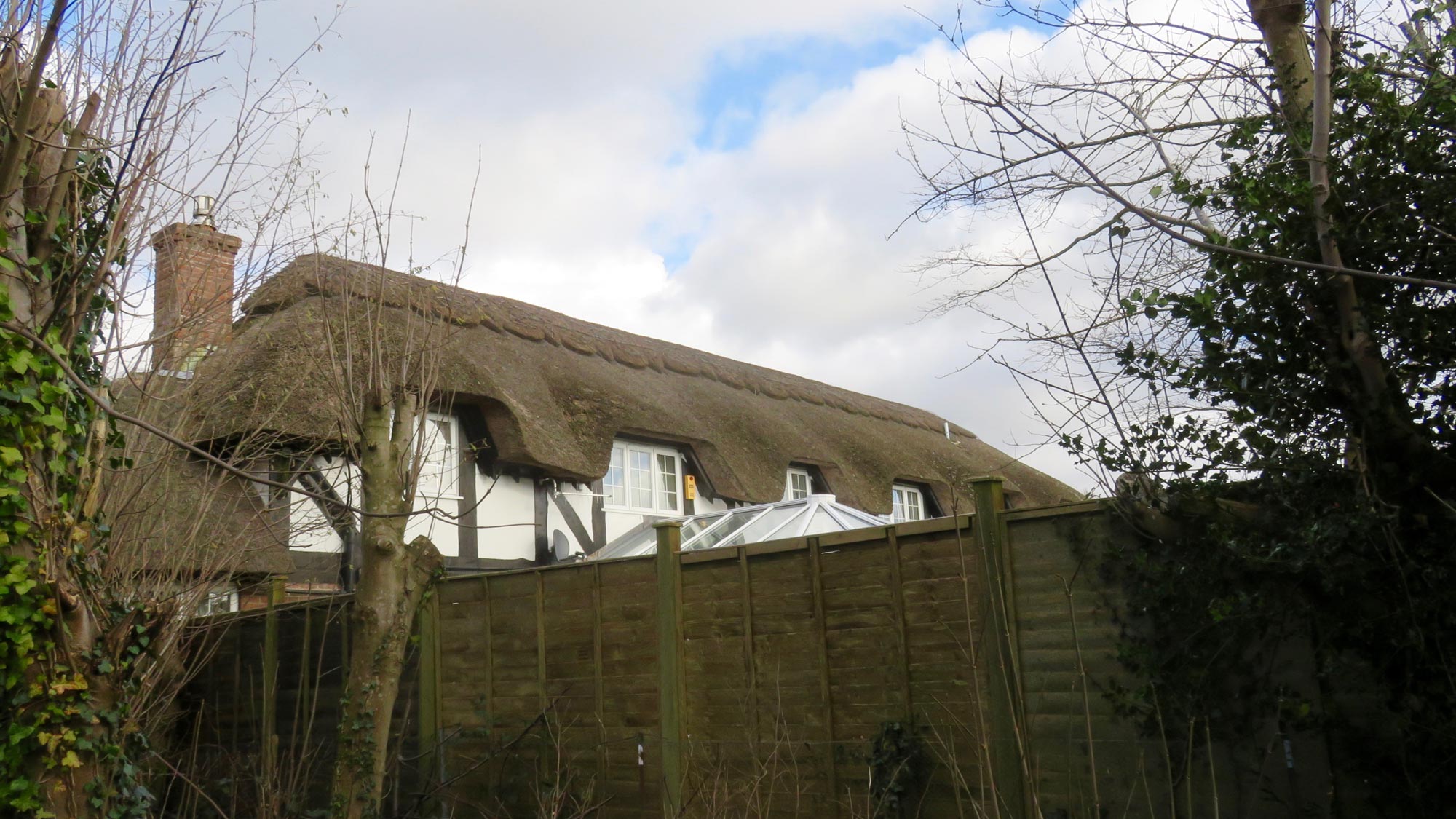
I walked down the Woodcock Lane side hoping for less glare. The very high fence is protected by the deep water-filled ditch alongside it.

Silver Thatch 4

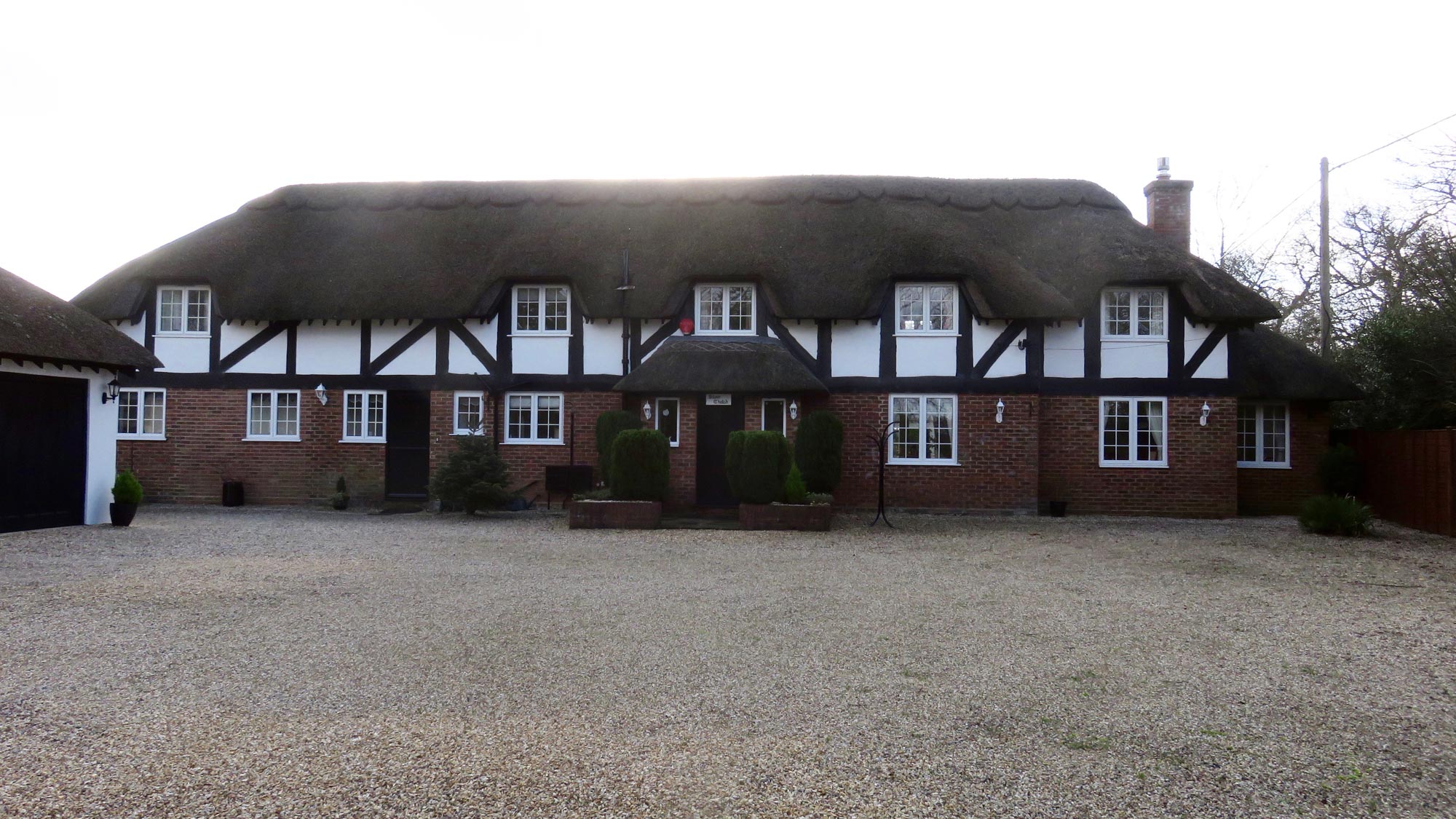
Finally, a helpful cloud dimmed the haze at the front and I was able to take a reasonable view.

Having sight of such a splendid abode made it easy to forgive our friend for sending us on a Wild Goose Chase a couple of days ago.

This afternoon I dipped into the selection of rediscovered negatives once more. A reinforced envelope addressed to Elizabeth, containing a letter and a strip of four colour negs would have been impossible for me to identify had not the letter been dated November 2003. My sister had obviously asked, as is her wont, to borrow these treasures to ‘work on the images’. I must have ‘filed’ the package in a drawer when she returned it to me.

One of these photos, from July 2003, was hopelessly out of focus, and another was of no great interest. I scanned and worked on

Deadly nightshade fruit

the fruit of deadly nightshade pictured alongside London’s Regents Canal,

Dandelion seeds on canal water

and dandelion seeds floating on the water.

Someday I must compare with Elizabeth what we each did with them.

When, later this afternoon, I came to begin drafting this post, we lost our Broadband connection. Not only that, but all BT’s telephone lines, even including the sales number, were engaged. I may have uttered the odd expletive. And possibly some not at all odd.

There was nothing for it but to lose myself in Josephine Tey’s elegant novel, ‘Brat Farrer’. After a couple of hours or so were back on line. Having calmed down somewhat I asked Jackie to remind me that there was no point in doing anything other than sitting and waiting when this happened again. ‘I wouldn’t dare’, she said.

Jackie fetched, and we ate, a meal from Hordle Chinese Take Away this evening. We drank water.

Whilst Jackie was out, I checked the line again. All was well, except that I could not access WordPress because ‘the server was not replying’. I really was comparatively calm when I rang Apple Support after dinner. The server replied whilst I was in the Apple queue. It seems my patience had borne fruit. I left the queue and posted this.

Black And White Discoveries

Today I had more fun scanning the old black and white negatives. Let us begin with two large format ones from 1957, both taken in the garden of 29a Stanton Road, London, SW20 where I grew up.

My mother and sister, Jacqueline, stand in the garden of the upstairs three bedroomed rented maisonette in which my parents raised their family of five. This little plot is the first one I tended, during my teens. Above the stone steps stands our back door, immediately behind which is a steep set of stairs leading directly into the kitchen. The window to the right is to one of those in the flat occupied by the Downes family who lived underneath. Beneath that window can be seen a pile of tea chests, which is what furniture removers used to pack belongings in those days. Dad drove a removal van. Fred Downes peers through his window to the left. Facing this scene is the railway path leading up to the embankment alongside which we used to play.

Jacqueline took this photograph of me.

By 1982 when the next group were taken, we were using 35 millimetre film.

This young man, like a fish in his element, was over the moon when publication of a magazine article illustrated by this image prompted a visit from Olympic swimmer, Duncan Goodhew, who brought a bag of gifts.

Here, Louisa sleeps in her cot in Gracedale Road.

I have already featured a number of pictures from the holiday at the Vachettes’ home in Normandy, when I couldn’t find this negative of her.

Becky, with cousin Susie, enjoys apples from the Drapers’ tree at Meldreth in Cambridgeshire.

Shelley paid a visit this afternoon and gave us a splendid pair of curtains that perfectly fit our French doors to the patio.

This evening we dined on the last of our Hello Fresh selection. The Lamb patties with yoghurt lentils and sweet potato discs were delicious and spicy. Contents can be seen when enlarging the image alongside my helping. Jackie will definitely keep all three recipe cards for further use. I drank more of the bordeaux and Jackie drank Hoegaarden.

A Family Outing And A Disappearing Act

Continuing our post-Christmas sort out, I came across a Fortnum and Mason picnic hamper from a previous Wolf and Luci Christmas present. This now contains various items of photographic interest, including some early negatives and slides.

I scanned four black and white negatives from a family trip to Richmond Park in 1962. Three of these have been published before, but scanned from rather faded prints because I had not found the negatives. Despite the fact that a considerable amount of retouching was required, I have now been able to offer more clarity. The wallet in which they were contained was labelled, telling me that I had taken these shots with my old Box Brownie camera. The format of these  images is square.

Mum, Joseph, Maureen, Auntie Jean & Vivien, Uncle Derrick, 1962

Given that I found them in a hamper, it is fortuitous that the first picture is of a picnic (complete with hamper) taken in Richmond Park. My two year old brother Joseph is here stuffing a titbit into his younger cousin Maureen’s willing mouth. Continuing clockwise around the image we have my Auntie Jean, Vivien, unfortunately chomping, Mum, and Uncle Derrick. My sister Elizabeth is largely obscured by my first wife.

Joseph and Maureen 1962 001Joseph and Maureen 1962 2

Joe gave Maureen a piggy back,

Dad and Joseph 1962

and had something to say to Dad.

I have learned through overlaps with my blogging friend Geoff Le Pard, how small a world we inhabit. Geoff grew up not far from where we now live in Hampshire, and he now lives near my childhood home in London. We have often jogged each other’s memories. In a recent post of his, he wrote of the gardening he did in his teens for Mr and Mrs Gosling who lived in a house, which he thought was called ‘Silver Thatch’ on the corner of Vaggs Lane and Silver Street, and wondered whether one day I might photograph the house.

Jackie drove me there today to investigate. Unfortunately we couldn’t find such a house.

April CottageApril Cottage and Spar garage

The only thatch on that particular spot, now featuring a mini roundabout, is actually behind the petrol station and Spar shop on the corner of Silver Street and Everton Road. It is called ‘April Cottage’. Jackie parked in Everton Road whilst I took the above two photos

VaggsLane/Silver Street corner

then walked across to photograph the Vaggs Lane corner as it is today.

I am afraid the Goslings’ house has probably disappeared. Just as Jackie had done when I walked back over to where I had left her. The Modus was nowhere to be seen. Had she done a runner?

As I stood there scratching my head she sped down Vaggs Lane from the other end, round the roundabout, and into the garage forecourt. I entered the vehicle. ‘Where were you? Didn’t you see me parked beside you?’ she asked me most calmly, and with not the slightest inkling of a screech.

Well, no. Why would I? I was concentrating on what I was doing.

My driver had considerately followed me over to the opposite corner, not seen me cross back to Everton Road and had torn up Vaggs Lane in search of me. So, what was she doing? Perhaps whoever spirited away ‘Silver Thatch’, had been having a laugh.

Gammon Steaks meal

This evening we enjoyed the second of our Hello Fresh meals. This was excellent Honey Mustard Gammon Steaks with Parsley Sauce, with which I drank equally good Solliard bordeaux 2014 given to me by Shelley and Ron; and Jackie drank Hoegaarden.

Take Pride In A Roaring Success

Here is the Mission Statement of The Lions Club of Bournemouth:

To empower volunteers to serve their communities, meet humanitarian needs, encourage peace and promote international understanding through Lions clubs.

Lions Clubs International is the world’s largest service club organisation with 1.4 million members in approximately 46,000 clubs in over 200 countries.

Lions are men and women who volunteer their time for humanitarian causes. Founded in 1917 by Melvin Jones, our motto is “We Serve.”

More information can be found on www.bournemouthlions.org.uk/

Our friends Barrie and Vicki Haynes are respectively President and Vice-President of this local branch.

Kinson Community Centre

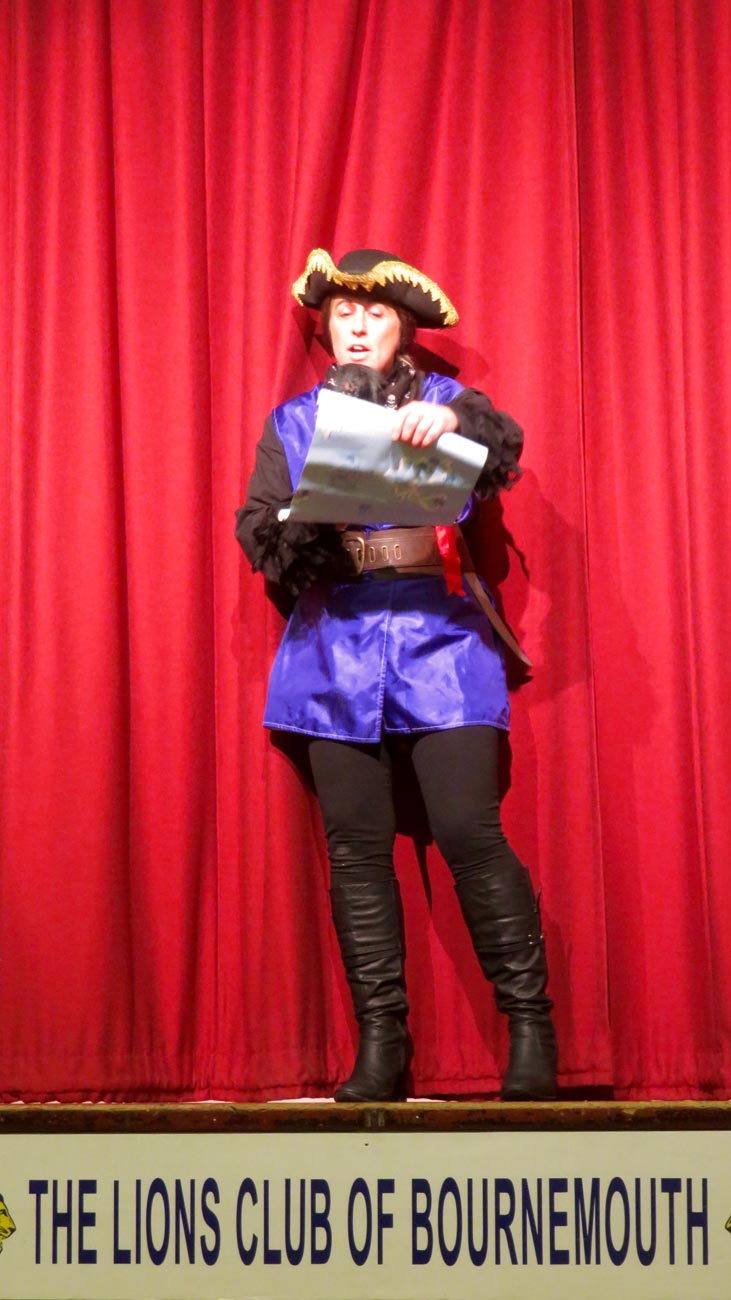
This afternoon, Jackie drove us to Kinson, a suburb of Bournemouth, where this group put on their annual pantomime. Written, as usual, by Barrie this was the hugely entertaining ‘Polly the Pirate’, which took place in the Kinson Community Centre.

Tilly

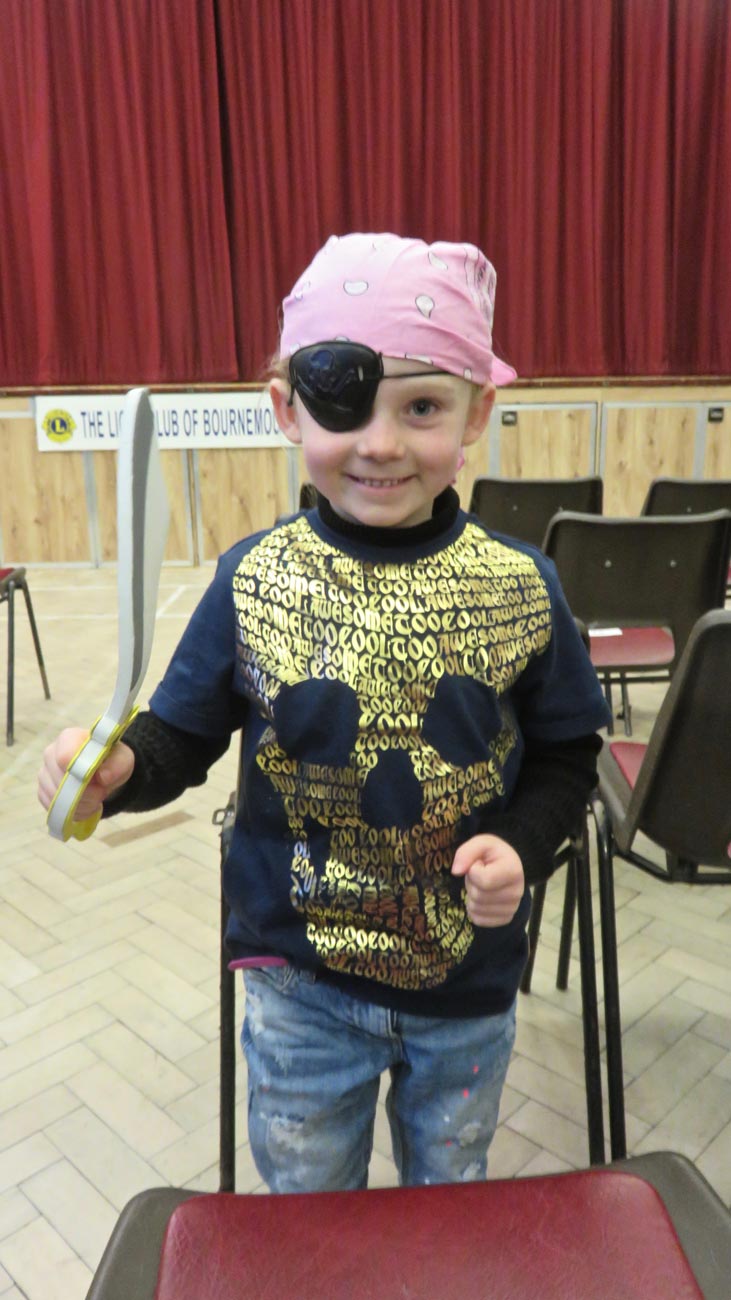
While Jackie and I were waiting for the start, we were entertained by an engaging conversation with the intelligent and friendly six year old Tilly who sat in front of us and had come dressed for the occasion. Note her awesome, cool, skull T-shirt.

Barrie as Ella the Pirate 1

Proceedings were opened by Barrie, who laid out the general ground rules, such as that when he appeared as Ella everyone was required to shout out the he was a fella.

Polly the Pirate scene 1

Polly the Pirate scene 2

Barrie as Ella the Pirate 2Barrie as Ella the Pirate 3Polly the Pirate scene 3

Curtain up and he was joined on stage by the rest of the cast who performed with glorious gusto.

Hawk

Hawk introduced the second act,

Polly the Pirate scene 4

which rollicked along.

Barrie's legs

I am reliably informed that young ladies no longer wear tights, but I do remember the days when nail varnish came in handy in the case of a ladder. It is hoped that someone remembered that before Barrie/Ella trod the boards for this evening’s performance.

Polly the Pirate scene 5Polly the Pirate scene 6Polly the Pirate scene 7Polly the Pirate scene 8Polly the Pirate scene 9Polly the Pirate scene 10Polly the Pirate scene 11Polly the Pirate scene 12Polly the Pirate scene 13

The audience, being a matinee, had its fair share of the very young,

Audience participation

who, as is customary, were encouraged by Barrie into a singalong, in which the mayor and his lady joined.

Finale

The finale received rapturous applause,

Vicki announces raffle winners.

and Vicki closed by reading the winning numbers of the interval raffle.

I understand there are just 18 members of the Bournemouth Branch. They must all have been in service today; on stage, back-stage, or front of house. These lions should take pride in a roaring success.

This evening Jackie and I dined at The Royal China in Lymington. Jackie had dumplings for a starter, for which I had hot and sour soup; we then shared special rice, special chow mein, and king prawns in ginger and spring onions. We both drank Tsingtao beer.

Wimbledon College As I Knew It

After our day in the sun, we are now in the grip of storm Gertrude. And they have only been given names in alphabetical order since the beginning of the year. Winds approach 50 m.p.h.

Owls

We have had no snow, so quite how a pair of snow-owls came to be on their perch in the garden, I don’t know. Anyway, they are thawing out.

This afternoon Jackie drove me to New Milton to look at a jacket I had ordered from Fagan’s. It wasn’t big enough, so we ordered a carpet instead.

Over the Christmas holiday period the library has become rather a dumping ground. Today we set about regaining the space for books and contemplation. This took some time, and prompted a certain amount of reorganisation. In the process, I discovered two postcards relating to our schooldays that were in a pile of Chris’s books that Frances had passed on to me.

The school which I and my two brothers had, between us, attended from 1953 to 1978 stands on a site where in 1860 John Brackenbury had purchased two large meadows below the Ridgway known as Tree and Boggy Fields. Brackenbury had helped to run Nelson House School, in Eagle House, Wimbledon High Street. His success there was such that in 1859 he took out a mortgage on the land below the Ridgway and founded the Anglican Preparatory Military Academy in 1860, also known as Brackenbury’s. The grounds of this college were so attractive that the school was opened to the public once a week.

In 1892 the buildings of the Anglican Preparatory Military Academy were purchased by the Jesuits and reopened as Wimbledon College which had existed on other sites earlier that year.

Wimbledon College

One of Chris’s postcards is of the very first pupils’ school photograph. Note the heavy leather rugby ball, such as we still used in the 1950s. Should any of my readers have antecedents likely to be present in this picture from 1893, I would be pleased to hear from you.

Wimbledon College

The other is of the splendid Victorian building I knew. The grounds seen in this photograph are just part of the sublime setting in which I was fortunate enough to spend my grammar school years.  During the summer holidays in 1977 the main college hall burned down. It is not clear what caused the fire, but the kitchens were located in the basement of the hall and it was supposed that the fire started there. Many a time I sat at the refectory tables in that hall, lobbing bits of food at other unruly juvenile diners under the eyes of the Catholic martyrs of the reformation, Saints Thomas More and John Fisher. Patrick Reid, the famous Old Boy who escaped from Colditz Castle in World War II, also looked down on us. I wonder whether their portraits survived the fire.

Extensive renovation and new building has since been undertaken.

Aubergin 'Al Funghetto'

Hello Fresh is an organisation that sends to our homes the ingredients and recipes for making exceedingly good meals. Jessica and Imogen sent us a week’s subscription for Christmas. This consisted of the wherewithal for three meals for two. Because we had such a houseful Jackie froze these goodies. Today we sampled the first. This was Aubergine ‘Al Funghetto’ with Grilled Butterflied Chicken. Containing supplied chicken breasts , aubergine, new potatoes, cherry tomatoes (these didn’t freeze so we replaced them’, flat leaf parsley, garlic, lemon , and chilli flakes, was absolutely delicious. Jackie is retaining the recipe card. Profiteroles was to follow. I finished the chianti and The Cook drank her customary Hoegaarden.

Well done the grandchildren.

P.S. More memories of school dinners from Keith Prince:

“Speaking of school dinners, I can’t praise them enough! As you will know, we had our own kitchens and a team of wonderful cooks and the assembly hall became our dining room. I was especially fond of the puddings – chocolate sponge with chocolate custard, spotted dick, and the crème de la crème: stodge! Who could resist those golden sponges soaked in rich, gooey syrup? Occasionally, you had to extract a few dead red ants, but they were absolutely delicious! (the stodge, not the ants!) I’ve spent all my life trying to find a comparable stodge in restaurants, but to no avail.
One term, (or year) I became a food monitor dishing out the grub from a trolley and clearing all the dirty plates away. The benefits of this were that we could eat our meals in peace after everyone else had finished, and we could eat as much as we wanted. At the end of the term, the cooks put on a special banquet for us helpers but, for some reason, I was feeling quite ill and I missed out. Very unusual for me because disease and I were not common bedfellows. I was never ill as a rule. Even the Asian Flu of 1958 didn’t seem to afflict me. I believe that at one stage, there were only three of us Ruddite Ones in the class.
One last memory of school dinners concerns the appalling abuse of a timid chemistry teacher whose nickname was “Clu Clu” due to his terrible stutter. I can’t remember his proper name as I never attended any of his classes, but I felt so sorry for him. Maybe you can enlighten me about him. One or two of the teachers were borderline sadists but in Clu Clu’s case, it was the boys who were the abusers. At every dining session, a teacher would patrol around the refectory to maintain reasonable conduct, but poor old Clu Clu was totally unable to command any respect. Depending on what was being served, by the end of the session, the back of his jacket was covered in cream or stodge or mashed potato.”