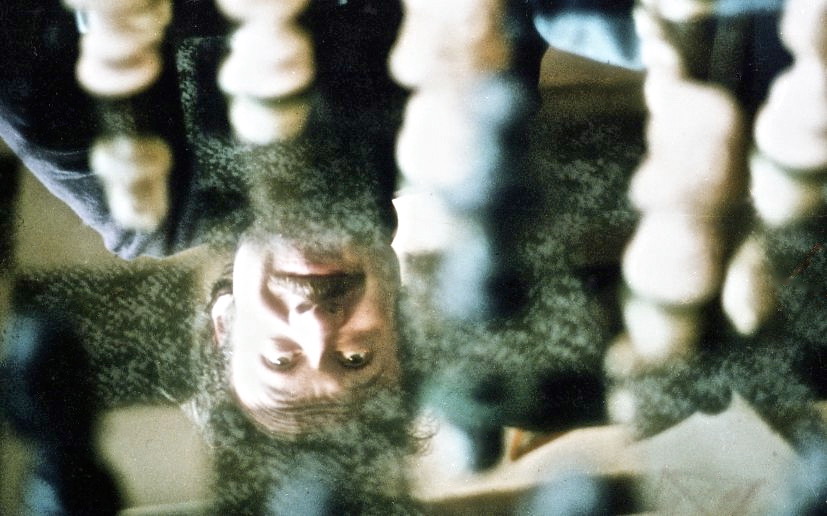
All Quiet On The Western Front

On 6th November Robbie Cheadle posted such an inspirational review of this novel by Erich Maria Remarque that I was prompted to reread the iconic work for the first time for almost 60 years.

You may care to read Robbie’s excellent analysis either before or after this review of mine.

Here are the boards and Title page and frontispiece of my Folio Society edition of 1966.

Although well able to provide excellent descriptive narrative and employ literary devices such as metaphor and simile, (“…but if he says it here the sentences have the sharpness of a bayonet in the moonlight”) Remarque largely makes use of the short sentence and the journalistic dramatic or narrative present to emphasise the immediacy of the story and maintain the fast pace of the life and death of the World War I German soldier, contrasted with the slow-moving apparent absence of life on leave or otherwise away from the front. “These are wonderfully carefree hours. Over us is the blue sky. On the horizon float the bright yellow, sunlit observation-balloons, and the many little white clouds of the anti-aircraft shells. Often they rise in a sheaf as they follow after an airman. We hear the muffled rumble of the front only as a very distant thunder, bumble-bees droning by quite drown it. Around us stretches the flowery meadow. The grasses sway their tall spears; the white butterflies flutter around and float on the soft warm wind of the late summer…..” “No-one had the vaguest idea what we were in for.” “To me the front is a mysterious whirlpool. Though I am in still water far away from its centre, I feel the whirl of the vortex sucking me slowly, irresistibly, inescapably, into itself.”

“The air becomes acrid with the smoke of the guns and the fog. The fumes of powder taste bitter on the tongue. The roar of the guns makes our lorry stagger, the reverberation rolls raging away to the rear, everything quakes. Our faces change imperceptibly. We are not, indeed, in the front line, but only in the reserves, yet every face can be read: This is the front, now we are within its embrace.” All senses are engaged, especially that of hearing. Sound, including its absence, conveys important information. “The dull thud of the gas shells mingles with the crashes of the high explosives”; “…. he has his mouth wide open and is yelling. I hear nothing.”

We learn how war changes people; how weak, insignificant, men can become martinets when given authority; how men reliant on each other for survival become “closer than lovers”; how necessity produces generosity towards previously unknown men – even enemies, now prisoners of war. There is an understanding between and empathy for soldiers fighting on opposite sides. “…. just you consider, almost all of us are simple folk. And in France, too, the majority of men are labourers, workmen, or poor clerks. Now just why would a French blacksmith or a French shoemaker want to attack us? No, it is merely the rulers. I had never seen a Frenchman before I came here, and it will be just the same with the majority of Frenchmen as regards us. They weren’t asked about it any more than we were.”

The author doesn’t flinch from describing the grisly reality. “…if a mortar gets you it blows you clean out of your clothes……” “I search around. And so it is. Here hang bits of uniform, and somewhere else is plastered a bloody mess that was once a human limb. Over there lies a body with nothing but a piece of the underpants on one leg and the collar of the tunic around its neck. Otherwise it is naked and the clothes are hanging up in the tree. Both arms are missing as though they had been pulled out. I discover one of them twenty yards off in a shrub.”

“Like an emptying tube, after a couple of minutes he collapses. What use is it to him now that he was such a good mathematician at school.”

The frequency and rapidity of death in hospital, where months of treatment can be followed by a return to the front is equally shocking.

This was meant to be the war to end all wars. It was not to be, and in our time of vastly more methods of destruction where those who send long range missiles never have to see the civilians they are smashing to pieces, and old men are still sending young ones off to die, inhumanity remains rife.

Not knowing any German I can only assume that the translation by A. W. Wheen is accurate. It certainly reads well enough.

In my view the Folio Society could not have found a more suitable illustrator than Charles Keeping for conveying the nature of this work.

Each of the lithographs in this set bears a description of the scene illustrated in the gallery

Silent Thudding

Late this afternoon we took a forest drive.

By the time we reached Holmsley Passage all vestiges of sunshine on the verges had made way for moody skies.

The forded stream reflected the autumn woodland leaves above, some fallen piles of which diverted the rippling water from its otherwise still-mirror-surface.

The season was still evident along Bisterne Close,

along which just as I commented on the apparent absence of livestock we rounded a bend where a number of ponies were gathered.

Spotting the Shetland in the corner of the woods I rounded the pony in the foreground of the last photograph in the above gallery to photograph the little fellow, who, of course, had turned into the trees by the time I arrived.

There were three pony tracks for me to follow. Now, as my readers know these animals are largely silent. Except for the thudding of their hooves that are more felt than heard.

The whole troop had decided to follow me. Each set of hooves bore approximately 700 lbs of horseflesh. I couldn’t turn round and couldn’t really relax until they had chosen a different route from mine

and thumped off past me. I knew that they would not attack me but I didn’t fancy being trodden on.

We will soon sit down to a dinner of Jackie’s tasty liver casserole, boiled potatoes, carrots, cauliflower, and green beans, with which she will drink Vineyards Juicy rosé and I will drink more of the Merlot I brought home from Da Vito last night.

Earlier Posts And New Restaurant

This morning I carried out culling of my iPhotos collection, removing all the pictures appearing in

and in

and six from

I spent the afternoon of this very wet day reading ‘All Quiet on the Western Front’.

This evening we dined at Da Vito Italian restaurant in Old Milton. This establishment has followed Red Chilli into what was a previous café, and has transformed the ambience.

Against a background of gentle recorded songs we enjoyed friendly, efficient, service and well cooked

minestrone starter followed by sea bream in mixed crustacean sauce for me; garlic bread starter followed by shrimp tagliatelle main and créme brulée dessert for Jackie. The olives we we given to begin with were quite spicy. My lady drank Peroni and I drank Valloria Merlot.

A Bright Autumn Morning

With the morning brighter than expected we took a forest drive before lunching at The Potting Shed in Redcliffe Garden Centre.

The drive was more nerve-wracking than usual for Jackie because more than usual other vehicles required negotiating on the narrow,

bendy, potholed lanes, the first of which was Shirley Holms Road;

then came Rodlease Lane; then Rope Hill, with its ancient high-

banked verges; running into Church Lane, where more Remembrance

poppies have been added to the fence outside St John the Baptist

parish church and a donkey limped slowly after its companions.

A number of ponies pastured on the moorland, and around the pool

preparing to flow across the corner of St. Leonard’s Road.

This evening we dined on meaty pork and herb sausages; creamy mashed potatoes; protein-packed plate-sized portobello mushrooms; firm, flavoursome Brussels sprouts, cauliflower and carrots, with which Jackie drank Patronus Weissbier and I drank more of the Fleurie.

Murder On The Orient Express

Agatha Christie’s 1934 masterpiece that is possibly her best known work clearly needs no review from me, save to say that I thoroughly enjoyed it.

My Fontana Books paperback, first issued in 1959, is the eleventh impression of 1974. Having seen one of the many screen versions, although not the one featured on the covers of this book bearing print old enough to need to be read through browned pages, yet never opened the novel before, I therefore knew the story and flattered myself that I could pick up the clues on the way, but I doubt that I would have done so otherwise.

I finished reading it today, after which I culled more of the pictures from my iPhotos file including all but four of those featuring in

and all but one each in

and

This evening we dined on pork chops with maple sauce; moist ratatouille; creamy mashed potato; firm carrots, cauliflower and Brussels sprouts, and tasty gravy, with which Jackie drank Juicy rosé and I drank Chassaux et Fils Fleurie 2024.

Rhinefield Road Rippling Reflections

Possibly because it is Armistice Day there was not much going on in

Lyndhurst which lacked inspiration for Christmas shopping. I photographed a few windows and street scenes, and automated

Post Boxes in transition to solar power. Further information on the new system can be seen on https://www.bbc.co.uk/news/articles/cgln72rgrero I don’t imagine the solar panels shown on that site will allow accommodation for the yarn decorations shown on the first one.

We then continued on a forest drive.

I was prevented from photographing the buildings on Waters Green by a pony intent on entering our car every time I wound down the passenger window. We played a game of catch the driver, involving her grazing the verge; me turning the handle; her leaping up and attempting to stick her nose into the car before I blocked her; me trying again; her back to cropping; me failing to beat her once more. Like any adult taking on a child with quicker reactions, I failed. Every time. Again I ran out of patience before the apparent infant.

Jackie parked beside Rhinefield Road, enabling me to photograph the

woodland of the Arboretum and a stream running beneath bridges over it, its rippling reflections, and floating leaves. The grassy ground cover over the mushrooms has been left to show their perspective.

Here is Jackie’s take on the scene.

We are now about to enjoy a repeat of yesterday’s baked gammon dinner with added ratatouille and the same beverages.

Posts from 2013

This morning I deleted from my iPhotos file all the images featuring in

and all but one in

I retained three from

The rest of the day I spent reading most of Agatha Christie’s ‘Murder on the Orient Express’.

This evening we dined on tasty baked gammon; piquant cauliflower cheese; boiled new potatoes; crunchy carrots; tender green beans and cabbage, with which Jackie drank Juicy rosé and I drank Almocreve Alentejano Tinto reserva 2022.

Giles Remembered

Until his death in Lymington Hospital last night Giles Darvill, two years younger than me, had been our longest surviving friend since we first met while working at the inaugural meetings of the Royal Borough of Kingston Social Services Department in 1971.

Following Jackie and my parting I shared his flat in Claverton Street, Westminster for a little more than a year from early 1973.

We still have a number of Giles’s works of stained glass hanging in our windows – the first image above being a representation of my initials DJK; the second a chequerboard for my 50th birthday on which I 

photographed him

as I had done playing chess on his glass table top whilst at his London flat mentioned above.

A trip to Covent Garden in October 1983 with his son Ben and my Matthew, Becky, Sam, and Louisa was memorable.

It was perhaps inevitable that we should, in retirement, have come to live in the area of the New Forest where our friend grew up. He returned to his roots in about 1999, since when he had turned his plot

of almost entirely grassed land into a rambling wildlife haven open to visitors as shown here in 2014 and 15. We still have a clump of

viper’s bugloss Giles gave us regularly attracting bees every year, and a stained glass lampshade he gave me years ago, timed to light up for a period every evening, is a constant reminder.

We took our last walk together on 17th September 2022, when I fell

and Giles had to go in search of another man for them both to haul me to my feet.

Almost exactly two years later it was my friend’s turn to fall. From hospital he was transferred to a local nursing home and I began visiting him on 28th October. The following month Jackie and I enjoyed afternoon tea with him and Jean in The Beach House hotel. Thereafter visits were continued in the care home until a chest infection and a fractured hip took him back to hospital last month.

Unfortunately Giles had been suffering with dementia. We both gained some comfort in that right to the end he recognised both Jackie and me and could reminisce about our early years.

The consequent memory loss would be a tragedy for anyone, but the most difficult aspect for a writer must surely be the inability to grasp the right words. And Giles was a gifted penman, especially a poet with a number of published works of which I have two collections. ‘Denizen’, a collection of his own favourites from 1968 – 2020.

‘Remembered’ is one of these. Somehow that tiny flying bird seems to have inserted itself into my scan. There is no trace of it in either the book or my machine.

A Trip To Canada

On a mostly sunny morning we took an early forest drive.

The hollyhock escaping from railings along the Lymington end of Southampton Road indicated the general seasonal confusion.

We followed a container lorry flinging autumn leaves into the air all the way to Lyndhurst where, as it turned left towards Cadnam, we noticed

the purple pigment dripping from the container it carried.

When we left Lyndhurst and travelled along the Southampton Road familiar from our journeys to the General Hospital, Jackie was keen to reassure me that we were not en route to a BSG procedure; and sure

enough, we turned off on the aptly named Woodlands Road which ran alongside sunlit woodland.

Eventually we came to Winsor Road, where

the Copythorne WI (Women’s Institute) draped a hedge with their WWI tribute.

We soon found ourselves driving through Canada where we admired its views, its magnificent houses, its lane, its common, and its Shetland ponies.

The skies became more moody as we approached Roger Penny Way.

A group meeting was taking place on Blissford Road.

A cyclist at North Gorley took care to negotiate ponies on the road.

Pannage pigs snuffled up the mast at Ibsley.

This evening we dined on the last of the chicken and vegetable stewp with the same beverages as yesterday.

Brunch And Book

Late this morning we drove to Redcliffe Garden Centre by

the skin of our teeth to brunch with two minutes to go in their first rate restaurant.

Here is a selection of their seasonal displays.

I spent the afternoon completing and posting

This evening we dined on second helpings of Jackie’s chicken stewp and fresh bread rolls with the same beverages, except that her Weissbier was Patronus.