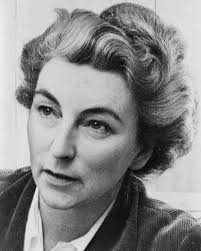
I’ve Read This Before

There must be very few celebrity biographies that are of great literary merit.

George Brown001

which I finished reading today, isn’t one of them.

No doubt good journalism, the book focuses on the political life, quarrels, gaffes and embarrassments of its subject, a leading, but desperately flawed Labour politician of my formative years. Undoubtedly hard-working, charismatic and energetic, Lord George-Brown intrigued me at the time when he changed his surname by deed poll to the hyphenated version, because he wanted to enter the upper chamber with the name by which he had been recognised all his life. He didn’t want to be addressed as Lord Brown.

The phrase ‘tired and emotional’ is a chiefly British euphemism for drunkenness. It was popularised by the satirical magazine Private Eye in 1967 after being used in a spoof diplomatic memo to describe the state of George Brown, who was invariably inebriated.

Paterson makes much of the Cabinet Minister’s class consciousness and the chip on his shoulder about university education; all this rather incongruous for a boy who progressed from a childhood in Southwark’s Peabody Buildings to a seat in the House of Lords.

Peabody_Square_Model_Dwellings,_Blackfriars_Road

Peabody Estates were the product of  ‘The Trust (was) founded in 1862 by London-based American banker George Peabody, who in the 1850s had developed a great affection for London, and determined to make a charitable gift to benefit it. His initial ideas included a system of drinking fountains (comparable to theMetropolitan Drinking Fountain and Cattle Trough Association scheme actually set up by Samuel Gurney and Edward Thomas Wakefield in 1859), or a contribution to the “ragged schools” of the Earl of Shaftesbury. In March 1859, however, he settled on establishing a model dwellings company. Three years later, in a letter to The Times on 26 March 1862, he launched the Peabody Donation Fund, with an initial gift of £150,000. The aim of the organisation, he said, would be to “ameliorate the condition of the poor and needy of this great metropolis, and to promote their comfort and happiness”. The paper reported, “We have today to announce an act of beneficence unexampled in its largeness and in the time and manner of the gift”.[2] Shortly before his death in 1869, Peabody increased his gift to a munificent £500,000.[3]

The Peabody Trust was later constituted by Act of Parliament, stipulating its objectives to work solely within London for the relief of poverty. This was to be expressed through the provision of model dwellings for the capital’s poor.’ (Wikipedia).

The trust continues to this day. Brown is an example of the potential for upward mobility even in those times.

Maybe it is because I lived through the 1960s that I did not, until reaching page 233 realise that I had read Paterson’s work before.

Ticket in book001

In my post Bookmarks I speak of my habit of leaving them in books I read. This has the additional purpose of reminding me that I have turned the pages in the past. Thus, this afternoon I learned that I had read the 1993 publication twenty years ago.  Maybe I should leave my markers nearer the beginning of the books.

The Earth

My return journey today from Nottingham was uneventful. Louisa drove me to Nottingham Station and Jackie collected me at New Milton.

I have quoted Heraclitus’s observation that ‘all is flux, nothing stays still’, in an earlier post. There is no greater example of this than the planet on which we live, which, as Richard Fortey, so eloquently describes in his ‘Earth An Intimate History’ which I finished reading this evening. I had plenty of time on trains in the last couple of days to make considerable headway in this book which I began reading a short while ago.

The John Day Fossil Beds001

The author is clearly a considerable geologist with a gift for explaining his science in a method intelligible to the layperson. His intention is to pass on his study of tectonic plates. I do not pretend that I will be able to remember what I have learned from this book, but I did find most of it understandable. His grasp of historical and prehistorical context makes it clear that human beings have come and gone in a minuscule fraction of the life of the earth. And my memory span will pale into insignificance in comparison to the lifetime of humanity.

Fortey explains how subterranean influences determine what happens both above and below sea level. He claims that ‘the face of the earth has its character scoured upon it by the elements, but they can only work on what has been set upon the surface by forces operating in the hidden depths. He has a gift for description, and uses plentiful simile such as ‘the chances of picking up a good rock sample [ with a simple dredge ] are about the same as catching a fish with a pair of tweezers at the end of a long pole’.

Beginning with volcanoes, the writer uses different well known phenomena to illustrate the various geological conditions and effects that he covers. Finally he covers the oceans and continents as a cohesive whole.

Bay of Naples001Bay of Naples002

He begins with Vesuvius and the Bay of Naples, and rounds it off neatly by finishing his summarising world tour at the same place.

A final quotation from T.S. Eliot’s ‘Little Gidding’ reinforces the point:

‘We shall not cease from exploration/ And the end of all our exploring/ Will be to arrive where we started/ And know the place for the first time.’

These illustrations are taken from my Folio Society edition of 2011, the first, of The John Day Fossils Beds National Monument, Oregon, USA,  being repeated on the cover boards.

This evening Jackie and I dined on Mr Pink’s fish and chips and pea fritters, with pickled onions and gherkins. Jackie drank Hoegaarden, and I drank Doom Bar.


The Peacock Spring

A welcome visit from Shelly and Ron, to collect the platinum anniversary photographs, broke the monotony of a morning spent on too-long-deferred paperwork. We enjoyed the usual ensuing conversation, naturally involving a certain amount of reminiscing.

Afterwards, beset by the raging gale-force winds, I visited the postbox.

Hanging baskets grounded 1Hanging baskets grounded 2

Despite Jackie’s distressed efforts to bring the hanging baskets and raised pots to protective ground level

Begonia fallenGeraniums and lobelia fallen

some were repeatedly blown over and their contents broken.

We haven’t dared approach the rose garden.

the-peacock-spring-aka-wenn-der-pfau-erwacht-fernsehfilm-grobritannienindien-enpgnh

In 1975 I bought a first edition of Rumer Godden’s ‘The Peacock Spring’. In 1996 the novel was filmed for television. Directed by Christopher Morahan and starring Peter Egan, Nareen Andrews, Hattie Morahan, Ravi Kapoor, with Madhur Jaffrey, this production was well received. It still took me until this year to read the book. I finished it today.

Set in 1959, a slow fuse burns with ever-increasing tension, until the explosive finale of the tale of a tragic relationship. The author’s trademark poetic description and insightful characterisation enables her to build an enthralling story of a flawed family and the conflict of cultural mores. I will not give away details, but can say that the picture to the left here shows the father with his two English daughters who have been brought to India to provide a veneer of respect to his relationship with the woman portrayed.

The Peacock Spring jacket

MacMillan’s publications comes in a striking book jacket designed by David Baxter.

It is not unusual for me to take forty years to read a book in my possession. As with this one, I sometimes wonder why it took me so long.

Cottage pie

This evening we dined on Jackie’s sublime cottage pie, crisp orange carrots and green cabbage. I drank more of the Cuvée St Jainé and Jackie enjoyed Blanche de Namur, a different Belgian wheat beer. The filmy quality of the above photograph comes from the wisps of steam rising from the dish, possibly encouraged by the layer of smoked cheddar cheese over the mashed potato topping.

Slightly Better Than Expected

The Canonical Hours are the seven prayer times in the day developed by the Roman Catholic Church. Ritualised offices are said, at three hourly intervals, in private or in groups. In her novel ‘China Court’, which I finished reading today, Rumer Godden has chosen to give each of her seven chapters a name of one of these hours.E3_double2

Mediaeval books of hours offered hand-written and -illustrated devotional works. They are the most common manuscript works of the period. Each of Godden’s chapters is headed by quotations from two of these.

James Joyce spans just twenty four hours in his rather more lengthy ‘Ulysses’, but Rumer Godden’s tale, a saga of four generations of occupants of ‘China Court’, covers a much greater time span. So why has she chosen to present her work in this way? That, I cannot tell you, for it would reveal too much. It is well worth reading the book to find out.

There is, of course, much more to relish in the novel. Slipping seamlessly backwards and forwards through the years, we learn about those who have lived in ‘China Court’. Opening with the death of a key figure, holding all the tapestry together, it is the story of the house, but far more, of those who have lived in it. We are treated to the author’s trademark beautiful, descriptive, writing and her insightful characterisation. An example, which fits with the time theme, is how seasonable changes in the garden are detailed. Close attention has to be paid to the narrative, for so seamless are her time switches that they are unannounced, so you suddenly find yourself transplanted into the lives of other generations. If, like me, you read in bed, it is not advisable to tackle this one when you are sleepy.

Ron barbecueing

Despite rain falling steadily all morning, Shelley and Ron persevered with their planned barbecue. By mid-afternoon the rain had cleared and the event continued, to be enjoyed by Jackie and me and most of the usual guests. Convivial conversation ensued. The delicious fare was similar to that provided on 9th. I drank Doom Bar and Jackie drank Carlsberg.

Traditionally, English Bank Holiday events are ruined by rain. This one wasn’t, as the weather was slightly better than expected.


Hedge Cutting

rumer-goddenIt was an exchange with Cynthia Guenther Richardson, herself a talented story-writer in Tales for Life, that alerted me to the fact that I had unread novels of Rumer Godden in my bookshelves. Cynthia’s enthusiasm led me to begin reading ‘A Candle For St. Jude’, yesterday, and finish it this morning. Like Tales for Life this book keeps the reader eager to learn the denouement. The work is full of beautifully described detail and insightful characterisation. I will not reveal the plot, but can say that all senses and emotions are carefully evoked. I mentioned the setting yesterday, and will add that the writer’s intimate knowledge of a dancing school clearly comes from her own training as a dancer, and subsequent running of her own such establishment.

Mike repairing Velux window

Paul and Mike from Double Glazing Doctor replaced the hinges in five of our Everest windows and repaired the leak in the Velux kitchen window, and this afternoon our new Samsung television was installed.

Butterfly Speckled Wood

A new visitor to our garden was, I think, a Speckled Wood butterfly.

I wandered down to Roger’s gate and back, in time to witness hedge cutting in Downton Lane.Hedge cutting 1Hedge cutting 2

Hedge cutting 3

This presented some interesting traffic problems.

Early this evening Becky, Ian, and Scooby arrived for their holiday with us. We all dined at The Red Lion in Milford. My choice of meal was a meaty Mexican chilli burger, served with crisp salad and chips. Jackie couldn’t eat all her hunter’s chicken, so I enjoyed some of that as well. My drink was Ringwood’s best bitter.

In Cold Blood

Jackie, now recovered, drove me to and from New Milton,so that I could travel by train to Waterloo and back, for lunch with Norman.

Rubbish

Many people seemed to prefer lobbing their rubbish over the railway bridge or the chain link fence onto the embankment, to using the bin provided. Those responsible for the planters on the station platforms, however, clearly take pride in their appearance.

Station planter

Isla, aged ten months, has been walking for a month. Not all the time. Able to stand on her mother’s lap, with ‘one shoe off, and one shoe on’, she took pleasure in repeatedly chucking one at my feet all they way from New Milton to Winchester. Her delight gave her the opportunity to display her two front teeth every time I picked up the missile. I couldn’t resist telling the child’s mother the story of Becky’s milestones.

Tas restaurant

Having arrived at Waterloo, I was to meet Norman at Tas Turkish restaurant in The Cut, a short walk from the station. Wall tiles

On a wall on the taxis’ Approach Road opposite the station, a few mosaic panels have been fixed. I rather like the Escher one. Cubana restaurantA set of steps brings you down to Lower Marsh. From there, passing La Cubana restaurant with its enticing mural, I continued to the Cut, on the corner of which stands The Old Vic, and proceeded to my rendezvous with my friend.

We began with falafel and garlic sausage starters. Our main course was the Tas special, a tender lamb dish. The house red wine was very quaffable, as was the coffee to follow. The prices were reasonable and the service good.

Jackie had not been idle whilst I was thus engaged. She bought two obelisks for roses and four more plants. At Redcliffe Nurseries she at last identified the lost label rose shown yesterday. It is the hybrid tea, Rose Gaujard.

On the train, and back at home, I finished reading Truman Capote’s ‘In Cold Blood’. I believe the term faction would adequately describe this work, based on the apparently random murder of a family of four in 1959. Capote thoroughly researched the event, the period leading up to it, and the eventual trial and execution of the perpetrators. That I take as fact. Obviously the victims could not be interviewed, but a number of the main characters were, not necessarily by Capote himself. It is therefore difficult to be sure what fiction the author has woven into his narrative.

The writing is clear, flowing, insightful, and descriptive. We can believe that Capote’s imaginative sections are true to the characters he is dissecting. Even on publication of this best-seller, readers knew who had committed the murder, and what was their fate. Capote’s skill has been, by moving backwards and forwards in time and place, to give us a gripping and credible detective story, not marred by the fact that the horrific events actually happened.

Whether or not it was the writer’s intention to point up the effects of childhood and mental ill-health on psychopathic behaviour, he certainly makes a case for them.

After more than half a century we still read of apparently random gun killings. Has anything been learned?

In Cold Blood cover

My Folio Society edition is illustrated by contemporary and earlier photographs, one of which adorns the front cover board.


The Task Ahead Of Me

Back drive

A.P. Maintenance have done a grand job on the back drive. The section in the foreground, abutting the road, is to be concreted next weekend.

Clematis Montana

The clematis Montana is now spreading down the dead trunk.

Rhododendron

More rhododendrons are in bloom.

Fly on tree peony

Yellow flowers, like those now appearing on tree peonies, attract insects, such as this iridescent-winged fly.

Today I finished reading ‘To Kill A Mocking Bird’, Harper Lee’s masterpiece from 1960. So many people have responded to yesterday’s post saying that it is one of their favourite books, and even more that it is on their reading list, that I will not give details here. Instead I will describe its impact. Set in 1935, this is a tale told through the eyes of a little girl from the ages of four to eight. It can be seen as an insightful piece of character building based on keen observation and a knowledge of what childhood was like. It also deals in a sensitive way with a profound social issue that was still relevant in 1960. For good measure there is a side-issue of a mystery beautifully solved at the end.

The writing is fluid. It has a gentle pace that picks up fast as the story unfolds. Characterisation and descriptions of small-town life are perfectly credible.

I did not want to put it down, and therefore consumed it in two sessions, one of several hours.

If it’s on your list, read it. If you intend to return to it, do so.

To Kill A Mocking Bird illustration

I probably won’t, because I’ll never manage to open many of my unread books. As I popped my Folio Society edition, that is enhanced by the fine pen and ink sketches of Aafke Brouwer, back onto it’s shelf, I was reminded of the task ahead of me.Bookshelf

The eight volumes on the left are some of my Heron Books set of the works of D.H. Lawrence from 1969, a reasonably produced cheap illustrated edition within the budget of a young family man. I have read most of them, which is more than can be said of the John le Carre quintet. I have read The Night Manager, but don’t remember much about it. ‘Our Game’, hasn’t even been removed from its cling film wrapping. The Aladdin I bought because of Errol le Cain’s illustrations. The next four I haven’t opened. I may have read ‘A Very Long Way From Here’, which I think was aimed at teenagers, although I was much older. Of the rest, only Doris Lessing’s ‘The Fifth Child’, and the two by Andrea Levy have been read. ‘Small Island’ describes the disappointing experience of early Jamaican immigrants to England; and ‘Fruit of the Lemon’, the, equally disillusioning  visit of a descendent to the island from which her family originated. If you like ‘To Kill a Mocking Bird’, you will like these. Doris Leslie’s ‘Peridot Flight’ is part of my Auntie Ivy’s collection, given to me when she moved into a care home at the end of her life. Maybe I’ll read that before my days are over. Maybe I won’t.

This evening we dined on Jackie’s delicious sausage casserole (recipe), mashed potato, with crisp carrots, cabbage, and runner beans, followed by profiteroles. I drank Alexis Lichine cute exceptionnelle, Bordeaux superieur 2013, and Jackie imbibed Hoegaarden Belgian beer best before 15.08.16.

Chesterton

We began this morning by Jackie driving me to the Post Office at Milford on Sea to post and Easter present with a card I had made yesterday featuring lambs who first appeared in the second ovine picture illustrating ‘The Nursery Field’.

Soon after we returned home Giles popped in for a visit. Knowing that I was reading G.K. Chesterton’s Father Brown stories, he brought me two published articles that he knew would interest me; one by himself, and the other by Jorge Luis Borges, the Argentine short-story writer who is one of his favourites.Chesterton

Giles Darvill’s own article was published in The Chesterton Review of November 1996, the cover of which bears rather a good pencil drawing of the subject. Entitled ‘With the Chestertons in Poland’, this deals with a trip the English writer took in 1927. It is based on letters and the log of Giles’s aunt, Dorothy Collins who was Chesterton’s secretary, still working for him at her death sixty two years later.Chesterton  photo

BorgesI couldn’t do much to enhance this photograph featuring the list of people above it, including Aunt Dorothy labelled 3 on the far right.

Borges’s piece is a general observation making comparisons with such writers as Edgar Allan Poe and Franz Kafka.

I read and enjoyed both essays.

This afternoon I took a painful walk around the garden and a few yards into Downton Lane. My difficulty was no doubt brought about by, despite the Dosset box, forgetting to take my breakfast medication.

DaffodilsClockI am happy to be able to say that many of the daffodils that Jackie planted on the back drive in the autumn have survived the attention of the small creatures mentioned in ‘Preparing For The Party’.

For Christmas, Becky and Ian gave us two garden clocks. One has been placed on the back wall of the house, and the other on the orange shed door at the far end of our plot, seen here through the peeling eucalyptus.Dandelions and ladybird

On Downton Lane a black spotted red ladybird was making its way towards bright yellow dandelions.

This evening we dined on rack of pork ribs in barbecue sauce, Jackie’s special fried rice and green beans followed by baklavas. Jackie drank Hoegaarden; I finished the Teroldego Rotaliano and began Blason des Papes Chateauneuf-du-Pape 2011.

Father Brown

I’m not feeling any better today. This is a little frustrating because yesterday I had been able to think, which hadn’t been possible the day before, so I hoped to be running around again by now. I always was an optimist. Crystal, another blogger, had commented on how difficult it is to be patient with illness. I imagine that is what she meant.

Jackie, however, improves by the day.

From the amount of coughing I have been engaged in, my stomach now feels as if I have done a few hundred sit-ups. This is not so fanciful when you consider that in my thirties I had a period of performing more than three hundred every morning, until I decided that eleven minutes was a bit too long and boring to spend on this rather excessive exercise.

My Folio Society edition of G.K.Chesterton’s Father Brown Stories consists of two volumes, each comprising two of  the four books. Yesterday evening I finished the first book, called ‘The Innocence of Father Brown’, and containing a dozen superbly crafted short stories, in elegant, flowing, prose. The fact that the eponymous amateur sleuth is a Roman Catholic priest is really incidental. He is an entertaining little character.

Colin Dexter, the author of the Inspector Morse series of novels, has written an interesting and knowledgeable introduction, and Val Biro’s skillful illustrations enhance the 1996 publication.Father Brown cover

Unfortunately my book now has some minor water staining on its front cover. I must have unwittingly spilt some from my bedside glass in the dark when I was rather dopey.

I have mentioned before that I was encouraged to read these books by watching the TV series. This is described as based on Chesterton’s characters. The only story I have now both read and watched, ‘The Invisible Man’, has developed some of the characters and radically changed the tale. Perhaps that is the only way the author’s little gems can be transferred to an hour long dramatic production.Father Brown illustration

The text illustration I have chosen to insert here is one to ‘The Invisible Man’. I won’t say how, but it ably demonstrates the point I make above.

This evening, for the first time for some days, Jackie felt able to drive out for a Chinese Takeaway meal, and I thought I could manage to sample some of it. In the event I couldn’t eat much, but there is always tomorrow.


Orlando/Vita

Lake on fieldStream overflowing

Heavy overnight rain had left lakes on the landscape and pools on the roads. Tractor tracks disappeared into a field now occupied by waterfowl. On my walk home from  car trip to Milford on Sea, I took one look at the overflowing stream alongside the footpath leading to the nature reserve, and decided to take the Park Lane route to the clifftop. As I received a sparkling cascade thrown up by a speeding motorist, I realised I may have been slightly mistaken in this.

Councillor Matthew Goode has been helpfully engaged in a conversation on Streetlife about the replacement of the footpath that fell into the sea last summer. Local residents are concerned about the time this is taking. It seems to me it would be rather rash to replace it before proper geological studies have been undertaken. It is easy to see where the next falls could possibly occur. The dog in the photograph was perhaps conducting its own survey.

Dog on clifftop

Crow on stumpCrowsWhenever rooks or seagulls find themselves a convenient post on which to perch, they are dive-bombed by relatives wishing to supplant them, and generally take off in a hurry. So it was this morning.

Later this afternoon, I finished reading Virginia Woolf’s novel ‘Orlando’. Woolf herself termed it a biography, which was why it was less popular with booksellers than with the reading public, because the shops believed biography did not sell as well as the fictional genre. Quentin Bell, in his introduction to my copy, describes the work as a prose poem.

James Joyce, in his lengthy novel ‘Ulysses’, manages to occupy no more than twenty four hours in the life of Leopold Bloom. The shorter piece from Mrs Woolf has Orlando, born at the end of the sixteenth century, still living in 1928, changing sex from male to female at the midway point, bearing two children, and reaching the age of just thirty- six by the end of the book.

Having met in 1922, Virginia Woolf and Vita Sackville-West’s friendship developed into a two or three year sexual relationship, perhaps culminating in this gift from Virginia to Vita, first published in 1928. The writer has found a fascinating form with which to celebrate her lover; her lover’s family, the Sackvilles; and Knole, their ancestral home. Orlando/Vita glides through three centuries of largely indulgent life in elegant surroundings described in beautifully flowing, opulent, and gloriously seductive descriptive prose. Woolf was having fun, even to the extent of calling it biography.

Vita Sackville-WestIllustrations of the adult, female, Orlando are photographs of Vita Sackville-West.

My copy purports to be no. 191 of a limited edition of 1000 of the Hogarth Press Collected Edition published in 1990. The £1 pencilled on the flyleaf suggests I bought it second-hand with no dust-jacket. Although the boards look genuine, I was surprised to find the book perfect-bound; containing several typographical errors; and a number of blank pages, not, as in Lawrence Sterne’s ‘Tristram Shandy’, deliberately left so by the author.Stamp

Two stamps, one superimposed on the other, giving an impression reminiscent of the London Underground, are in what my uneducated eye imagines to be Chinese. The only signs that the book may have been read before me were a few splashes of what I hope is coffee on the page edges; and pages 212/213 pasted in. Where has it been, and who drank the coffee?

Second-hand books do often give scope for such speculation.

Becky is, I know, not responsible for the stain, because that was in place when I lent it to her recently. She did, however, take the trouble to find the two missing pages of text on the internet and stick them into the blanks. Other empty pages should be part of the appendices.

This evening we dined on Jackie’s juicy chilli con carne and my plain boiled rice, followed by Pearl’s delicious Dutch Apple Cake with a.n. other’s cream. I started on an excellent bottle of Arene des Anges Costieres de Nimes 2013 given to us for Christmas by Helen and Bill.