A Knight’s Tale (13: A Second Revolution)

By July 1933, Mabel was to take up a post at Chanak (now Canakkale) in the Dardanelles, then under Turkish rule. This was to prepare a boy and girl for an English school. Although there appears to be no record of this engagement it is highly likely that it was with

the Whittall family, as attested by my great aunt’s water colour of 1936 of the group sharing a duvet. There is much material on the history of this influential family on Google, and the gentleman with the book does bear some resemblance to published portraits.

After 2 1/2 years in Turkey Mabel returned to England two months before her 94 year old mother died from a fall on the stairs.

Her next post was in Ceuto, Spanish Morocco, in time for the Spanish Civil War to break out and subject Miss Knight to a second Revolution. This was bad enough, but not as dangerous as the Russian one, even though the Communist party was dropping bombs on the oil tanks at the location.

The house was close to the refinery and, therefore, in a very dangerous spot. Mr Delgado, father of Mabel’s two girl pupils, had charge of the oil supply for the ships.

On one occasion, seeking safety from the bombing, my father’s aunt fled into the market, where, in the street, she was horrified to meet a man carrying his child’s head in his hands.

The position near these oil tanks became so dangerous that Mabel and the girls were sent to Mr Delgado’s olive plantation near Seville, where they remained until the war was over.

Whilst in Seville, Mabs accepted an invitation to watch a bull fight. She records that “I shall never forget the horror I experienced seeing the torture of the animal. And I would advise no lover of animals to witness this horribly cruel sport”.

Running For Cover

Following a warning of further fierce winds we carried out our normal protective preparations early this morning. Although still strong the gusts were not as forceful as yesterday.

Soon after lunch we took a drive into the forest to take our minds off any possible storm damage.

As we approached Smugglers Road car park we witnessed the most unusual sight of a quartet of ponies racing down the hillside. Naturally we turned in to investigate the equine objective.

There, apart from a more nonchalant trio preferring grass to whatever goodies were on offer, the animals gathered around a group of promising visitors.

My attention strayed to the purpling heather on the verges and upward on the hillside. As I picked my way up a steep and very narrow pony track, I had forgotten that, with the current state of my knees, it is far easier to climb than descend. When I realised I would have difficulty getting down, and would not therefore be nimble enough to negotiate meeting a pony face to face, I sidled crablike to the bottom. I really must keep a stick in the car – and remember to take it out.

On my return manoeuvres I was happy to see the ponies still occupying the car park.

A group of walkers set off by a different, gentler, route

So far the rain had kept off. Enough, at Linwood Bottom, for me to be tempted to stray to photograph

a number of white cattle from a different angle.

No sooner had I disembarked than a heavy downpour sent me diving into the Modus; the cattle lurching to their feet; and a gentleman and two boys passing the bovine bunch in their dash for cover.

Having read enough of David Copperfield to scan four more of Charles Keeping’s memorable illustrations, I did so.

‘Mr Micawber accepted my proffered arm on one side, and the proffered arm of Traddles on the other, and walked away between us’

‘With the veiled face lying on his bosom, Mr Peggotty carried her, motionless and unconscious, down the stairs’

‘The door of the boat-house stood open when I approached’

‘ ‘The Devil take you!’ said Uriah, writhing in a new way with pain’

All the portraits in these examples remain faithful to earlier versions.

Tonight we dined on a mixed meat melange with tasty gravy; new potatoes, both boiled, and fried with mushrooms; crunchy carrots; and tender cabbage. Jackie drank more of the rosé while I drank Chevalier de Fauvert Comté Tolosan Rouge 2019.

A Forest Walk

During this pleasantly sunny morning, I was mostly dead heading while Jackie continued with her general garden maintenance.

After lunch I posted https://derrickjknight.com/2021/08/07/a-knights-tale-12-the-night-of-the-panther/

We had been promised light showers for the afternoon, and this is how it began, so my Chauffeuse drove me to the Rhinefield Ornamental Drive and parked in one of the designated car parks while I took a walk. The rain kept coming, but it was mild and sporadic enough for me to set off for twenty minutes each way, crunching along a gravel path and pine cones carpeting the forest floor

through the majestic giant redwoods and their neighbours

some of which, having fallen, would take their time returning to the soil. In answer to Yvonne comment below, I have discovered that “Managing forest land often generates lots of woody branches, pieces of trees and other loose woody material — slash in other words — from tree harvesting or thinning. While many landowners and managers look upon this material as a disposal dilemma, it also is a rich, and frequently overlooked, opportunity for to enhance wildlife habitat. Arranging slash materials into piles can provide birds, mammals and other wildlife in the forest with the food, water, space and cover they need.” (https://washingtondnr.wordpress.com/2017/02/14/not-just-another-stack-of-dead-branches-habitat-piles-for-wildlife/)

I believe Forestry Commission volunteers make the stacks we see.

At first there were many other groups of walkers taking a similar route.

This was to change in a moment, as quiet adult voices and shrill cries of children were drowned by the increasing crescendo of pattering precipitation misting the trees,

puddling the path, and running down my specs and my camera lens.

This was at my turn round point and continued, soaking me to the skin beneath my allegedly showerproof jacket, until my mud-spattered sandals, sans socks, reached the car. Just one family of three passed me in the rush to get out of the rain. The mother informed me that she had wet pants. “Is that all?” was my reply.

With all fresh ingredients, Jackie repeated yesterday’s menu for dinner tonight, with which we drank the same beverages.

A Knight’s Tale (12: The Night Of The Panther)

During these last two years, Mabs received visits from an old friend of St Petersburg days and was persuaded to go to Estonia, the new state that had just obtained its independence from Russia.

English was very much in demand, and there would be plenty of pupils, so off she sailed to Reval – now Tallinn – the capital of Estonia. There she found life very interesting and thoroughly enjoyable.

From her own rooms in the centre of the capital she taught groups from the Ministry; from the Banks; and pupils from the high schools.

In the summer months balls were given on board the various English ships, such a Cumberland, York, Neptune, and other light cruisers, brightly decorated for the occasion. At Christmas there were evening parties in the snow, sleigh bells, and supper at a seaside villa. Easter was equally festive.

Many Estonians and Baltic Germans kept up some of the old Russian customs including special services in the Russian churches, with processions of priests and choristers.

In 1929, when Mabel had been in Tallinn seven years, she persuaded her younger sister, Evelyn, to join her. Evelyn did so, and her part in the saga will come later.

The global depression had reached all Europe, including Estonia, by 1931, which meant English lessons were not quite so plentiful.

In July 1932, when the eldest sister, Ethel, with her severe health problems consequent upon her revolutionary experience, was having difficulty in letting rooms in the Wimbledon house that the two of them were jointly buying, [Mabel] “decided to leave Tallinn, and turn over the teaching and my furnished room to my sister.”

After “getting things straight” in 18 Bernard Gardens SW19, she began to look for another post abroad. Nothing daunted, now aged 51, my father’s aunt accompanied an English woman and her two daughters, aged 15 and 13, joining her husband in India for six months. Mabel’s task was to prepare her charges for school in England. Her “time in India was very comfortable and the girls were not spoiled and very easy to teach”. They “even had an electric fan in the schoolroom.”

One night my intrepid great aunt joined a panther hunt. “The natives selected a good tree and made a platform in it” where she and two others “spent the night watching for the panther – gun ready. A goat was tied up near the tree as a decoy, but the panther was too wise and managed to slink away after getting the hunters’ scent.”

The six months being up, Mabel returned to England with the family.

Frenetically Flittering

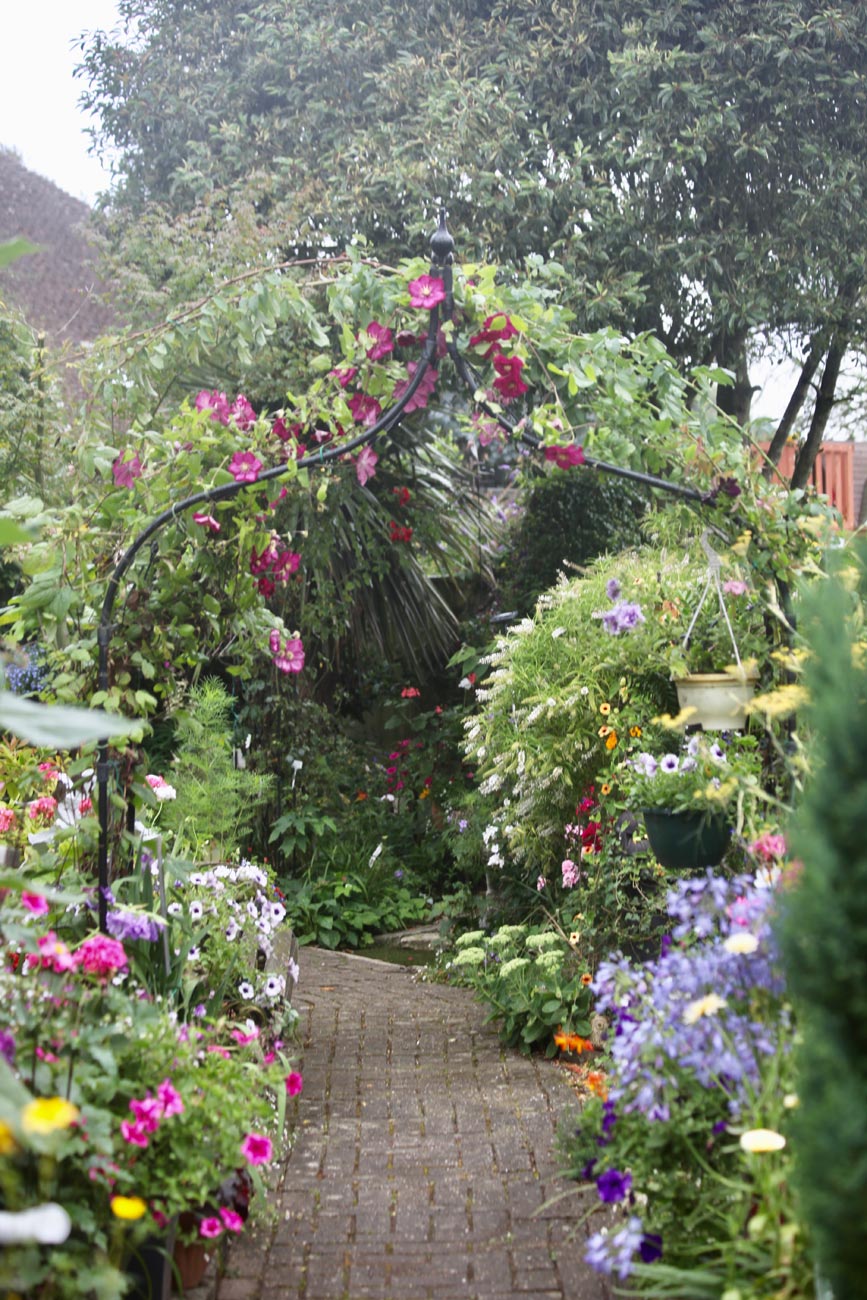
With overnight winds having ripped a stem from the Wedding Day rose, yet spared the clematis on the Agriframes arch,

Jackie was out early this morning laying down garden furniture once more, and picking up smashed pots and broken stems. Gale force winds continued throughout the day.

Undeterred, she set about refurbishing the Head Gardener’s Rest, and photographing the process.

First going;

then gone;

then rebuilding;

and finally, completed;

after which, basking in the sunshine, she toasted it.

My still photographs show neither the waving branches in

the front garden,

higher roses such as Compassion and Penny Lane,

nor the Weeping Birch swaying above its eponymous Bed including the proliferating Crinum Powellii.

Some begonias are sheltered enough to remain unscathed.

Even the frenetically flittering Small White butterflies were forced to take rests

on swaying Verbenas bonariensis

and the last remaining bloom on this geranium.

The Veronicastrum Virginicum Album was displaying signs of osteoporosis, but For Your Eyes Only seemed to find enough shelter in the Rose Garden.

Later this afternoon I posted https://derrickjknight.com/2021/08/06/a-knights-tale-11-a-pack-of-ravening-wolves/

This evening we dined on cod, chips, and peas with which Jackie drank more of the Cotes de Provence rosé and I drank more of the Fleurie.

A Knight’s Tale (11: A Pack Of Ravening Wolves)

I have inserted the following section into https://derrickjknight.com/2021/08/05/a-knights-tale-10-after-the-revolution/

Mabel further tells us:

“Hardly a night passed without hearing shots and people shouting and running. After a while I got accustomed to it so that it did not wake me.

At night the soldiers would raid the grocers’ shops and get out the wine. One day outside my house I saw a stream of wine running down the gutters. The soldiers had been ordered to get rid of all the wine they could find, and they were pumping it out of the cellars.

Clothing got to such a price that people were often stopped in the street and forced to take off their clothes, boots, and other articles, going home almost naked. A girl of 18 years was made to take off all except her chemise. “now go home, dear, or you will catch cold, they said. She was a friend of one of my pupils.”

It seemed an important omission.

To continue, in Mabs’s own words:

“One of our first preparations was to have a sale of our smaller properties – such as linen cloths, embroideries, and objects which we could not take home with us. Then followed a very curious sight – English ladies standing in the street displaying costumes, coats, etc. How eagerly these were bought by the Russians. On the day of departure the drossy driver, who came to fetch my elder sister with her luggage, stopped her when she was to clean out her porridge pot before giving it to him. “Oh, please let me have it as it is” he cried, not wishing to lose even a mouthful of food, so precious as it was. The journey was by no means pleasant – one consoling thing being to be able at the different stations where we stopped, to take our teapots up the platform to the hot water supply and get a cheering cup of tea.”

Remembering that WW1 was still not over, this was their convoluted route home:

“We travelled via Finland, crossing the Gulf of Bothnia to Sweden and through to Norway.

At Voss in the hotel we had a most wonderful meal, the best we had had for months. I am afraid we all looked like a pack of ravening wolves, and indeed manners seemed a detail. The waitresses just stared at us in amusement. One day we were taken for a lovely drive round the fiords.

The came the dangerous crossing from Bergen to Aberdeen.

After staying one night in Aberdeen we arrived in London in October, about two weeks before the Armistice.”

Mabel and Ethel stayed at a hostel in London. After a few days they both found jobs: Mabel, fluent in German, at the Prisoners of War Bureau; and Ethel doing secretarial work at the Grand Hotel.

After the Bureau closed down Mabel returned to her normal profession in May 1920. This was a pleasant two year post teaching the four daughters of General Hessey at Hellingley, near Eastbourne.

Each summer, in order to keep up her languages and foreign travel, she took holiday engagements in Holland and Belgium.

Clinging Precariously

Knowing that we could expect heavy rain this afternoon, Jackie spent all morning

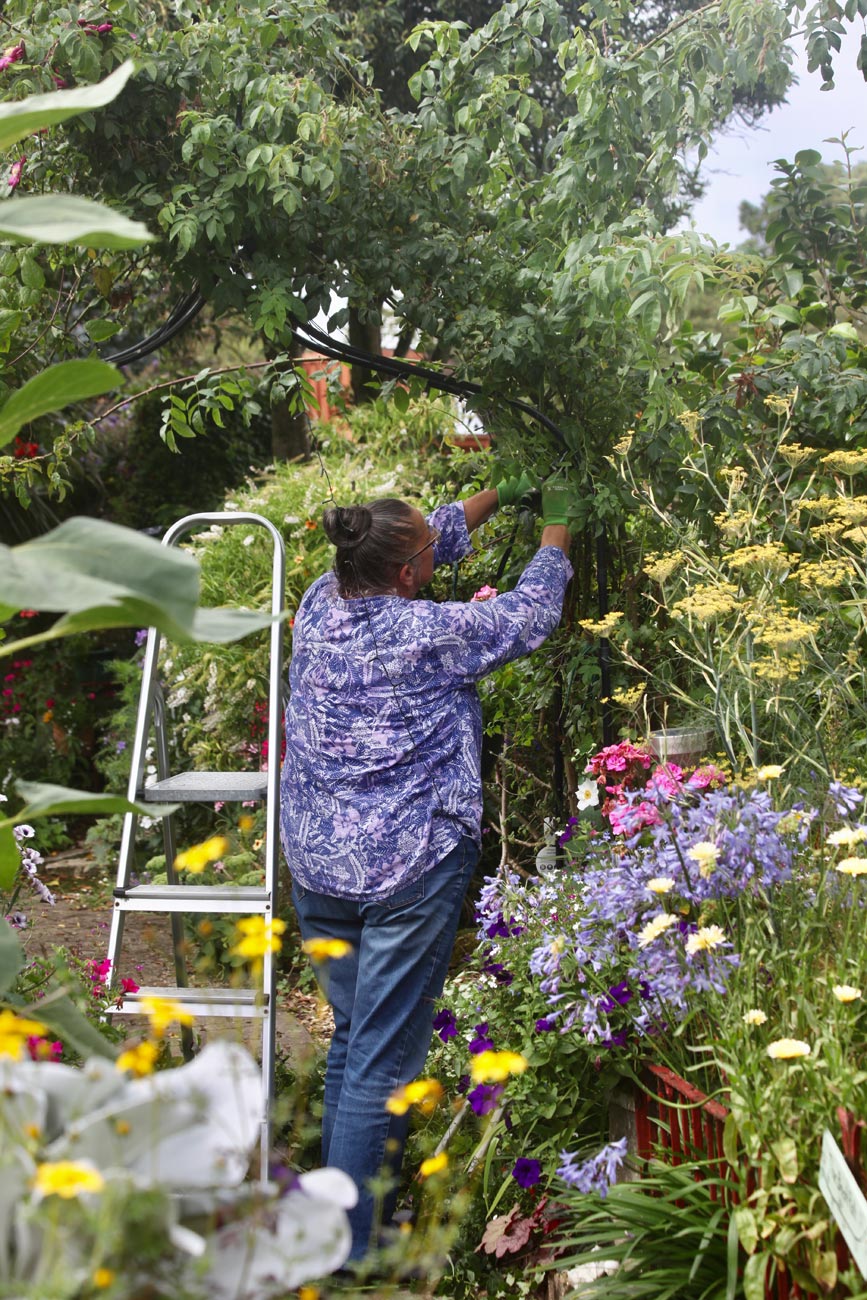
trimming Wedding Day on the Agriframes Arch which would be bound to be ravaged.

She completed the task as the rain began.

I carried out dead heading, a little clearing up, and photography.

Phlox are doing very well this year.

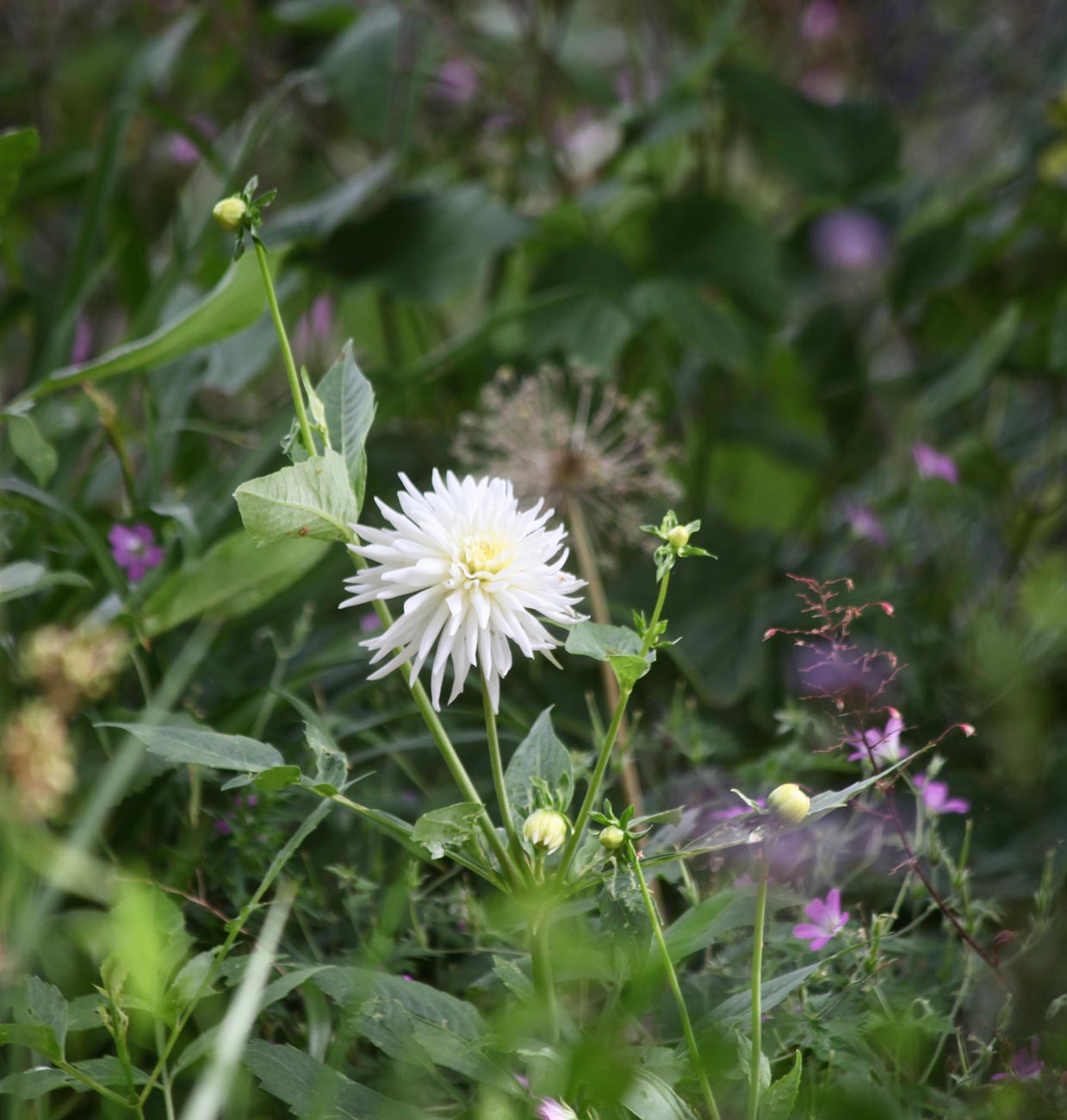
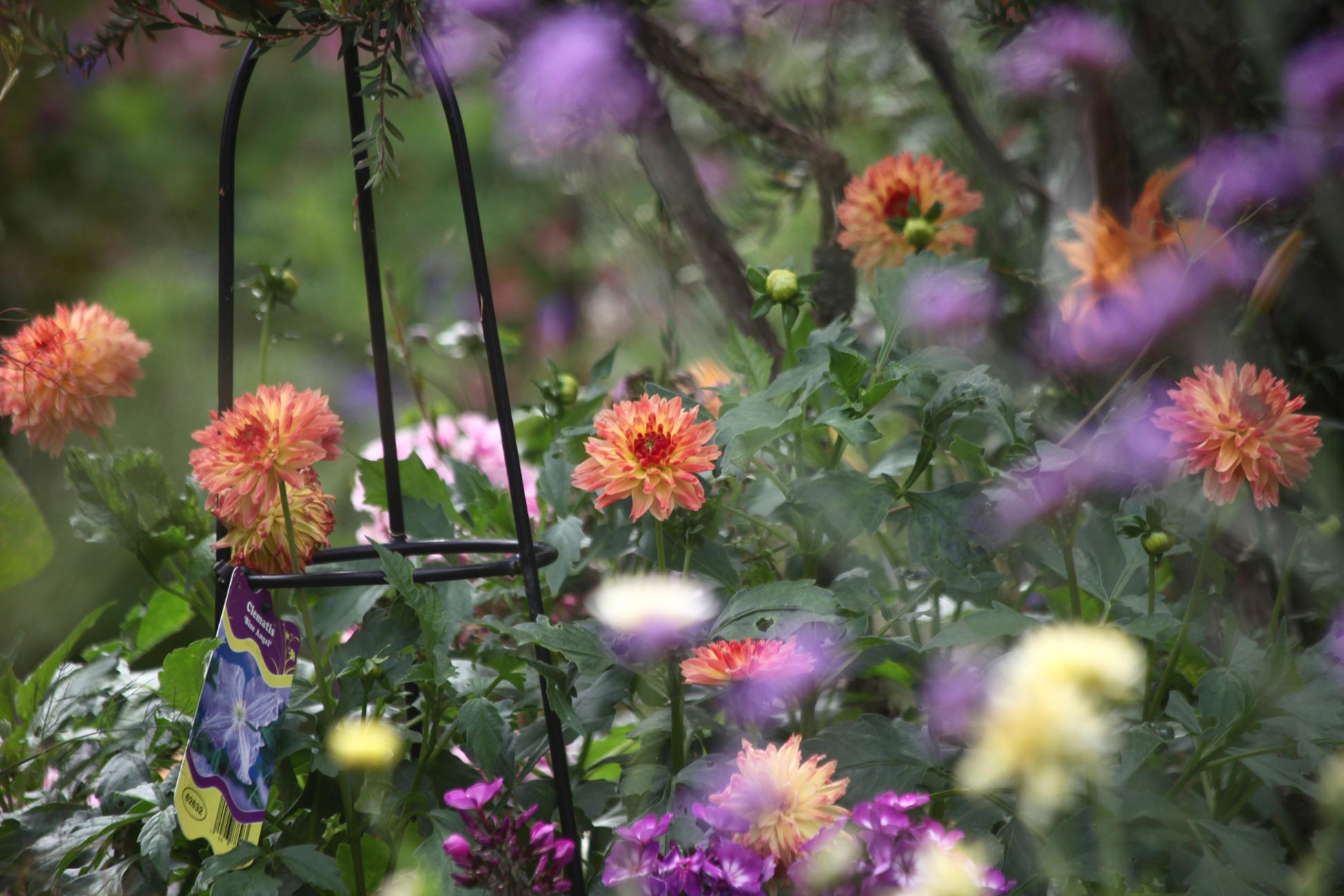
It is the season for dahlias

and Japanese anemones.

Fuchsias are enjoying it too. These examples are Garden News, Magellanica, Mrs Popple, Hawksmoor, and Sarah’s Delta.

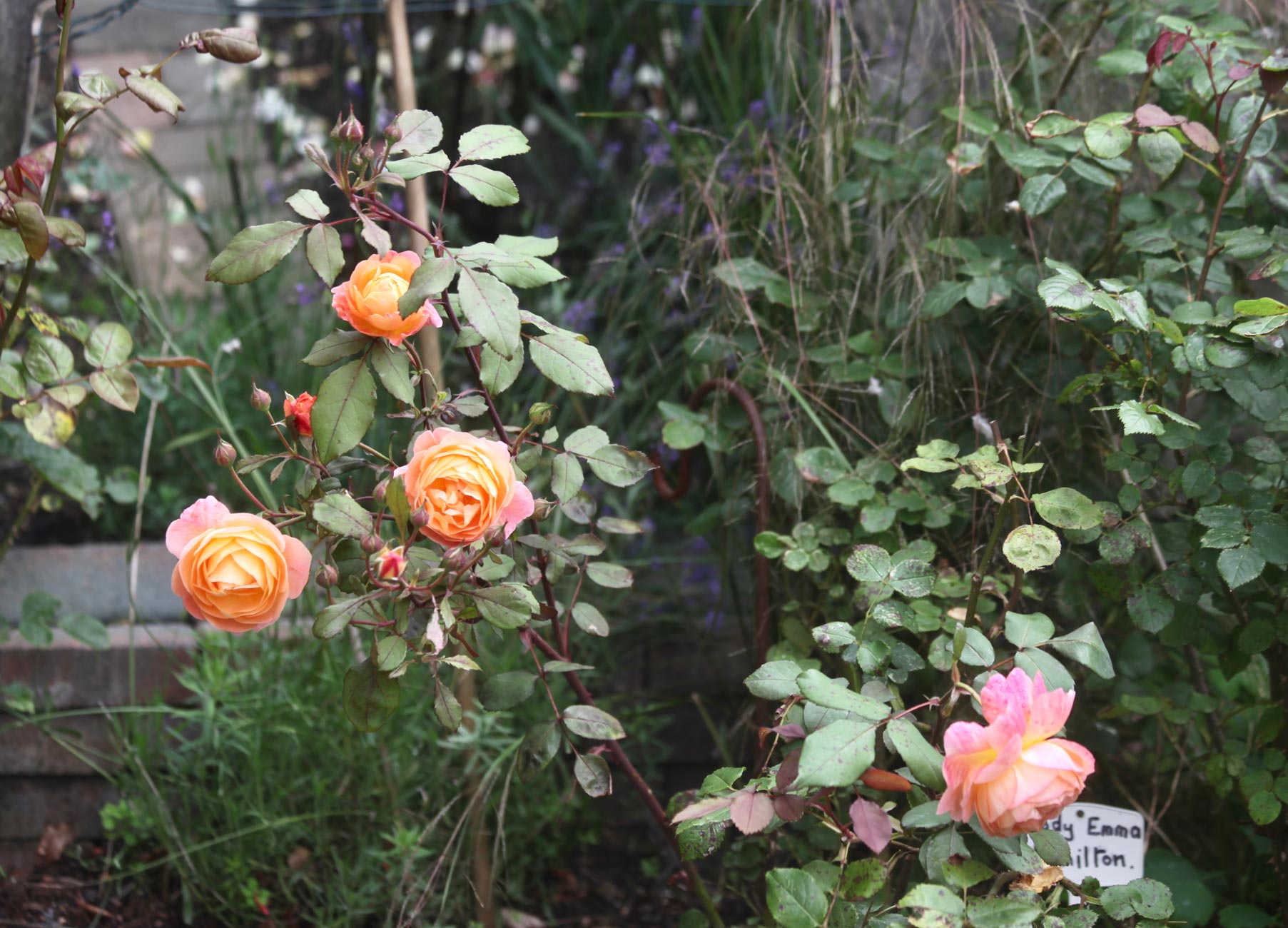
Roses picked out by my lens include Alan Titchmarsh, Summer Time, a pink climber, Deep Secret, and Lady Emma Hamilton.

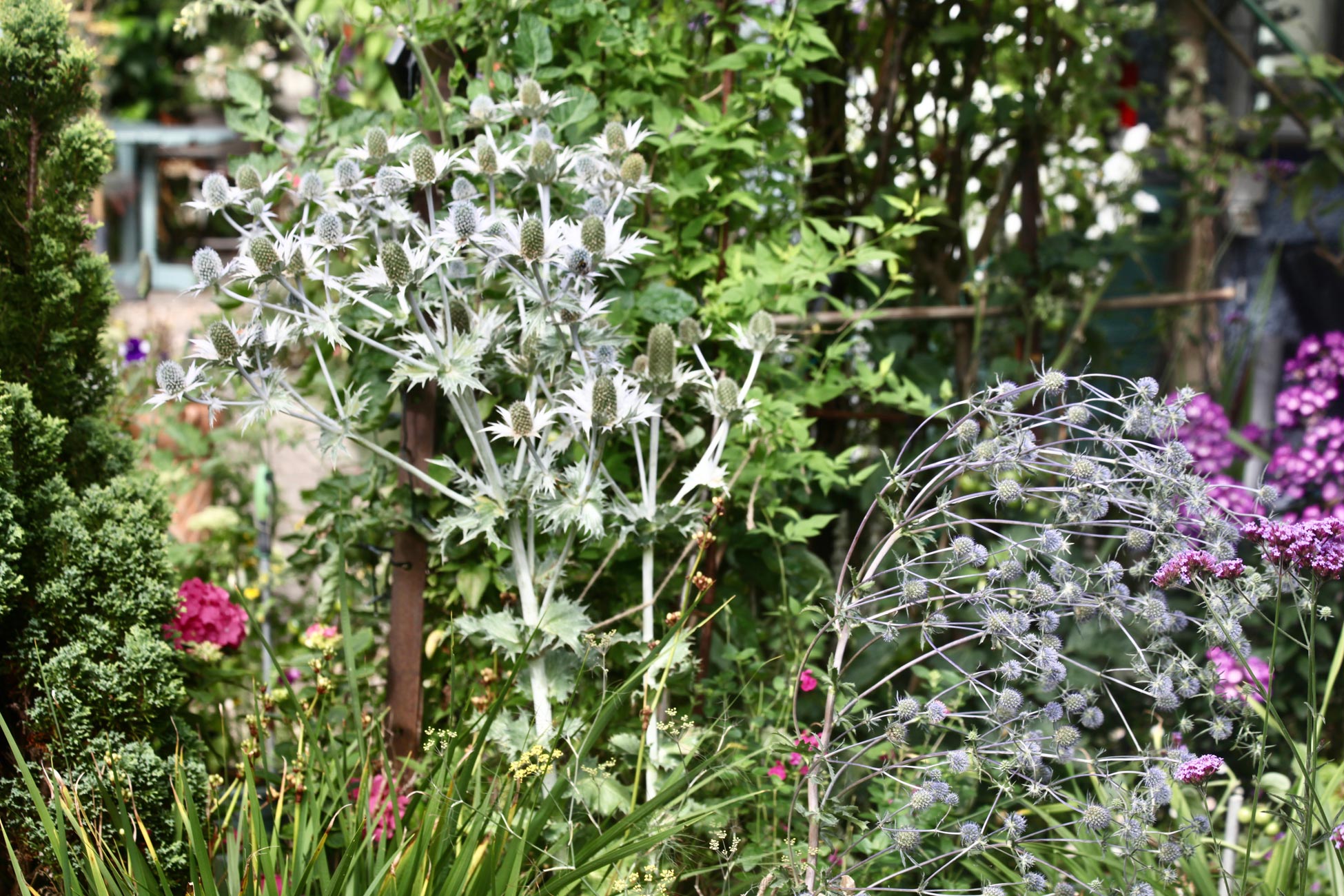
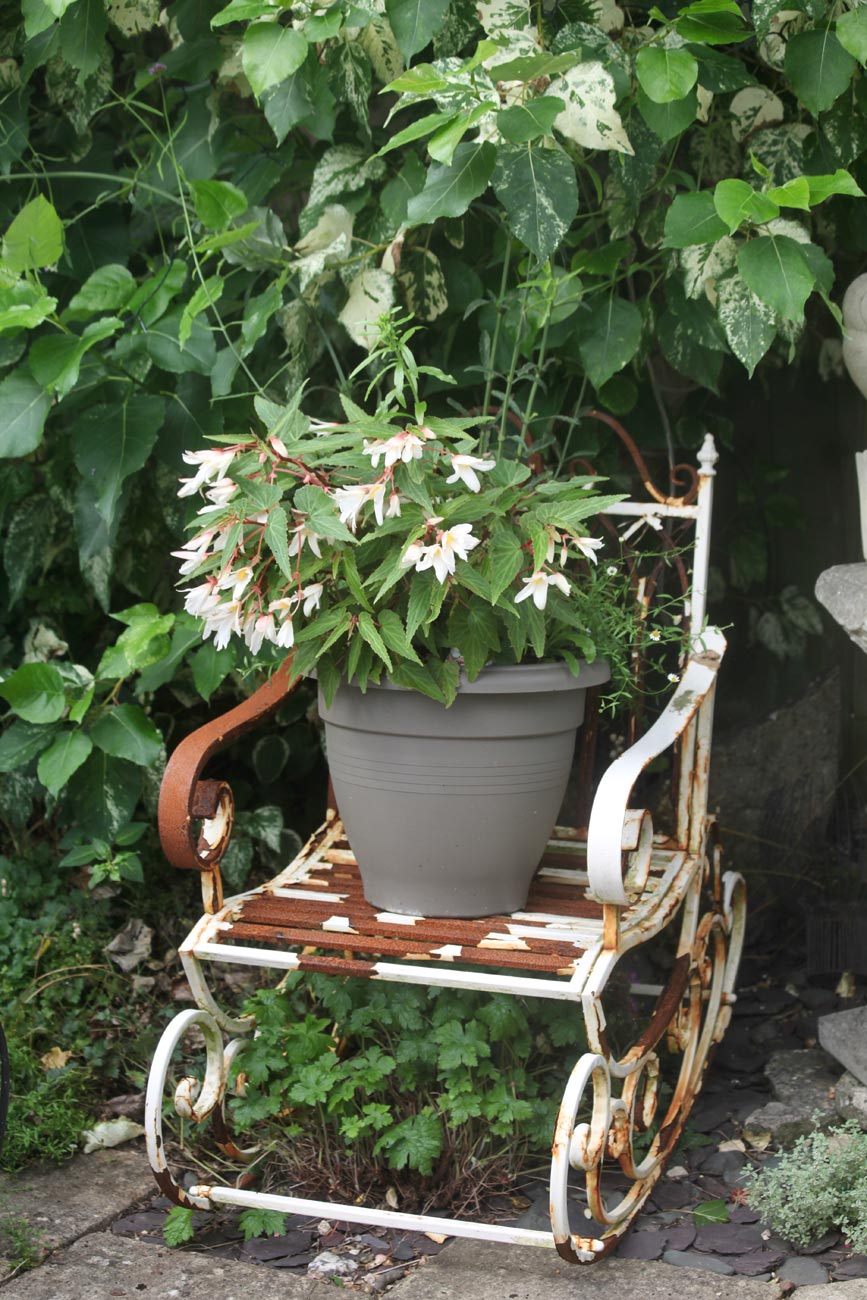
Other gems include two varieties of eryngium; blue agapanthus contrasting nicely with pale calendulas; the swamp lily Crinum Powellia; whiskery St Johns wort; White Pearl sweet peas and; potted begonias reclining on the rusty rocker, now a little unsafe to use for its intended purpose.

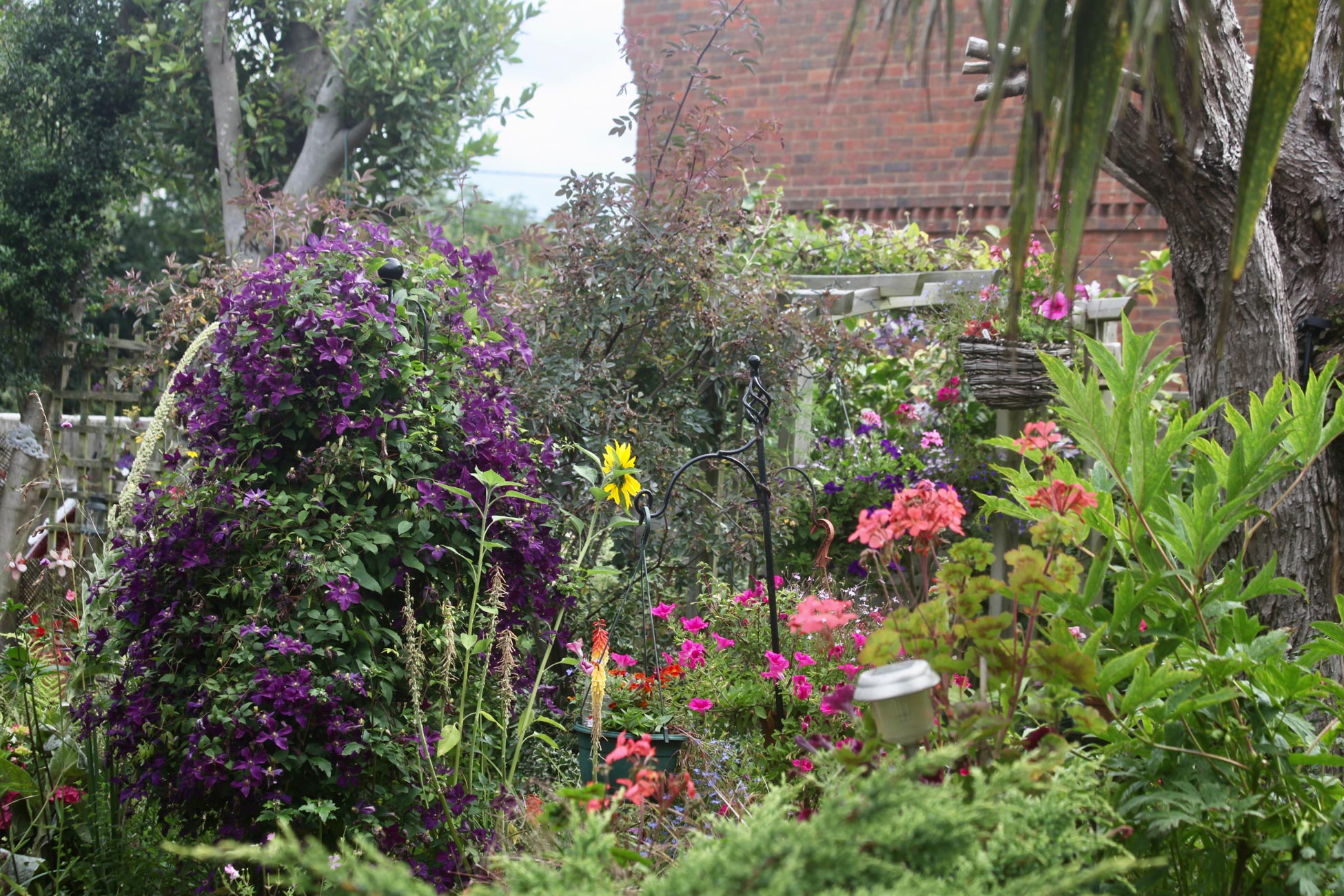
In addition to the clematis still sprawling on the Agriframes Arch above, we have many others, including

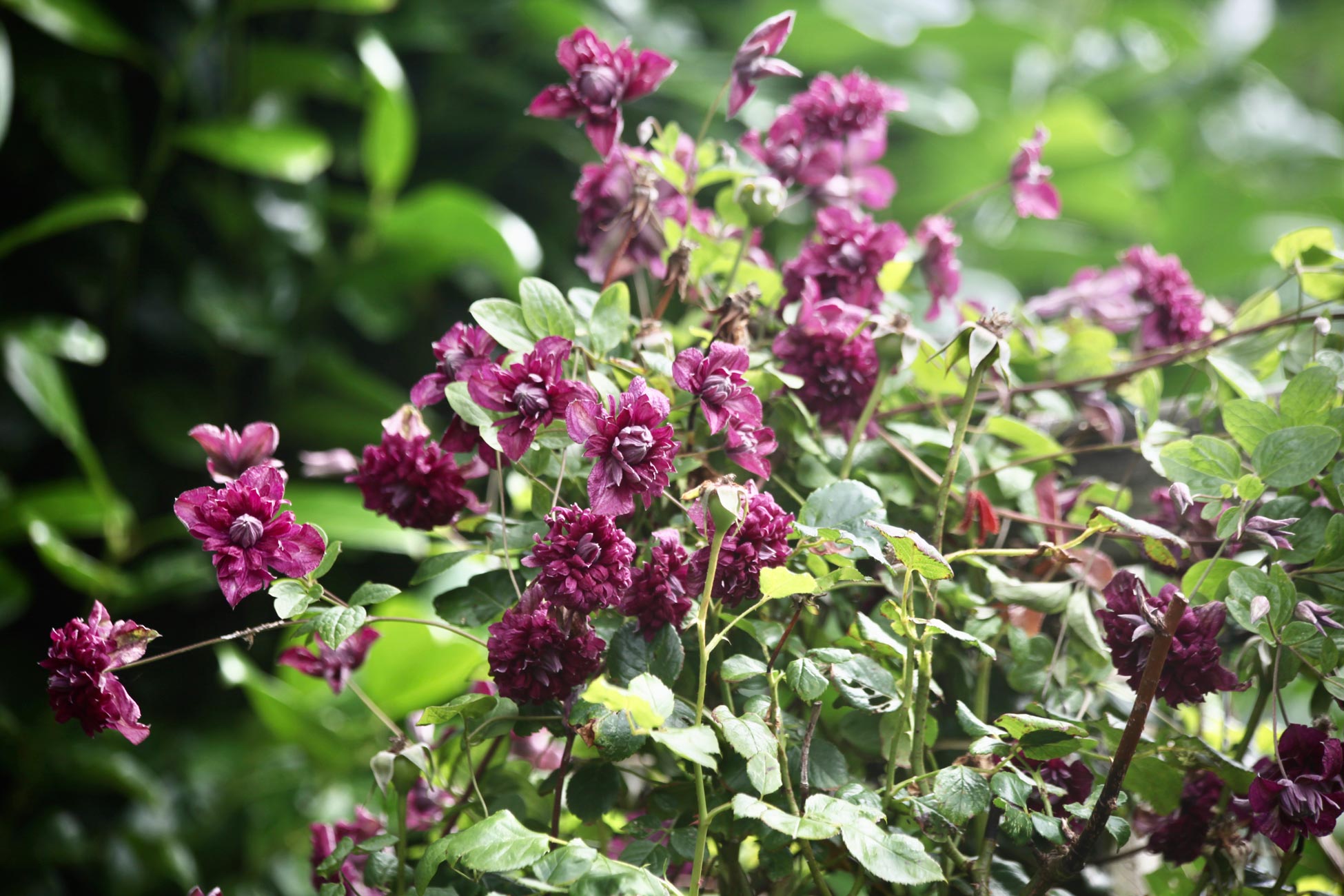
Polish Spirit in the Dragon Bed and on the barrier trellis, and Purpurea Plena Elegans in the Rose Garden.

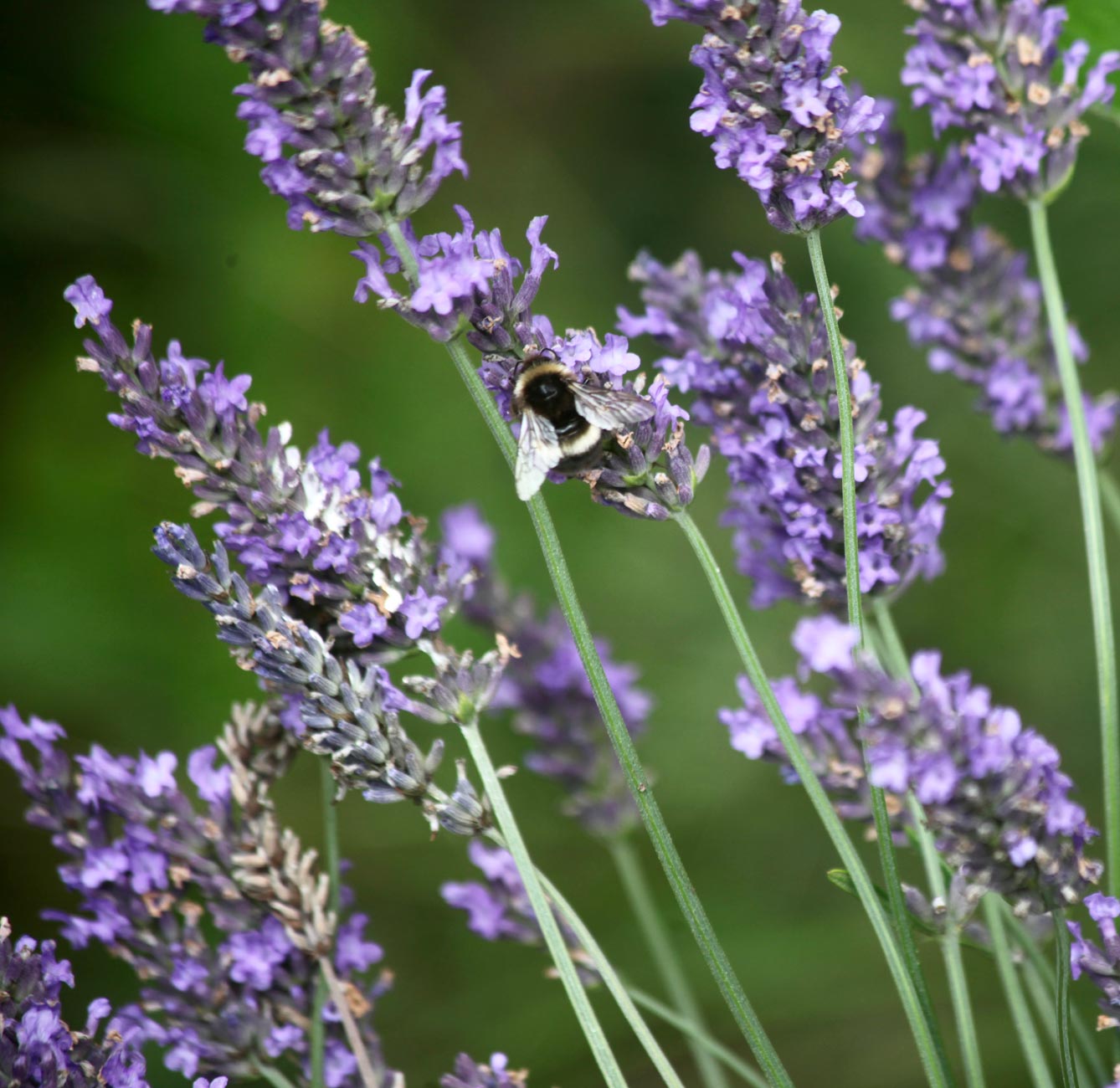
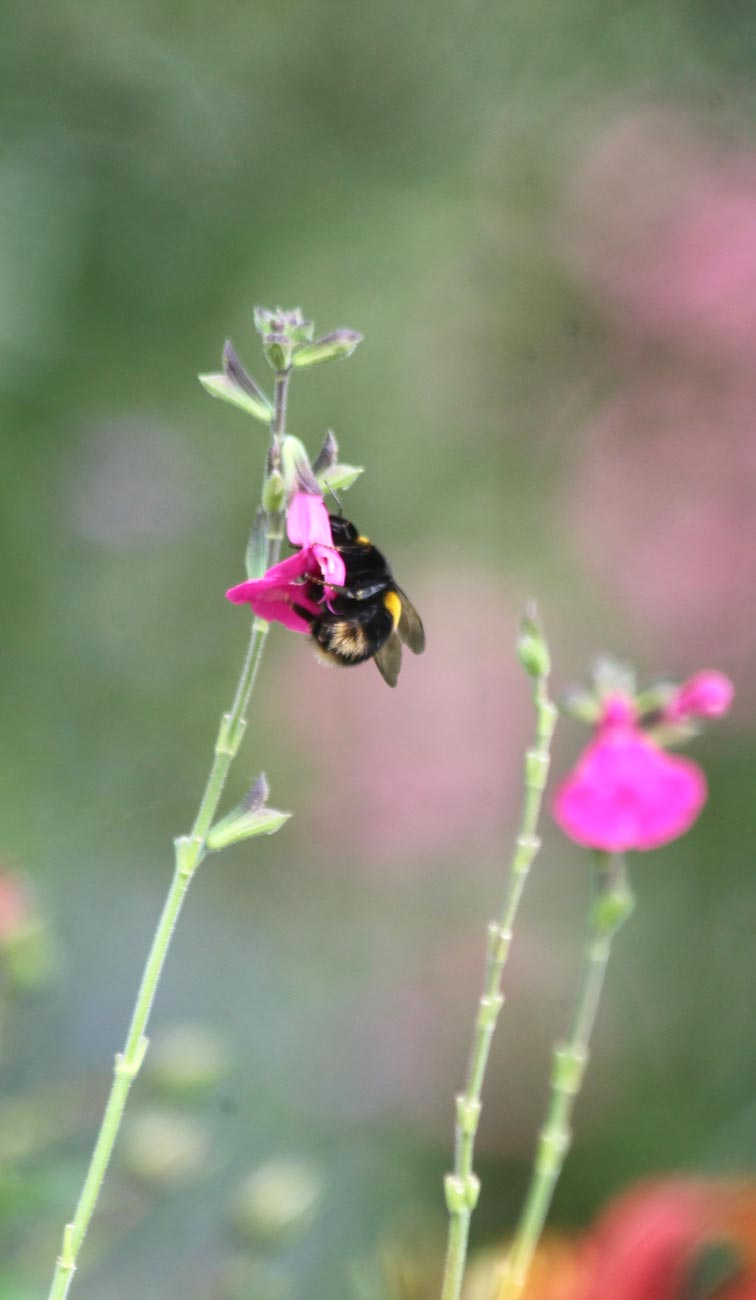
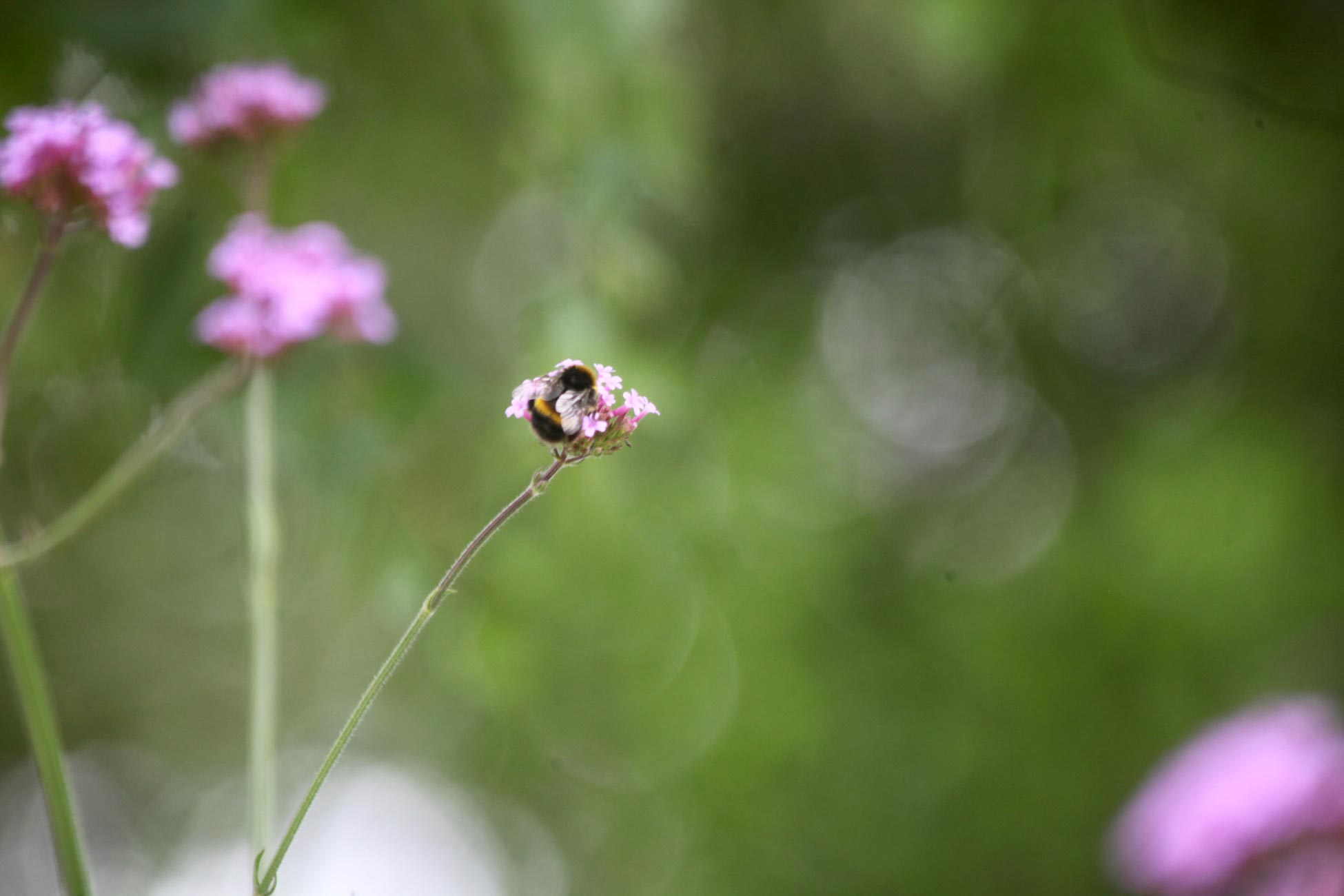
Rather like the Head Gardener, bees such as these clinging precariously to lavender, to salvias, and to verbena bonariensis, were working against the rain clock.

This afternoon I posted “A Knight’s Tale (10: After the Revolution)”

Our dinner this evening consisted of chicken breasts cooked in Nando’s chilli, lemon, and mango sauce, and Jackie’s savoury rice, with which she drank Cotes de Provence rosé 2020, and I drank more of the Fleurie.

A Knight’s Tale (10: After The Revolution)

Then came the Russian revolution, when it was not safe to be out in St Petersburg at night, and even at dusk. The only police were very inefficient student volunteers who nevertheless did their best. All the old police were killed during the first days of the Revolution. As my great aunt Mabel was out every day she witnessed a great deal of the excitement. She saw police being dragged out of the Police Station, but did not go near enough to discover whether they were dead or alive. She saw gun battles through the windows of the building between soldiers and police. Two or three times she narrowly escaped being shot at herself.

Mabel speaks of the severe lack of food and its consequent rationing from the middle of the second decade of the 20th century:

“…. about 1916, one could no longer go into shop and buy bread, for it was rationed. It gradually got worse and worse after the Revolution. One had to wait for hours in a queue for a small piece of bread.

Then all cereals disappeared until, in 1917, one could buy nothing but meat at a very high price, fish, and vegetables; and in the middle of winter there were no potatoes.

The ration of bread dwindled down to 2 ounces, or even one ounce, per person. In the summer of 1918, I did not get any at all; what one did get was half straw and sand. The only chance one had at that time of getting any bread was from the speculators – secretly sold by them, and a 10 lb loaf would cost 130 roubles – that would be £3 at the then rate of exchange. The loaf contained sand, and one could feel the grit in one’s teeth. But I was glad to get it and thought it delightful compared with the rationed bread. Of course, these speculators were caught and sometimes imprisoned.

One could sometimes get dried vegetables, consisting chiefly of cabbage. One of my pupils brought me some horse’s oats which he had got hold of, and he suggested mixing them with dried cabbage to make a kind of rissole. To do this one had to separate the husks from the grain, so I put them through a coffee grinder and then through a sieve; a lengthy process as you can imagine. But they really made quite a palatable rissole.”

She continues:

“My sister and I used to spend hours hunting for food in the market places. A friend of mine would say “Do you know you can get rice in such or such a place?” – Off we would go at the first opportunity, only to find that the Bolshevik police had confiscated it after raiding the market and taking off all the food.

Occasionally I was lucky and came home triumphant with a little sago or half a pound of bread.

We also had great difficulty in getting milk. A man would be selling milk, and I would wait in a queue for an hour at the St Nicolas station. Then came the Bolshevik police, and the milk seller would fly with the queue running after him. It was so funny! I can see them now running shelter-skelter over the rails behind a railway truck. Every vigil there were raids in the houses. The people in different houses kept guard all night in turns.”

Mabel further tells us:

“Hardly a night passed without hearing shots and people shouting and running. After a while I got accustomed to it so that it did not wake me.

At night the soldiers would raid the grocers’ shops and get out the wine. One day outside my house I saw a stream of wine running down the gutters. The soldiers had been ordered to get rid of all the wine they could find, and they were pumping it out of the cellars.

Clothing got to such a price that people were often stopped in the street and forced to take off their clothes, boots, and other articles, going home almost naked. A girl of 18 years was made to take off all except her chemise. “now go home, dear, or you will catch cold, they said. She was a friend of one of my pupils.”

Of raids on private homes our diarist records:

“At one of the houses where I taught, nine or ten soldiers came to raid the house, and the Hall Porter tried to prevent them from entering, and in doing so his little girl of eight years, who was in bed, was killed by a bullet fired by one of the soldiers at the Hall Porter.

One of my best Russian friends had her flat raided; nine Russian soldiers came at 2 o’clock in the morning and demanded entrance. They seized every scrap of food they could find and then arrested the husband for no reason beyond that he was friendly with the English. I often telephoned to his wife to know whether he was going to be released. One day she was in a terrible state as her husband was to be shot. She did everything she could to try and save him. At last she was advised to go to one of the Bolsheviks; by paying a terrific sum of money he was let off. He then escaped to Estonia, and now he is living in London.

The summer of 1918, I was living in the country not far from Petrograd. Every night I was sure that the soldiers would come to raid the house where I was staying ………. later I stayed for 10 days with some people, and there the Bolsheviks came to commandeer. Six soldiers walked in with hats on and cigarettes in their mouths; they came three times and the third time was 9 p.m. They asked us to move out the same evening.

By now the British Ambassador was leaving Petersburg and the English colony was under the care of the British Consul, Mr Woodhouse. This man started to organise a party of those who were wishing to go home to England. We were about 25 in all. I had been so horrified to see how terribly thin and emaciated my sister hd become through months of semi-starvation, that I decided at once that we must join the party for England.”

One Miniature Member

Early this afternoon I posted “A Knight’s Tale (9: Before The Coming Revolution)”.

Later, we shopped at Lidl and carried on for drive. Everywhere is becoming very crowded. Reaching Lymington was a lengthy process. We kept along Sowley Lane and St Leonard’s Road to the east, which doesn’t have too many visitors.

A family of mallards beside a temporary pool alongside St Leonard’s Road were possibly debating whether to settle on it.

Opposite, in sight of the Isle of Wight,

bees busily worked over the remaining blossom on nascent blackberries while they still had a chance.

Our familiar equine group of friends, with its one miniature member congregated outside St Leonard’s Grange, within reach of

their still liquid watering hole reflecting possibly aquatic plants.

Cattle on the moorland fronting houses between East End and East Boldre were happy to share pasturage rights with a few ponies.

This evening we dined on our second helpings of Red Chilli takeaway with which Jackie finished the Carricante and I drank more of the Fleurie, which involved opening another bottle.

A Knight’s Tale (9: Before The Coming Revolution)

Mabel Knight, the most widely travelled of the siblings, followed the early career pattern of her elder sister, Ethel. Aged sixteen she attended a boarding school as a pupil/teacher in return for board and lodging. As usual there was no salary. This would come the next year as a teacher in a small school in Cornwall. For an annual salary of £10 per annum she was required to teach from 9 a.m. to 12 and from 2 p.m. to 4; to take boarders for daily walks from 4 to 5; to dust the drawing-room and schoolroom; and to make her own bed.

Further teaching posts in England were to follow before moving to Germany in 1905, and taking up positions of varying periods and satisfaction as nursery governesses. Her happiest engagement included charge of the three younger children of the Blumenthals who had made their fortune at Hopetown during the South African War.

A brief summer assignment in Pomerania, on the southern shore of the Baltic Sea was followed by a nursery post in Davos, Switzerland. This came to an end when her skating charge ran off and and fell on the ice – a minor accident for which Mabel was dismissed. Discipline of an employed domestic staff member in those days was harsh. She returned to England and spent two years on various teaching posts.

Between 1904 and 1907 my great aunt enjoyed a mostly long distance relationship with Dutch engineer, André Schmidt who was working in Tokyo. She was apparently devastated by his death in a tragic accident while showing a group of Japanese students round an electrical works in Hamburg.

The following year, having recovered enough from her loss, Mabel took a position teaching English in Batoum, Georgia. Initially, four children were her pupils. This expanded to include students from the school run by her employers; the son of the Commandant of the town; its chief chemist; the Governor’s only son, and others, such as the manager of

tea plantations in Chakra.

There, she was befriended by The Consul, Mr Stevens, and his family. For several years she enjoyed a very active social life – a “great life”.

After four more years Mabel moved to St Petersburg as governess to the children of the Professor Ott, Court Doctor there. Shortly before Christmas 1912, because the family were moving to Nice, she took rooms in the centre of the city, teaching many private students. Ethel was teaching and living elsewhere in the Tsarist capital. Before the coming revolution the two sisters met frequently, going to dances and parties together. “St Petersburg was a wonderful city to live in before WW1. At night the streets were filled with almost as much traffic as in the day and it was quite safe to come home late at night after a dance (2 and 3 in the morning).”