The Prime Suspect

Jackie spent much of the morning watering the garden and tying up roses. After lunch I joined her and dead-headed roses and Welsh poppies while she continued.

When the heat drove us in for a rest, the Head Gardener watched Gardeners’ World and I scanned another 21 pages from

H.E. Bates’s “Down The River” illustrated by Agnes Miller Parker.

Later I took a few photographs and joined in a another watering session.

Here are a few images from upstairs, featuring the blooms of the Cordyline Australis; the eucalyptus; the yellow Bottle Brush plant; and the red Chilean lantern tree receiving attention from Jackie.
Even this last mentioned small tree was wilting in the heat. The two-toned pink peony can be glimpsed just above left of centre in the first image.

For several days now Jackie has discovered pure white eggs, of a size too large to have been laid by our garden birds, either secreted among the flowers beds or lying on the lawn. Yesterday evening she noticed one on the grass bearing a small hole through which she discerned yellow yolk and clear viscous albumen. She left it intact.

This morning this is what it looked like. Our neighbours on the corner beside the pub keep ducks. Clearly someone is nicking their eggs, depositing them in our garden, and enjoying a meal later. To our mind the prime suspect must be a fox, but we haven’t seen one. Maybe Russell Crow.

Certainly not this tiny mouse that Jackie watched feeding on borage seeds.

Mr Chan at Hordle Chinese Take Away opened up again today. That fare, is therefore what we ate for dinner. Jackie drank Hoegaarden and drank more of the Carles.

Down The River

The English author, H. E. Bates (1905 – 1974) is best known for his novels, in particular those embracing the escapades of the Larkin family, starting with “The Darling Buds of May”. Peter J. Conradi, in his Guardian obituary, offers the quotation that Bates had the gift of putting the English countryside down on paper.

This gift is amply demonstrated  in

which I finished reading last night. The work predates, by just 3 years, “Sweet Thames Run Softly”, Robert Gibbings’s first celebration of his riverine peregrinations.

Bates’s first such wanderings were guided by his beloved grandfather along East Anglia’s Rivers Nene and Ouse. We are taken on these rambles and more as the writer develops into manhood. River is, however, his main character. The waterways and their denizens – flora and fauna – are described in such exemplary prose that comparison with Gibbings is inevitable. In my view the latter has the lighter touch and wanders off down periodic tributaries, often involving myth and legend, as his spirit moves him. Bates, equally as eloquent, is more organised and offers observations on contemporary issues such as killing otters for sport.

A product of Glasgow School of Art, Agnes Miller Parker (1895-1980) was described by me in my eponymous post of December 14th 2015 as ‘one of the best illustrators of her day’.

I trust her wood engravings will bear this out. The above illustration is the title page.

Here is the book jacket, still intact after not far off 100 years.

Because of the number of engravings in this volume I present here a first selection,

and will add a few more at intervals to my normal ramblings.

This evening we dined on succulent roast gammon; roast potatoes: Jackie’s piquant cauliflower cheese; firm carrots and broccoli; tangy red cabbage; and tender green cabbage with leeks. I drank Patrick Chodot Fleurie 2018. The Culinary Queen had enjoyed her Heineken whilst cooking.


Characterisation

‘The Posthumous Papers of The Pickwick Club’ was the 24 year old Charles Dickens’s  serialised debut novel. Such publications in 1836 were the soaps of the period before television and a more leisurely age when reading was a main source of entertainment. The monthly instalments of these comic capers were eagerly awaited by those in many walks of life. Those who couldn’t read gathered round their more literate friends and colleagues, having contributed to the costs of library borrowing.

Today’s promotional merchandise boosting sales for blockbuster films and best-selling books like the Harry Potter series are no new idea. Pickwick inspired items were on sale when Queen Victoria came to the throne. There may not have been a market for replica football kits, but there was for Pickwick hats and coats.

The novel itself is really a series of short stories stitched together with the thread of what Mr Pickwick himself terms his “rambles” which were taken by coach and horses with groups of friends around the South of England. Interest was a little slow to catch on and the young author seemed to be feeling his way before picking up the pace with gusto. Gradually we become attached the characters introduced along the way.

Every so often what appears to be an extraneous story is introduced in the patched garment. These I found of varying interest.

As usual with Dickens, we learn much about the social, economic, and legal aspects of contemporary life. The author writes with fluidity; with remarkable knowledge of human nature; and with considerable humour. But, then, the world has appreciated that for almost two centuries,

All the strands are neatly drawn together in the closing stages when we learn the outcome of various relationships and their prospective futures.

Christopher Hibbert’s introduction to my Folio Society edition is scholarly and informative – I owe Pickwick hats and coats to him.

I have now finished reading the lengthy tome and can complete my posting of Charles Keeping’s

lively line drawings leaping exuberantly from the leaves of the book. I have written before about the artist’s fidelity to the text. What is also striking is his expressive rendering of the author’s characterisation. Keeping conveys the nature of his subjects with humour and accuracy. Some are grotesque caricatures; others gentle and sensitive souls. Comparison with the first and last of today’s selection will indicate that Charles Keeping can produce consistent individual portraits.

This evening we dined on smoked haddock, cod fish cakes, very tasty carrots, tender runner beans, juicy ratatouille and Jackie’s piquant cauliflower cheese, with which she drank Hoegaarden and I finished the Syrah.

As I Lay Dying

Mat, Tess, and Poppy returned to their home at Upper Dicker late this afternoon.

Afterwards, I finished reading William Faulkner’s ‘As I Lay Dying’. The book was first published in New York in 1930 by Jonathon Cape and Harrison Smith, Inc. My Folio Society Edition of 2011 is enhanced by William Gay’s knowledgeable and insightful introduction, and by the evocative illustrations of Katherine Hardy.

Fifteen different narrators are the device by which the author tells the tale of an eventful burial trip. They alternate with each other in presenting chapters varying in length from one line to a mere handful of pages. We enter the hearts and minds of a stubbornly independent poor rural family as the individuals relate their thoughts and observations in most credible uneducated vernacular. The protagonists, despite a certain amount of stupidity, usually retain their dignity.

Practical, sometimes wry, common sense is expressed by characters outside the bizarre-thinking family whose determined isolation does not work to their advantage. The trip has different meanings to different members of the Bundren Family who are too proud to accept help from anyone. The story is a compelling one of which I will not reveal details.

The front board bears a giant fish

caught by the youngest son.

The mother of the family appears on the frontispiece,

and other full page illustrations appear at intervals.

Despite the title, this was not an unenjoyable book to read at the holiday period.

This evening, Becky, Ian, Jackie, and I dined on the Culinary Queen’s splendid beef in red wine, creamy mashed potatoes, mashed swede, crisp carrots, cauliflower, and broccoli, followed by Christmas pudding and custard, with which I drank El Zumbido Granacha 2018 and Becky and Ian drank Wairauru Cove 2018. These delights were consumed on our knees while watching Rocketman, the marvellous biopic of Elton John played by Taron Egerton

The Siege Of Krishnapur

In the afternoon of this day of steady rainfall Paul and Margery visited to deliver the painting by John Jones that Paul has now framed. We had an enjoyable conversation over tea and mince pies, and are very pleased with both the picture and the framing.

During the rest of the day I finished reading J.G.Farrell’s historical novel ‘The Siege Of Krishnapur’. Originally published by George Weidenfeld and Nicholson 1n 1973, mine is the Folio Society edition of 2008 with an excellent and insightful introduction by Hilary Mantel and evocative illustrations by Francis Mosley.

Without revealing anything of the story I can say that the clearly impeccably and aimlessly researched work takes us into the period of the Raj, its customs, its class divisions, and its beliefs. The pace of the narrative reflects the ebb and flow of action and reflection of such an event. There is dramatic action and there dull, energy-sapping periods. All the senses are so well engaged. Sickness and death are rife. We see how people are revealed in their true colours – some rising to the occasion, others failing or turning it to their own advantage. Barriers between the sexes are broken down.

The boards are embossed with this design by the artist which also runs across the spine.


Mr Mosley, especially with his chosen palette, has captured the essence of the time and place.

As, this evening, we left home to meet Elizabeth at The Wheel Inn, Jackie photographed arboreal fingers reaching for the full moon draped in dramatic clouds.

The staff at the community pub, having reserved a friendly table,

had placed us beside the log fire. Jackie also produced these two photographs.

Elizabeth and I both enjoyed crispy duck with ginger salad starters.

My main course consisted of oven baked hake wrapped in parma ham, lobster sauce, sautéed potatoes and asparagus. The ladies were both delighted with their roast turkey with all the trimmings. Jackie finished with Christmas pudding, and I chose Eton mess. Both were very good. Jackie and Elizabeth  both drank Warsteiner and I drank Ringwood’s Best.

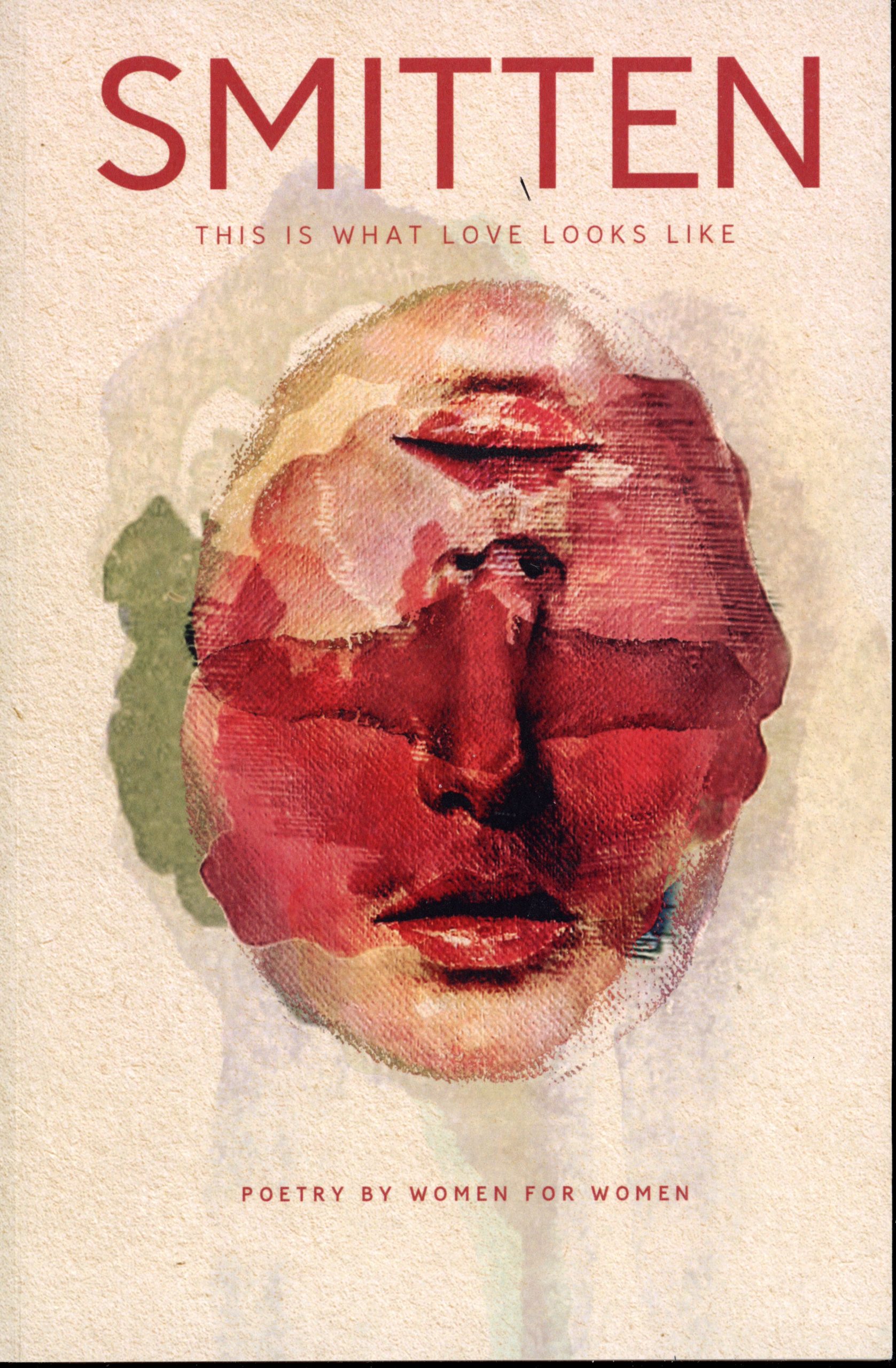
This Is What Love Looks Like

‘At its heart, this collection of writing is all about love, which we believe all readers can relate to and appreciate. Who among us has not fallen in or out of love, or longed for an unrequited love?’

So state the editors in the preface to


They are Candice Louisa Daquin and Hallelujah R. Huston.

There are so many very well written and insightful pieces in this anthology that I cannot mention them all. Examples will have to suffice.

The powerful impact and often sudden nature of sexual love is shown in ‘To Love Her’ by Jesica Nodarse and in ‘Out of the Blue’ by Emily Alice DeCicco.

The beautiful imagery displayed in Erin King’s ‘Dusk”, or ‘Your Hair Hangs Down’ from Charity M. Muse symbolises the beauty of love. The fear that often comes with committing wholeheartedly to another person is well tackled in ‘Bravery is doing it anyway’ by Avital Abraham. Most significant is the fear of loss, whether from betrayal, featured by Christine E. Ray in ‘An Exchange Quick and Quiet’; from death as in Maria Gary’s plaintive ‘I’ll Be Seeing You’; or simply fading away, as demonstrated by Rachael Ikins’ ‘Falling Toward Winter’

We all imagine that lost love will never come again. Sometimes it never will, and lasting separation will prompt the memories evoked by Tara Caribou  in ‘The Feathering Sleep’.

The Preface to this collection also states that love ‘transcends categories, labels, and clichés’ yet, that ‘these lesbian and bisexual voices are necessary in this predominantly heterosexual world.’ It is this that makes the book ground-breaking.

Coming to the realisation of one’s own orientation is sometimes as difficult as coming out to the world. A number of the contributing poets have tackled this issue. Marie Pritchard, in ‘My Way Home’ speaks of how long this may take.

Susan Heather K. McGraw shows us the reality of society’s condemnation and isolation in ‘The Well of Loneliness’. It is, however, in one’s own families that declaration of love’s direction can be most difficult. The secrecy that can exist within families is exemplified in ‘On Pompano Beach After My Father’s Funeral’, by Carolyn Martin, while denial is the theme of Talia Rizzo’s ‘This Poem Was Written To the Sound of Your Voice’, and Kirsten Fedorowicz’s ‘Family Reunion’.

To return to the Preface, ‘anyone who is open to appreciating love and poetry can gain as much from this collection of poems as a lesbian can.’

The sub-title is taken from the powerful ‘Karaoke Night with Lady Rose and Babe’ by Kindra M. Austin.

I have happily followed Candice Louisa Daquin on WordPress for a number of years, and compliment her and her colleagues on this publication, available on Amazon.

I spent much of the day drafting this review.

This evening we dined on spicy pizza and plentiful fresh salad with which Jackie drank Hoegaarden and I drank Concha y Toro Casillero del Diablo Merlot 2017.


Published
Categorised as Books Tagged

An Evocation

After yesterday’s long trip we took it easy today.

I finished reading

The front and back of the jacket are from a painting by the author’s father, Ulric van den Bogaerde created in 1934.

In this book Dirk Bogarde returns to the years from 1927 to 1934 visited fleetingly in the first part of his autobiography ‘A Postillion Struck by Lightning’. The work really does evoke that period of a largely idyllic childhood. In his author’s note, the author, no doubt very fairly, credits Fanny Blake as ‘the most valiant of editors’ with having ‘wrestled hard and long with [his] deliberately limited vocabulary.’ It is this naive vocabulary and verbal style that is the greatest charm of this volume, conveying the very sense of the young boy who published, courtesy of the Viking branch of Penguin Books, this evocation in 1992 – so many years after the depicted events. Bogarde’s fluency and facility with description nevertheless shines through, as he expands on his early childhood.

The monochrome full page pictures among the text


retain Mr. Bogarde’s lightness of touch.

This evening we dined on Jackie’s spicy pork paprika with savoury rice. I drank Séguret Cotes du Rhone Villages 2018 while Mrs Knight abstained.


I Can’t Stay Long

Today was another dull, wet, day.

Seated on the sofa, I lunched on scrambled egg and toast while watching the Rugby World Cup third place play off between Wales and New Zealand. It was a very good match, albeit no doubt rather an anti-climax for these two losing semi-finalists.

This afternoon I finished reading ‘I Can’t Stay Long’, a selection of

Laurie Lee’s essays. This portrait of the author by William Thompson forms the frontispiece of my 1975 edition published by Andre Deutsch.

Here is the biography presented by Britannica.com.

‘Laurie Lee, (born June 26, 1914, Slad, near Stroud, Gloucestershire, England—died May 13, 1997, Slad), English poet and prose writer best known for Cider with Rosie (1959), a memoir of the author’s boyhood in the Cotswold countryside.Educated in his home village and in nearby Stroud, Lee eventually moved to London and traveled in Spain in the mid-1930s. Upon his return to England, he worked as a film scriptwriter (1940–43) and as an editor for the Ministry of Information (1944–45). Lee published several volumes of poetry in the 1940s and ’50s, but he achieved little recognition until his autobiographical book Cider with Rosie (U.S. title The Edge of Day) was published by Leonard Woolf in 1959. Cider with Rosie became an instant classic and was widely read in British schools. An account of Lee’s happy childhood in a secluded village, the book nostalgically evokes the simplicity and innocence of a vanished rural world.Lee wrote two more volumes of what became an autobiographical trilogy, As I Walked Out One Midsummer Morning (1969), a description of his walk to London and then across Spain just prior to that country’s civil war; and A Moment of War (1991), an account of his experiences in Spain during that war. Lee’s other works included the poetry collections The Sun My Monument (1944), The Bloom of Candles (1947), and My Many-Coated Man (1955) and a collection of stories, I Can’t Stay Long (1976).’ My first edition of this latter publication attests to the fact that it was published the year before this extracts states.
1959 was the year before I left school. I was one of those who read the instant classic that was ‘Cider with Rosie’ – but, I think, a little after 1960. ‘I Can’t Stay Long’ is presented in three parts, each one introduced with a decoration by Susan Campbell.
relates to periods of the author’s childhood;is more philosophical, presenting the author’s views on love, appetite, charm, paradise, and parenthood; and culminating in a compassionate and insightful visit to Aberfan the year after ‘the village lost its children’. I feature this terrible disaster in my post: https://derrickjknight.com/2015/12/05/aberfan/is a set of travelling stories. It is in these in particular that Lee’s splendid poetic eloquence is given full rein. Like a rich Christmas pudding filled to capacity with glazed fruits, nutritious nuts, and silver sixpences, the author’s fluent and elegant prose is packed with simile, metaphor, alliteration; amplified with appropriate adverbs and adjectives, yet nothing superfluous. He writes like the poet he is, managing to reflect the varied atmospheres, pace of life and people encountered. Contrasting ‘A Wake in [communist] Warsaw’, including the barren journey to reach the town, with the lively, yet languorous ‘ Sugar Islands’ of the West Indies, or the self indulgent sybaritic exploitation of ‘A Festive Occasion’ at Cannes, all demonstrate Laurie Lee’s keen ear and observation.This evening we dined on tasty pork cutlets; roast potatoes, chestnut mushrooms, and Yorkshire pudding; tender greens, and crunchy carrots, with which Jackie drank Hoegaarden while I drank more of the Fronton.


Backcloth

Yesterday evening I finished reading ‘Backcloth’, the fourth in Dirk Bogarde’s series of memoirs. In the 1980s, when the books were first published, I managed to miss this one which, produced by Viking, appeared in 1986. My copy is Bloomsbury’s paperback issue of 2013.

The author has further developed themes introduced in the first three books; notably his teenage and his war years, the struggles of the film industry and of ageing, If anything, his poetically descriptive prose has improved, and there is more revealing honesty.

Despite disappointments in production, I recommend this work, even to a reader who may not be familiar with its antecedents. There are, however, a few minor errors in proof-reading. The reproductions of the author’s exquisite illustrations seem to have been printed on blotting paper, and the photographs ripped untimely from the developing tray. I will not attempt to improve on them here. For £14.99 Bloomsbury should have done better – or even have omitted the pictures.

Becky and Ian had stayed overnight. As it is our daughter’s birthday we had planned to spend the day at the Hawk Conservancy Trust at Weyhill, near Andover. We were to meet Matthew, Tess, and Poppy there at 10.30 a.m.

The journey was going quite well until we hit a road diversion along single lane roads with no passing spaces. We followed, of all things, a huge Highway Maintenance truck. A combination of Diversion signs and the SATNAV sent us around a very long circle. Twice. Sometimes we were not moving at all. At one point a vehicle in front stopped and, with hazard lights on

came to a complete standstill. The driver behind us approached to find out what was happening. The stationary driver needed to be helped to pass an oncoming queue.

Eventually we found a way out of the maze. Then the SATNAV battery went flat. After a while we stopped at a garden centre where we were given confused and confusing instructions. Lost again, we stopped for further directions at a pub. It was closed. Fortunately a garage provided correct information and we arrived almost two hours late.

The rest of the day was most enjoyable and completed by an excellent meal at the Hawk Inn. My choice of main course was a rib eye steak, chips, mushroom, tomato, and salad. This was followed by Eton Mess. I drank Malbec.

I took many photographs of raptors and will feature them tomorrow. We had been without internet this morning and were back on soon after 10.30 p.m. There was neither time nor energy to deal with these this evening.

Cruck Frames

Jackie spent most of the morning watering the garden. I managed a token dead heading session which nevertheless filled two trugs. Nugget even followed me around. It helps if you use his name.

Regular readers will know of my penchant for leaving bookmarks or other tokens in my books, for posterity’s pondering.

Occasionally previous owners of my second hand copies have had the same idea. The volume I finished reading this afternoon contained two examples.

One is an engraving or possibly a linocut clearly cut from another book. I wonder whether I will ever see the original?

The other is a transparent bookmark. Who left it? Perhaps a rep for CIBA; perhaps a sufferer of chronic bronchitis. Could it have been Kellettt (or perhaps Kenneth) Carding whose name appears inscribed upside down on the bottom left-hand corner of the endpaper? If so would that explain the equally sized clip taken from the top right hand corner of the flyleaf; perhaps the name of an earlier owner?

If the first is an engraving, although charming, it lacks the finesse of the work of Robert Gibbings, whose ‘Sweet Thames run Softly’ is the book concerned.

This is the first of the author’s meanderings along an eponymous river. Originally published in 1940, my copy is the third imprint – darted 1941.

Gibbings blends elegant descriptive prose into simple philosophy, amusing anecdote, sensitive observation, and informative history; profusely illustrated with fine wood engravings.

Here I present

sample pages

displaying both the author’s engaging writing and his exquisite illustrations.

With a work of Robert Gibbings, my delight is often enhanced by his material having been covered by me, either in prose or photography;

an example of a cruck built house as described above, is more fully featured in my post “Afternoon Tea”.

This final sentence would surely not be out of place in any publication today.

Later, I retouched this image of my Grandpa Hunter, Mum, and Uncles Ben and Roy taken at Conwy c1926. The sandcastle being built may have heralded Ben’s later employment as Clerk of Works.

This evening Jackie produced a meal of roast chicken marinaded in Nando’s spicy Chilli and Mango sauce on a bed of succulent peppers and mushrooms; crunchy carrots; and tender runner beans, with which she drank Hoegaarden and I drank Domaine Franc Maine Bergerac 2016 – one of Lidl’s finest.