The Age Of Chivalry

CLICK ON IMAGES TO ENLARGE. REPEAT IF REQUIRED

Raindrops on window

Today began with leaden skies and raindrops on windows.

Garden through rainy window

Even owls, dripped on from branches above,  peered enviously inside.

Late this afternoon, when the rain had desisted somewhat, we took a car load of rubbish, that we had ourselves recycled once or twice already, to Efford Recycling Centre; and returned with two mirrors for the garden, a bar stool, and a Chinese rug.

Back in the early 1970s, I discovered the English book illustrator Frank C. Papé, and,  through him, the American writer, James Branch Cabell, in the illustrated editions produced by The Bodley Head in the early 20th century. I have already featured ‘The Cream of the Jest’, and today, as I finished reading ‘Domnei: a Comedy of Woman-Worship’, offer more information on the collaborators.

On the author, Wikipedia tells us:

‘James Branch Cabell (/ˈkæbəl/; April 14, 1879  – May 5, 1958) was an American author of fantasy fiction and belles lettres. Cabell was well regarded by his contemporaries, including H. L. Mencken, Edmund Wilson, and Sinclair Lewis. His works were considered escapist and fit well in the culture of the 1920s, when they were most popular. For Cabell, veracity was “the one unpardonable sin, not merely against art, but against human welfare.”[1][2]

Although escapist, Cabell’s works are ironic and satirical. H. L. Mencken disputed Cabell’s claim to romanticism and characterized him as “really the most acidulous of all the anti-romantics. His gaudy heroes … chase dragons precisely as stockbrockers play golf.” Cabell saw art as an escape from life, but once the artist creates his ideal world, he finds that it is made up of the same elements that make the real one.’

There is much more information on his life and works on this link [1]’

Maybe I’m too gullible, but I found this work an enthralling fantasy of an imagined love story from the age of chivalry. There are a number of cynical characters, and we are invited to believe it is based on fragments of a Medieval manuscript. Obviously the source is spurious, and it is perhaps significant that the only uncut pages are the last two of the alleged bibliography. Nevertheless the romantic in me was enjoyably engaged with this readable story, details of which I will not reveal. The language is of the writer’s time, yet following the form of a 14th century geste. The descriptions of the natural world are beautifully done.

The artist is perfectly in tune with the writer, Clicking on the numbered highlight in the following paragraph will take you to the fuller Wikipedia page about him.

‘Frank Cheyne Papé, who generally signed himself Frank C. Papé (b. Camberwell, July 4, 1878 – d. Bedford, May 5, 1972) was an English artist and book illustrator. He studied at The Slade School of Fine Art, completing his studies circa 1902-04.[1] Papé was married to a fellow Slade student, illustrator Alice Stringer.’

Papé’s distinctive style ensured his popularity in the golden age of book illustration. He has a mastery of line and form.

Domnei, first published in 1913, underwent several revisions before the first illustrated edition of 1930, of which my copy is one.

Domnei001

Of the ten plates protected by tissue sheets, we begin with the frontispiece;

Domnei002

thereafter I have chosen samples of chiaroscuro elegance;

Domnei003

of drollery;

Domnei004

and of excellent composition, with an ability to indicate the effect of passing time on a still beautiful woman. We can well believe this is the lady in the second picture above.

Domnei005

Each of the thirty short chapters is introduced

Domnei006

by a framed picture illustrating its first page.

Domnei007

These are minutely faithful to the text.

Domnei008

I cannot elaborate on this without giving too much away.

This evening we dined on Jackie’s supreme lamb jalfrezi, savoury rice, and vegetable samosas. I finished the malbec.


Heirloom Or Paraphernalia

No less an accomplished novelist than P.D.James has provided a positive introduction to my Folio Society 1990 edition of Anthony Trollope’s ‘The Eustace Diamonds’. Ms James has accurately analysed the characters featured in the book, and rightly, highlighted Trollope’s understanding of the nature of women and the plight of those without an income in Victorian Britain.

Trollope’s novel is a lengthy saga based on the ownership and the search for the thieves of the eponymous jewellery. His usual skills of characterisation, dialogue, and flowing language are employed. I have to say, however, that my interest waned somewhere about the middle of the story, when I struggled with the writer’s philosophising. I began to feel that I didn’t care who owned the diamonds, or who had stolen them, if, indeed, they had been purloined. Nevertheless, I did persevere, and on balance, was pleased I had done so.

The Folio Sociaty remained committed to Llewellyn Thomas for the illustrations to this Palliser series. I have explained before why I do not like these.

This is just as well given that I spent most of the day wrestling with the installation of High Sierra, the new Operating System for iMac. By late afternoon, the outside light having disappeared, I had, with the help of Apple’s technical help advisers, learned that the procedure, now underway, would take another 9 hours. Not having the stomach to scan old film images and struggle with the Windows 10 alternative, I have produced no illustrations today.

But I did get to read the last 100 pages of the book.

One of the most interesting aspects of the story was the question about whether the diamond necklace was a genuine heirloom or paraphernalia. These are legal terms that Mr Trollope understood far more than I.did.

I gleaned enough from the book to establish the accuracy of Wkipedia’s comments on the subject:

‘In popular usage, an heirloom is something, perhaps an antique or some kind of jewelry, that has been passed down for generations through family members.

The term originated with the historical principle of an heirloom in English law, a chattel which by immemorial usage was regarded as annexed by inheritance to a family estate. Loom originally meant a tool. Such genuine heirlooms were almost unknown by the beginning of the twentieth century.[1]

In the English legal system, any owner of a genuine heirloom could dispose of it during his lifetime, but he could not bequeath it by will away from the estate. If the owner died intestate, it went to his heir-at-law, and if he devised the estate it went to the devisee. The word subsequently acquired a secondary meaning, applied to furniture, pictures, etc., vested in trustees to hold on trust for the person for the time being entitled to the possession of a settled house. Such things were more properly called settled chattels.[1] As of 1 January 1997, no further settled land can be created and the remaining pre-existing settlements have a declining importance in English law.[2]

An heirloom in the strict sense was made by family custom, not by settlement. A settled chattel could be sold under the direction of the court, and the money arising under such sale is capital money.[3] The court would only sanction such a sale, if it could be shown that it was to the benefit of all parties concerned and if the article proposed to be sold was of unique or historical character. The court had regard to the intention of the settlor and the wishes of the remainder men. [1][4]’ 

In the book, the debate centred around the Eustace family’s contention that the diamonds were an heirloom, and the widow, Lizzie Eustace’s claim that they were paraphernalia, described by the on-line free legal dictionary as

In the English legal system, any owner of a genuine heirloom could dispose of it during his lifetime, but he could not bequeath it by will away from the estate. If the owner died intestate, it went to his heir-at-law, and if he devised the estate it went to the devisee. The word subsequently acquired a secondary meaning, applied to furniture, pictures, etc., vested in trustees to hold on trust for the person for the time being entitled to the possession of a settled house. Such things were more properly called settled chattels.[1] As of 1 January 1997, no further settled land can be created and the remaining pre-existing settlements have a declining importance in English law.[2]

The Free Legal Dictionary (https://legal-dictionary.thefreedictionary.com/paraphernalia) describes paraphernalia as ‘the name given to all such things as a woman has a right to retain as her own property, after her husband’s death; they consist generally of her clothing, jewels, and ornaments suitable to her condition, which she used personally during his life.
     2. These, when not extravagant, she has a right to retain even against creditors; and, although in his lifetime the husband might have given them away, he cannot bequeath such ornaments and jewels by his will.’

This evening we dined on breaded chicken breasts served on a bed of onions, garlic, and peppers; with roast potatoes and mushrooms; ans spinach. Jackie drank Hoegaarden and I drank more of the cabernet sauvignon.

The Lady In The Van

CLICK ON IMAGES TO ENLARGE. REPEAT IF REQUIRED.

Today, Jackie drove me to and from New Milton for me to travel to London for lunch with Norman. There was not one available seat on the train until I had a stroke of luck. In search of any possibility I walked through to the third packed carriage of the five that comprised this morning’s transport vehicle. Other hopeful travellers walked towards, and past, me in their own fruitless hunt. Suddenly a young man rose to his feet and retrieved a violin case from the luggage rack. He didn’t sit down again. In response to my enquiry he replied that he was leaving the train at the next stop. As I relaxed into position I reflected that, had he been my maternal grandfather, he would probably have uttered the rhetorical question: “would you be in my grave as quick?”.

Five more carriages were added at Southampton Central where we learned the reason for the crush. It was, of course, Wimbledon week. This also necessitated an additional stop for the tennis.

Preston Road

From Waterloo, I travelled by Jubilee and Metropolitan underground lines to Preston Road, and walked down that street to

The Preston

The Preston, where Norman was waiting, and we each enjoyed the same acceptable lunch of gammon steaks followed by Eton messes. We shared an excellent bottle of Fico Grande Sangiovese, followed by lukewarm double espresso coffees. The one and a half staff on the bar did their pleasant very best.

Alan Bennett

On my outward journey I finished reading Alan Bennett’s ‘Keeping on Keeping on’.

This massive tome written in Bennett’s idiosyncratic style includes diaries from 2005 to 2015; short essays and newspaper articles; two playlets; and his experience of filming The Lady in the Van.

The diaries are fascinating for the author’s take on years still in my own memory. Of the plays I preferred ‘Denmark Hill’ ‘a darkly comic radio play set in suburban South London’ which has particular appeal for one who grew up in Wimbledon.

This is Wikipedia’s opening section on The Lady in the Van:

‘The Lady in the Van is a 2015 British[2] comedy-drama film directed by Nicholas Hytner, written by Alan Bennett, and starring Maggie Smith and Alex Jennings. It tells the true story of Mary Shepherd, an elderly woman who lived in a dilapidated van on Bennett’s driveway in London for 15 years.[5] Smith previously portrayed Shepherd twice: in the original 1999 theatrical production, which earned her a Best Actress nomination at the 2000 Olivier Awards[6] and in the 2009 BBC Radio 4 adaptation.[7]

Hytner directed the original stage production at the Queen’s Theatre in London, while Bennett adapted the screenplay from his 1999 West End play of the same name, which was nominated at the 2000 Olivier Awards for Play of the Year. The film was shown in the Special Presentations section of the 2015 Toronto International Film Festival[8] and received largely positive reviews from critics.’

Having seen and enjoyed this delightful film I was pleased to find the book closing with Bennett’s filming diary of the production.

The Lady In The Van

The successful and versatile artist David Gentleman was a neighbour of Bennett’s when the author lived in Camden Town’s Gloucester Terrace. He has produced some charming vignettes for this section of the book.

My reading on the return journey was Spirit of Love by Ramanlal Morarjee. I am enjoying this novel and will comment further when I have finished it.

Barchester Towers.

CLICK ON ANY OF THE DRAWING IMAGES TO ACCESS THE GALLERY THAT BE VIEWED FULL SIZE.

It may not have escaped some readers’ awareness that I have been struggling against a ailment of some sort for the last few days. This morning, Jackie made an appointment, forced me into the car, and drove me to the GP’s surgery where I was given a prescription for antibiotics which I collected from the adjacent pharmacy.

‘Anthony Trollope’s own goals’ is the title of a post on www.adrianbarlowsblog.blogspot.co.uk. Adrian is Jackie’s eminently erudite cousin whose piece gave me the nudge I needed to get on and read my complete set of the writer’s works before I run out of time. When I conveyed this intention to the blogger, he advised me to start with ‘Barchester Towers’, then move on to ‘Can You Forgive Her?’ Today I finished reading the first.

Here is a link to Wikipedia on the great Victorian novelist: https://en.wikipedia.org/wiki/Anthony_Trollope

Anthony Trollope

I had been under the impression that the only one of his forty seven novels I had already read was ‘The Warden’, some forty years ago. It was not until I found a slender bookmark towards the end of ‘Barchester Towers’, that I realised I had read that one as well. Never mind, I had forgotten it, so enjoyed it afresh. The writer’s style, a little lengthy for today’s taste, is superb. Trollope has an insightful knowledge of human nature combined with the ability to convey the emotional life of his characters with clarity, compassion, and passion. He has subtle humour and evokes the manners of the the time with a keen descriptive eye. The book in question is well crafted, keeping the reader interested in the tale he is telling. As usual, I will not give away any details.

My set is from The Folio Society. This one is dated 1977, and has an introduction by Julian Symons.

The text is embellished by Peter Reddick’s delicate drawings, nicely evoking both the setting and the characters.

This evening we dined on Jackie’s marvellous macaroni cheese, green beans, broccoli, carrots, and ham. Jackie drank Hoegaarden; I finished the Costières de Nîmes; and Becky and Ian didn’t imbibe.


The Good Soldier

CLICK ON IMAGES TO ENLARGE.

Today I finished reading

The Good Soldier frontispiece

This frontispiece contains one of Philip Bannister’s excellent illustrations.

The Good Soldier cover

Although the term was not universally adopted until 1925, the Art Deco period had already begun in France by 1915, when Ford’s novel was first published. This, I imagine, is what inspired Bannister’s front cover design.

The author begins with ‘This is the saddest story I have ever heard’, but do not despair, the book is a perfectly constructed work demonstrating profoundly insightful characterisation, well-observed description and good story-telling written in flowing prose.

I will not reveal the story save to say that as a “tale of passion” it is of the suppressed kind, and is related by a close observer of humanity who has not, himself, experienced the “magnetism and passions” of such “splendid and tumultuous creatures” as the ill-fated protagonists of “the Ashburnum tragedy”. Dowell, the narrator, is convinced that in a world stifled by “conventions and traditions”, only the “normal” survive, and no-one, even they, gets what they want in life.

I found myself wishing that Henry James, an earlier American-born writer with an equally psychological bent, who died the year after this book’s publication, could have written rather less densely, and as apparently freely as Ford.

Julian Barnes has provided an interesting introduction to my Folio Society edition.

The Good Soldier illustration

Here are a couple more of the illustrations.

This evening we dined at The Hare & Hounds in Sway. Jackie’s starter was prawn cocktail,

Whitebait

mine was whitebait in beer batter, served with brown bread and butter and salad.

Fish and chips

We both enjoyed fish and chips as a main course,

and neither of us could manage a dessert. Jackie drank Amstel, and I drank Ringwood’s best.

Focus On History

CLICK ON IMAGES TO ENLARGE. REPEAT IF REQUIRED.

For my last birthday, Shelly and Ron gave me “Eyewitness – 150 years of Photojournalism” by Richard Lacayo and George Russell. Published by Time magazine this covers the history of such photography up to 1995.

The book is a collection of important pictures stitched together by a series of erudite essays from the two writers. I finished reading it today and found it fascinating. Some of the images were familiar to me, but many were not. What I have chosen to feature here is necessarily idiosyncratic, but I hope it will provide a flavour.

Boulevard du Temple, Paris 1839

I start, as does the book, with ‘the first known photograph of a human being’. Louis Jacques Mandé Daguerre exposed this image of Boulevard du Temple, Paris in 1839. Because, in those early days, exposure times were several minutes, any moving thing, such as carriages, horses, or pedestrians would pass on by without leaving a trace. Except for the man standing still for long enough to have his boot polished. Can you spot him?

The Crawlers c1876-77

Some early photographers set out to expose social ills. John Thompson made his picture ‘The Crawlers’ in about 1876-77. ‘Crawlers’ “were poor people so malnourished they would literally crawl to fetch water for the hot tea on which they chiefly subsisted. This woman held a small child all day for its mother, who had found a job in a coffee shop.”

Street Arabs at Night 1889

Jacob Riis’s ‘Street Arabs at Night’ in about 1889 slept on “warm spots around the grated vent-holes” in New York’s Lower Manhattan.

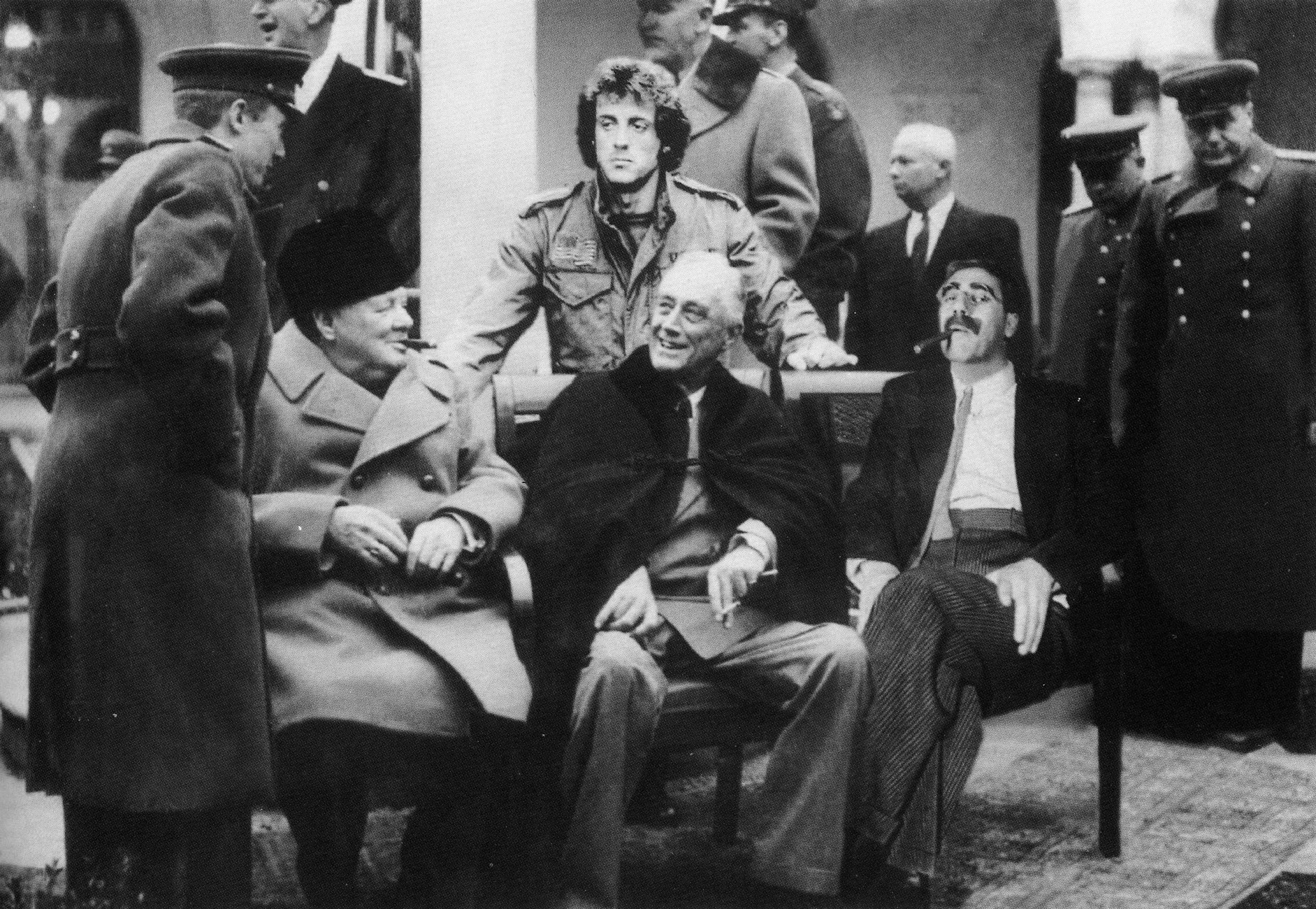
Important events could now be recorded. We are told that in 1908 James Hare “had taken a picture that proved the Wright brothers’ plane could fly”. At that time we still believed that the camera could not lie.

Yalta Conference? 1990

However, certainly by 1990, when Paul Higden  produced ‘Yalta Conference?’, which included “some latter-day gatecrashers”, we had become disillusioned.

A number of photographers brought back images of combatants in the American Civil War, but it was neither technically possible nor seen to be desirable to photograph the action.

British artillerymen 1917

That had to wait until World War 1 when an unidentified photographer produced this painterly picture of ‘British artillerymen feed[ing] an 8-inch howitzer’.

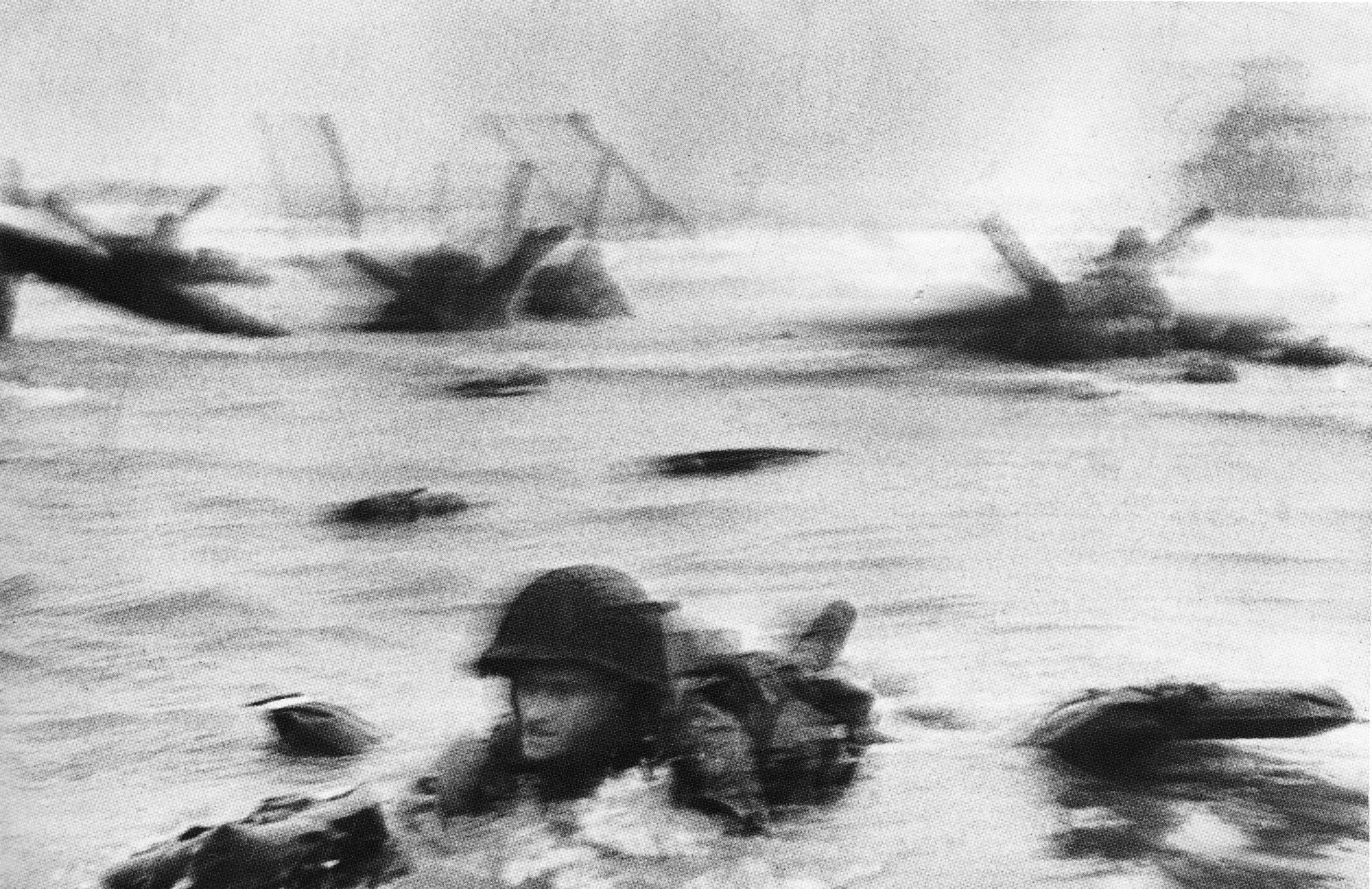
Normandy invasion on D-Day 6.6.42

Robert Capa was there with his camera for the ‘Normandy invasion on D-Day’, 6th June, 1944. Unfortunately the is one of only a few images of this event that were saved, most of the others having been destroyed in a dark-room accident.

In 1947 Capa, with David Seymour, Henri Cartier-Bresson, William and Rita Vandivert, and George Rodger formed that prestigious photography group, Magnum.

brasserie-lipp-1969

The Cartier-Bresson picture I have chosen for this piece does not feature in this book. It comes in the form of a postcard sent to me by Giles. The image is of a typically candid shot from this photographer, at the Brasserie Lipp in Paris, taken in 1969.

Bangladesh 1971

A later member of Magnum was Don McCullin. In the 1960s and ’70s he “became one of the best- known chroniclers of war and misery”. This picture demonstrates the sensitivity that this man exemplified.

Joseph Goebbels 1933

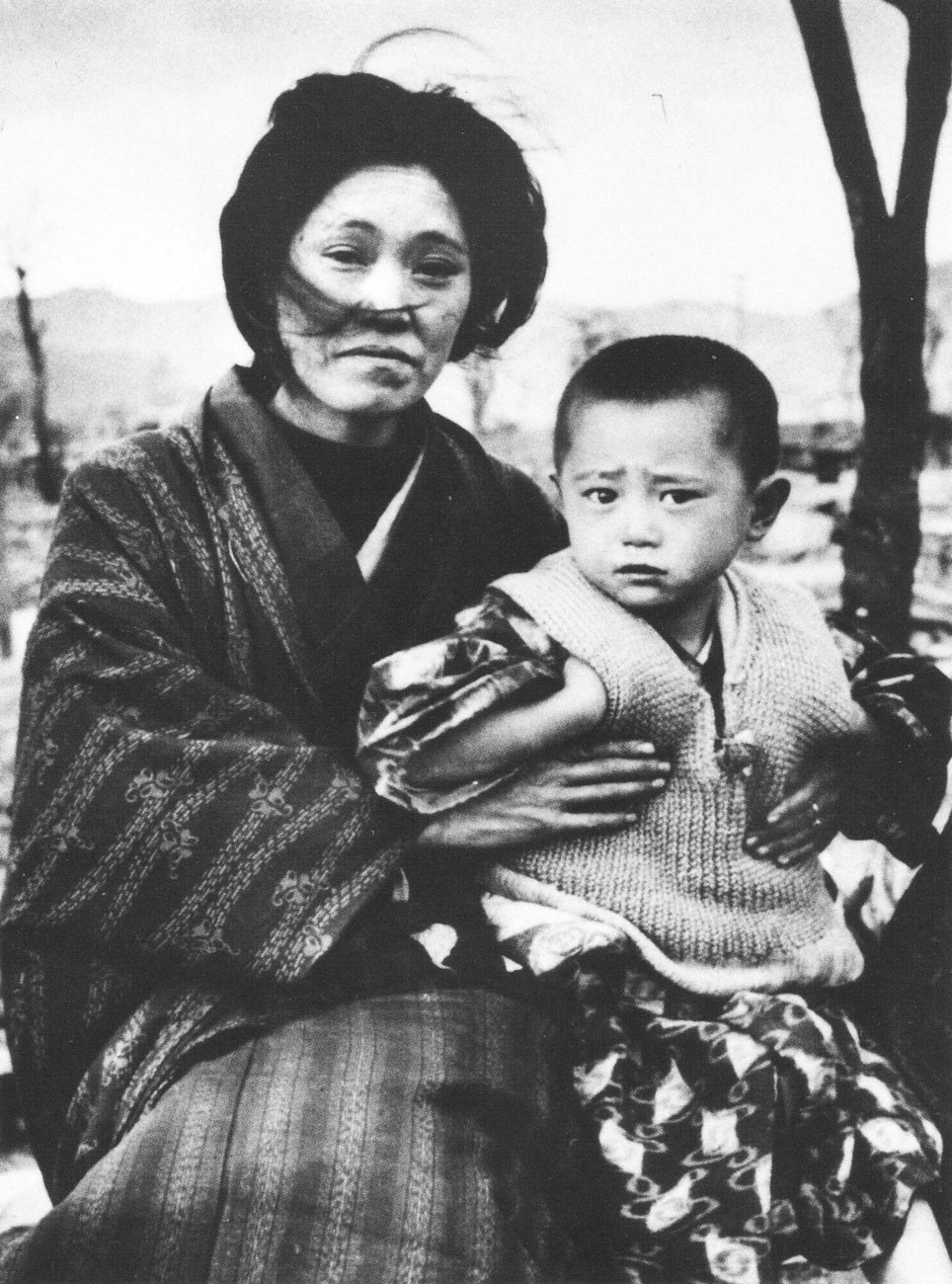
I have selected two images by Alfred Eisenstaedt which book-end WW2. It is amazing that he managed to walk away unscathed when he photographed Joseph Goebbels at a League of Nations Assembly in Geneva in 1933. A year or two later it would surely have been a different story.

Mother and Child at Hiroshima 1945

I’d rather witness the hate of Hitler’s Minister of Propaganda than the devastation of this ‘Mother and child at Hiroshima’ that Eisenstaedt portrayed in 1945.

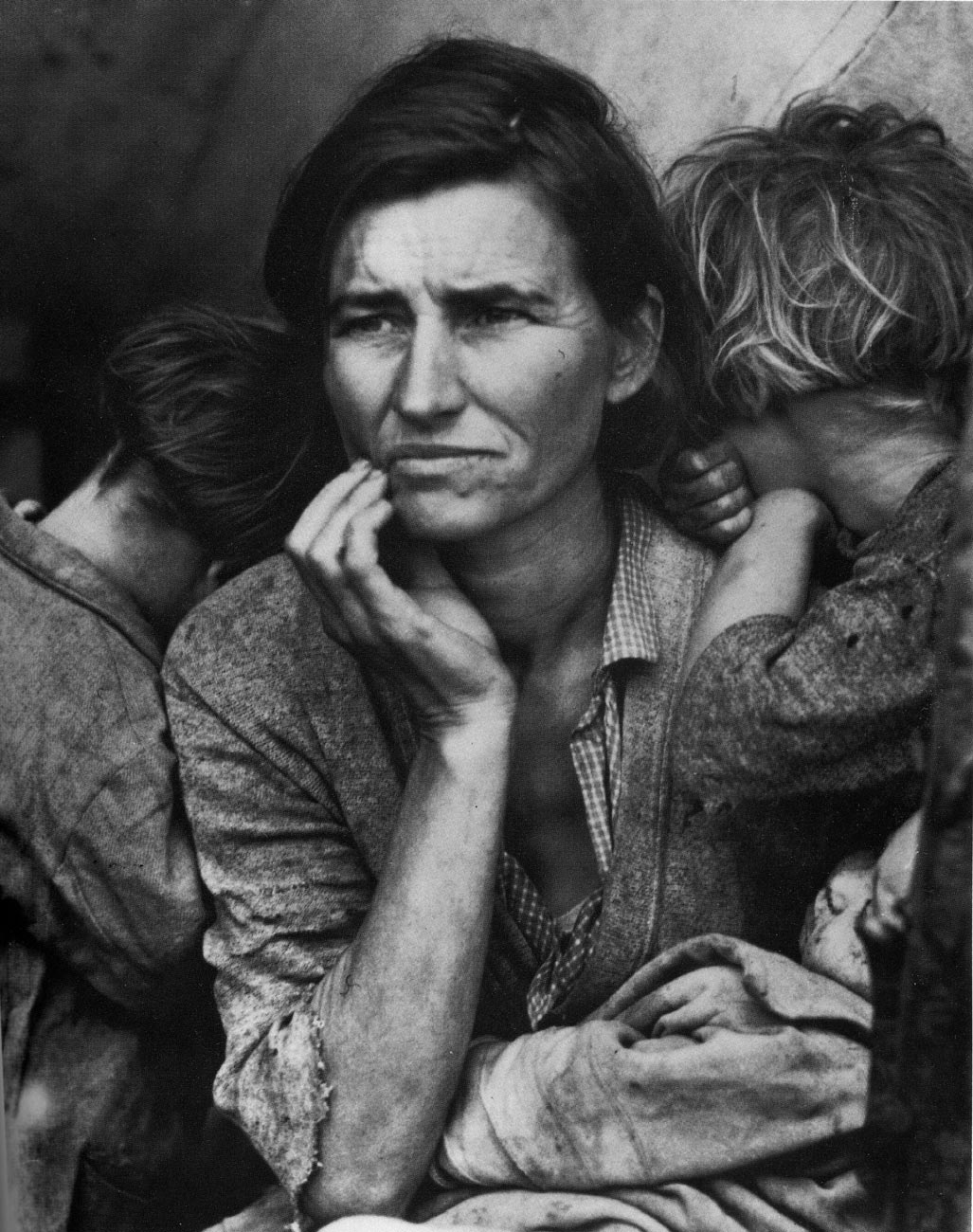
Migrant mother 1936

Dorothea Lange’s ‘Migrant mother’ from a California migrant workers’ camp in March 1936 “is one of the best-known icons of the Dust Bowl era”.

Suicide 1942

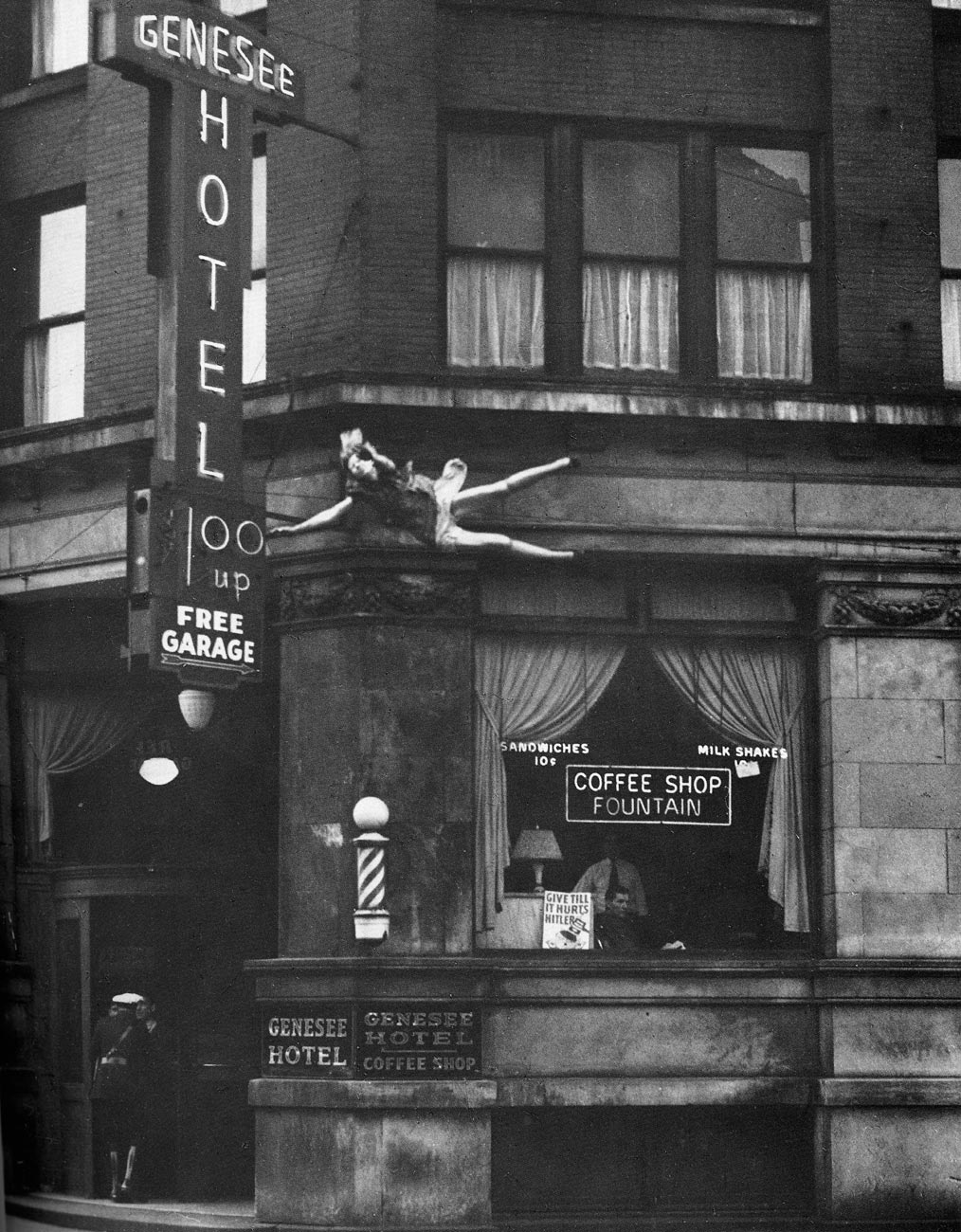
Finally, who, old enough, could examine Russell Sorgi’s 1942 ‘Suicide’, without being transported back to 9/11?

This evening we finished our Chinese takeaway meal.

A Partial Reconciliation.

CLICK ON IMAGES TO ENLARGE. REPEAT IF NECESSARY.

Today, feeling rather feverish, I spent the best part of the day in bed.

In the intervals when my eyes were open I finished reading Jane Austen’s ‘Sense and Sensibility’. It is more that 50 years since I decided I didn’t like her writing. Maybe, now I’m a little older, I thought I might give her another go.

The novel is beautifully crafted; the prose elegantly fastidious. The writer progressively builds her insightful characters, but I still find I don’t like them much. She was, of course, writing of a certain social class in her own time, but I can’t develop any rapport with people who are concerned only with appearances and presenting what others may wish to hear.

I suppose I have achieved a partial reconciliation with Miss Austen.

My 1949 Avalon Press edition is illustrated by Blair Hughes-Stanton.

Sense and Sensibility 001

The colour plates, one of which adorns the book jacket, are obscured by mist,

Sense and Sensibility 002

and figures in the vignettes appear to represent ghosts or zombies.

This evening we dined on Jackie’s tandoori chicken and boiled rice. She drank Hoegaarden and I drank lime squash.

Licking Into Shape

CLICK ON IMAGES TO ENLARGE. REPEAT IF REQUIRED

Parasol on gravelled patio

This morning we bought another parasol for the South end gravelled patio.

After lunch, The Head Gardener watered and I dead-headed The Rose Garden. Here there are two examples of similar but different flowers that she has been pointing out recently.

For Your Eyes Only

These are For Your Eyes Only

Summer Wine

and Summer Wine.

Hydrangea 1Hydrangea 2

Other manifestations are these two hydrangeas. Apart from the subtly different hues, can you spot the difference?

When Jackie and I visited Wimborne Minster on 23rd November 2013, we could not access the Chained Library. This was, however, possible for her and her sisters when they were staying near there recently.

The Chained Library003

Helen bought me a copy of W. A. (Frank) Tandy’s small booklet, which I finished reading today.

Tandy provides a brief introduction to the practice of chaining library books, and details of those, mostly dating from the 16th to the 18th centuries, contained in Wimborne Minster. The earliest volume in the collection is “Regimen Animarum”, a manuscript written on vellum, dated 1343. The books cover other subjects than the expected ecclesiastic ones. Gardening, science, and medicine are examples. I found it fascinating to discover that Sir Thomas Browne’s “The Pseudodoxia Epidemica of 1672” ‘examines the theory that a female bear gives birth to a lump of fat which she then licks into the shape of the cub she wants; it is from this that the expression ‘licking into shape’ originates’.

6453751d0b046bb859fccb8b97bd4e3b

This illustration comes from a mediaeval bestiary, Bodley 764, taken from Pinterest.

In mediaeval times, and the early years of printing, many books were extremely valuable. Most were bound in wooden boards making it possible to chain them in the manner thus described by Wikipedia:

‘A chained library is a library where the books are attached to their bookcase by a chain, which is sufficiently long to allow the books to be taken from their shelves and read, but not removed from the library itself. This would prevent theft of the library’s materials.[1] The practice was usual for reference libraries (that is, the vast majority of libraries) from the Middle Ages to approximately the 18th century. However, since the chaining process was also expensive, it was not used on all books.[2] Only the more valuable books in a collection were chained.[2] This included reference books and large books.[2]

It is standard for chained libraries to have the chain fitted to the corner or cover of a book. This is because if the chain were to be placed on the spine the book would suffer greater wear from the stress of moving it on and off the shelf. Because of the location of the chain attached to the book (via a ringlet) the books are housed with their spine facing away from the reader with only the pages’ fore-edges visible (that is, the ‘wrong’ way round to people accustomed to contemporary libraries). This is so that each book can be removed and opened without needing to be turned around, hence avoiding tangling its chain. To remove the book from the chain, the librarian would use a key.[3]

Chained library in Hereford Cathedral

The earliest example in England of a library to be endowed for use outside an institution such as a school or college was the Francis Trigge Chained Library in Grantham, Lincolnshire, established in 1598. The library still exists and can justifiably claim to be the forerunner of later public library systems. Marsh’s Library in Dublin, built 1701, is another non institutional library which is still housed in its original building. Here it was not the books that were chained, but rather the readers were locked into cages to prevent rare volumes from ‘wandering’. There is also an example of a chained library in the Royal Grammar School, Guildford as well as at Hereford Cathedral. While chaining books was a popular practice throughout Europe, it was not used in all libraries. The practice of chaining library books became less popular as printing increased and books became less expensive.[3]Wimborne Minster in Dorset, England is yet another example of a Chained Library. It is one of the first in England and the second largest.[4]‘

Sweet

As I entered this onto WordPress, I enjoyed the scent of our sweet peas standing on my window sill.

This evening we dined on Jackie’s vegetable rice salad with cheese-centred fish cakes. My lady drank Hoegaarden and I drank Kingfisher.

P.S. Cynthia Jobin’s comment below has some interesting additional information on early books.

The Death Of The Heart

CLICK ON IMAGES TO ENHANCE. REPET IF REQUIRED

Today, I have been mostly watering plants.

Nicotiana

Nicotiana now soars aloft.

Clematis Diversifolia Hendersonii

Several of our clematises, such as Diversifolia Hendersonii

Clematis Queen Mother

and Queen Mother in the front garden,

Clematis

and Duchess of Albany on the Rose Garden pergola bear hats of invisible pixies frolicking and turning somersaults in the sunshine.

Lily 1

This lily has taken two years to bloom.

Lily 2

Many, like this one, live just one day.

Bee on nasturtium

Bees are drawn to our nasturtiums.

Kniphofia

The kniphofias have poked their way up through the soil,

DDahlias

as have the red hot dahlias in the New Bed. The first is Bishop of Llandaff. I’m not sure about the others.

View from Shady Path

This view from the Shady Path encompasses

Hollyhocks

Margery’s hollyhocks.

While I was watering, Ronan was fixing our boiler, not that we will need heating any time soon.

The Death Of The Heart001

This is the blurb on the back cover of

The Death Of The Heart002

which I finished reading this evening.

When my blogging friend, Lisa learned that I was embarking on this novel she remembered that when she had read it, a long time ago, she had found it sad. I would trust Lisa’s judgement ahead of the book’s publicists.

If this is a story of adolescent love in the thirties, I am glad my teenage years were in the fifties. In my view it was more a tale of isolation and loneliness. I agree with the ‘Passion, misunderstanding…..’ paragraph above, but if this an example of ‘sublime sense of comedy’ it is so black as to be invisible to me. Remind me not to try The Orchid Trilogy.

Having said all this, I must concede that Bowen ‘is a major writer’. The book is well constructed; the prose is elegant; she has a keen eye for detail; and she develops character well. But does she like any of her creations?

Finally, Augustus John’s model has far more spirit about her than the unfortunate Portia.

This evening Jackie enjoyed a meal out with her friend, Pauline (not our NZ one); and I dined sumptuously on scrambled egg on toast and Doom Bar.

Undine

CLICK ON IMAGES YOU WISH TO ENLARGE. REPEAT IF NECESSARY. DISAPPOINTINGLY THIS DOESN’T WORK FOR THE COLOUR PLATES WHICH BECOME TOO PIXELLATED.

I failed an intelligence test this morning.

Well, in fairness no-one told me that the weedkiller sachets contained further such items. You see, it was my task to zap the weeds in the cracks between the concrete sections of the front drive, and its accompanying gravel path.

Weedkiller sachets

So. I merrily tore of the top of the outer covering and tipped the contents into 5 litres of water. I would have immediately added four more inner sachets. But I noticed a transparent packet bearing floating minuscule sections of what looked like vermicelli, and strove to extract this. Ah. It was soluble. So I got the poison all over my fingers and had to wash it off. Of course, the mini-pasta also dissolved, as it was meant to do.

Well, now I know.

Iris foetidissima

Our first iris foetidissima bloomed today. Its days are numbered because The Head Gardener is less partial to them than I am. It must be something in the name.

This afternoon I finished reading:

Undine title page

This volume has adorned my bookshelves for 34 years, but, although I have often perused the pictures, I only began to read it a few days ago.

The Encyclopaedia Britannica has this to say about the author:

‘Friedrich Heinrich Karl de la Motte, Baron Fouqué, (born February 12, 1777, Brandenburg—died January 23, 1843, Berlin) German novelist and playwright remembered chiefly as the author of the popular fairy tale Undine (1811).

Fouqué was a descendant of French aristocrats, an eager reader of English and Scandinavian literature and Greek and Norse myths, and a military officer. He became a serious writer after he met scholar and critic August Wilhelm Schlegel. In his writings Fouqué expressed heroic ideals of chivalry designed to arouse a sense of German tradition and national character in his contemporaries during the Napoleonic era.

A prolific writer, Fouqué gathered much of his material from Scandinavian sagas and myths. His dramatic trilogy, Der Held des Nordens (1808–10; “Hero of the North”), is the first modern dramatic treatment of the Nibelung story and a precedent for the later dramas of Friedrich Hebbel and the operas of Richard Wagner.’

220px-Arthur_rackham_selfportrait

It is a measure of the prowess of the artist, the foremost English book illustrator of the early twentieth century, Arthur Rackham,

Undine cover

that it is his name that appears on the front cover,

Undine spine

although the writer features on the spine.

One reason I never pursued book illustration as a career was that I knew I had no hope of ever matching this master.

Undine illustration 1

Undine illustration 2

There are 15 colour plates in my Heinemann edition. I forced myself to make a limited selection, and chose these two examples of the many moods Rackham is capable of evoking. He is noted for his trees.

Undine vignettes

Each chapter is topped and tailed by an exquisite little vignette, pertinent to the story.

Let us not forget the translator, W. L. Courtney, who has produced a beautifully poetic rendering of the original romantic fable of 1811. I do not know how far from the original he has strayed, but suitably quaint archaic language speaks of the bygone days of knights, honour,  chivalry, water sprites, and magic.  The poetic prose is especially descriptive. It was fun to read, even without Mr. Rackham’s input.

This evening we dined on chicken marinaded overnight in lemon and piri-piri sauce, carrots, runner beans, ratatouille, and mashed potato and swede, followed by lemon tart and cream. The Cook drank Hoegaarden and I drank la Croix des Celestins Fleurie 2014.