Round The Bend

This morning Dale from Crestwood visited and measured up for the new flooring in the sitting room. This friendly, personable, gentleman received knee replacements shortly before me and is back to carpet fitting, which is encouraging. When we discussed dates and I mentioned that we were very flexible, a snort-guffaw ensued from Ian.

Mr and Mrs Steele returned home to Emsworth after lunch when I continued grappling with

retouching this further image from the 1926 Conwy holiday of my mother, her parents, and siblings. Here Uncle Roy determinedly clings to a toy train; Uncle Ben clutches a boat; and I am not sure what Mum is holding. Grandma photobombs from behind her daughter. Elasticated socks don’t seem to have been invented then.

This badly scratched and spotted single image represents two hours work. I didn’t fancy tackling another today.

Jackie had spent much of this hot and humid day watering plants in containers. Later I took over on the final stint.

Early this evening we took a drive into the forest, buying fish and chips from Mr Pink’s on the way home. We ate these with pickled onions and, in my case Calvet Cru du Beaujolais 2016 to drink, before I uploaded the photographs and finished the post.
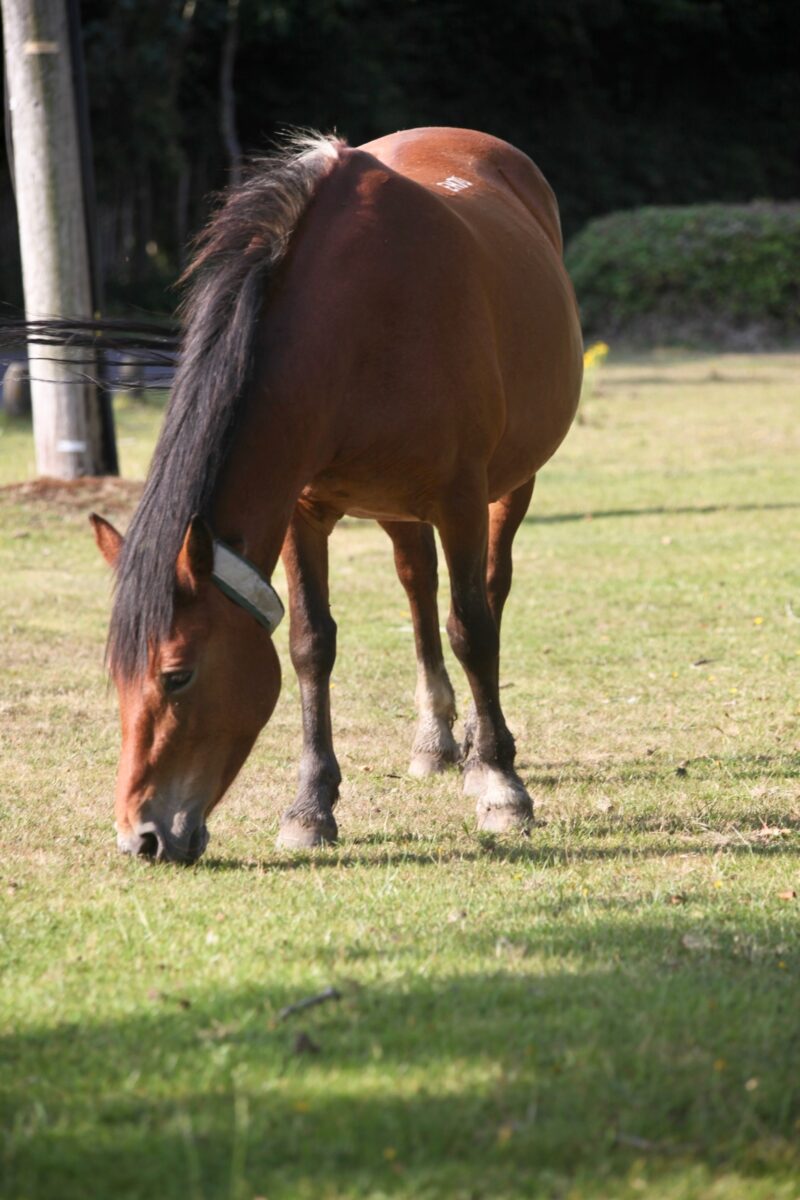
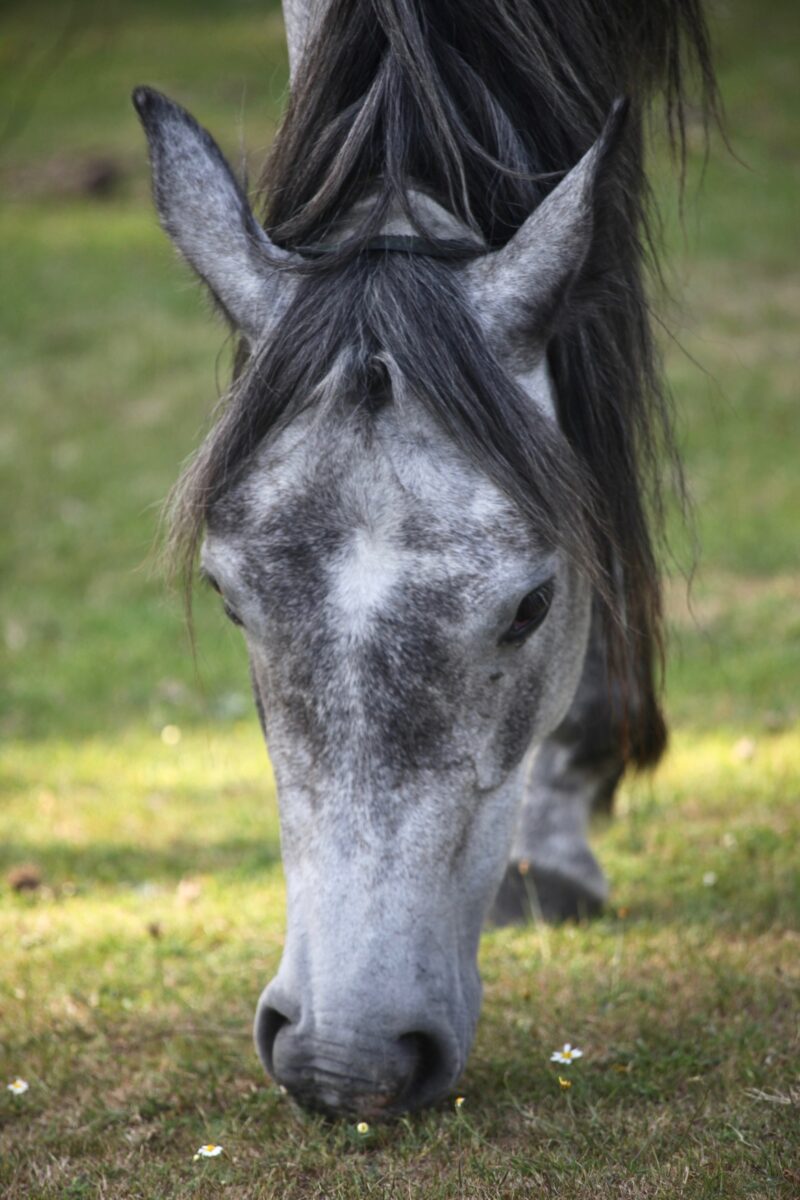
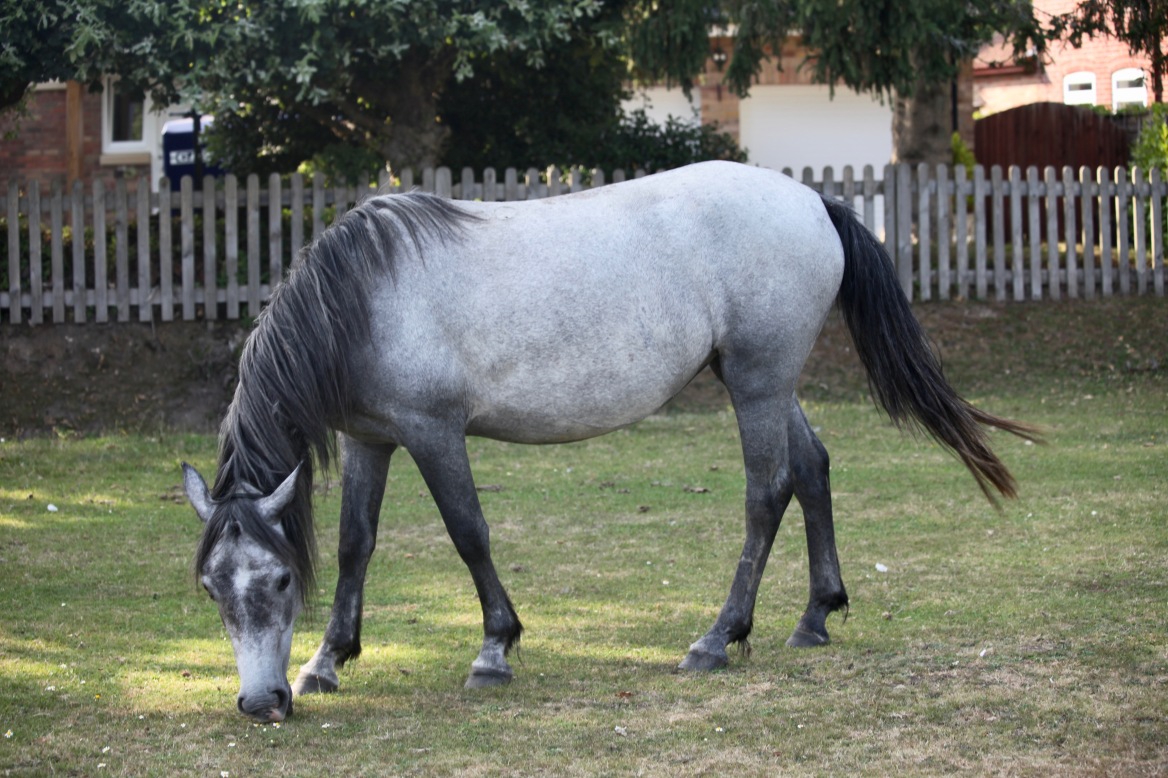
Ponies largely grazed in the shade alongside Pilley Street.
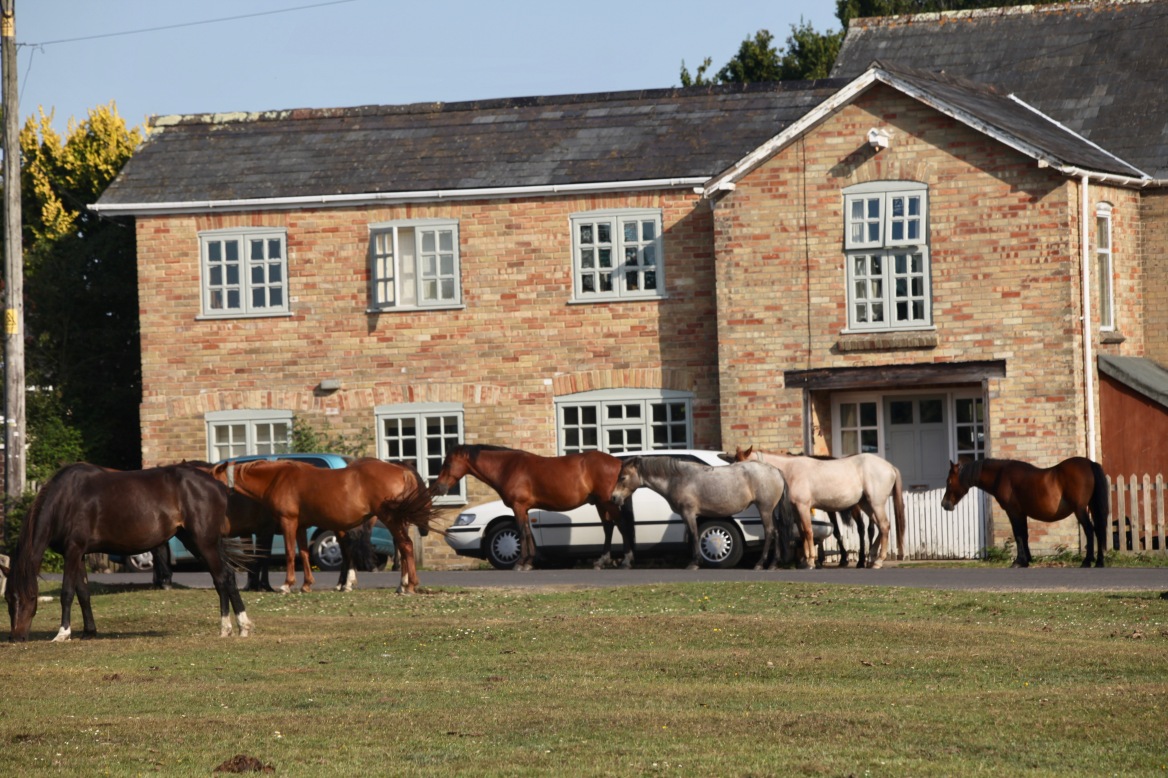
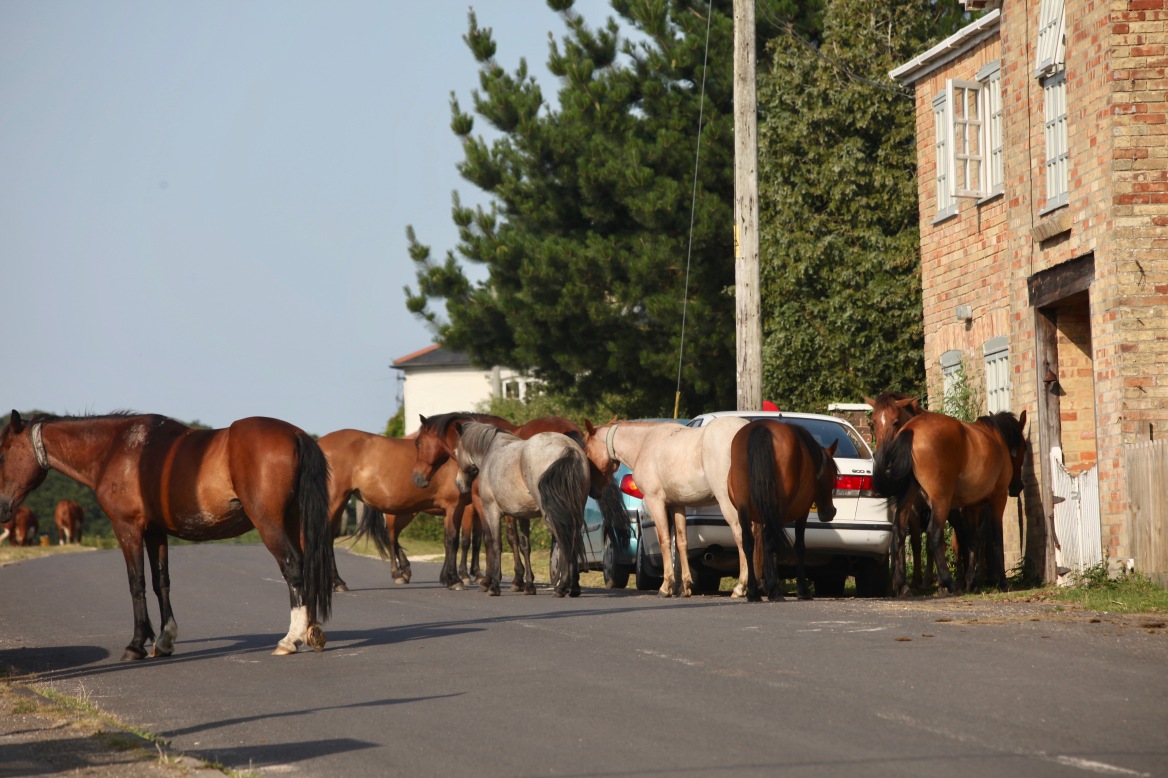
Ponies at East End surrounded vehicles outside a row of houses.
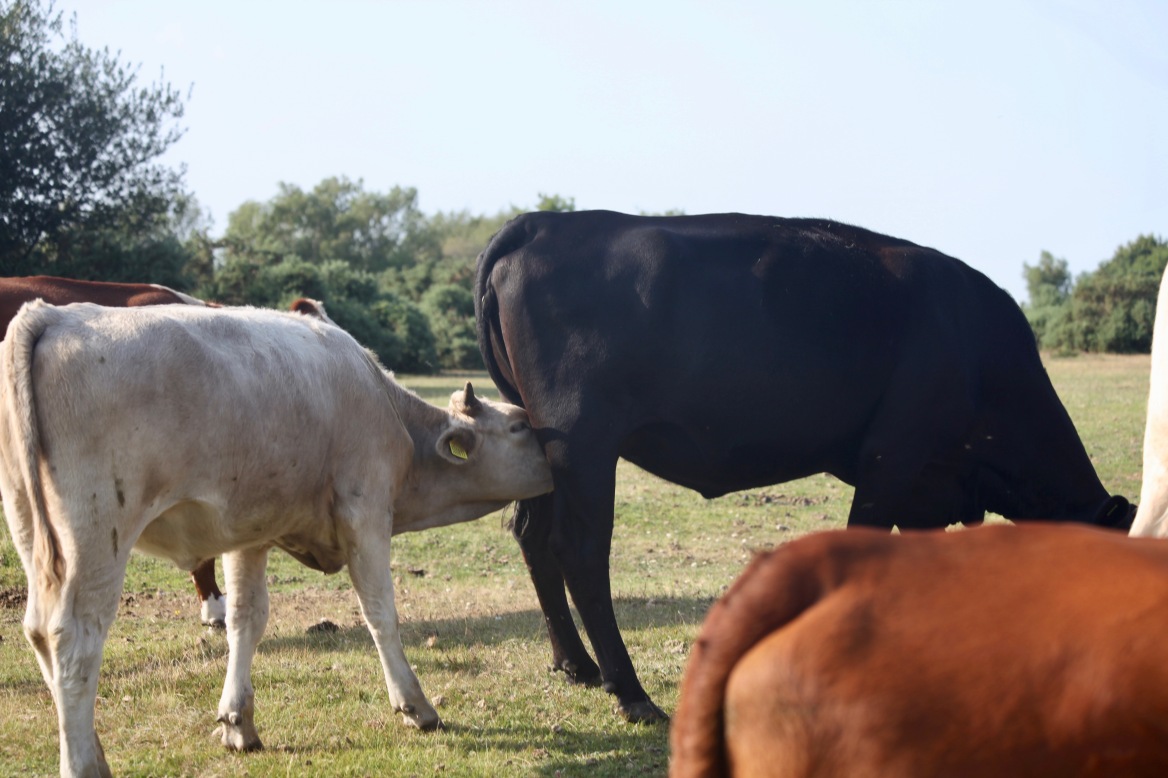
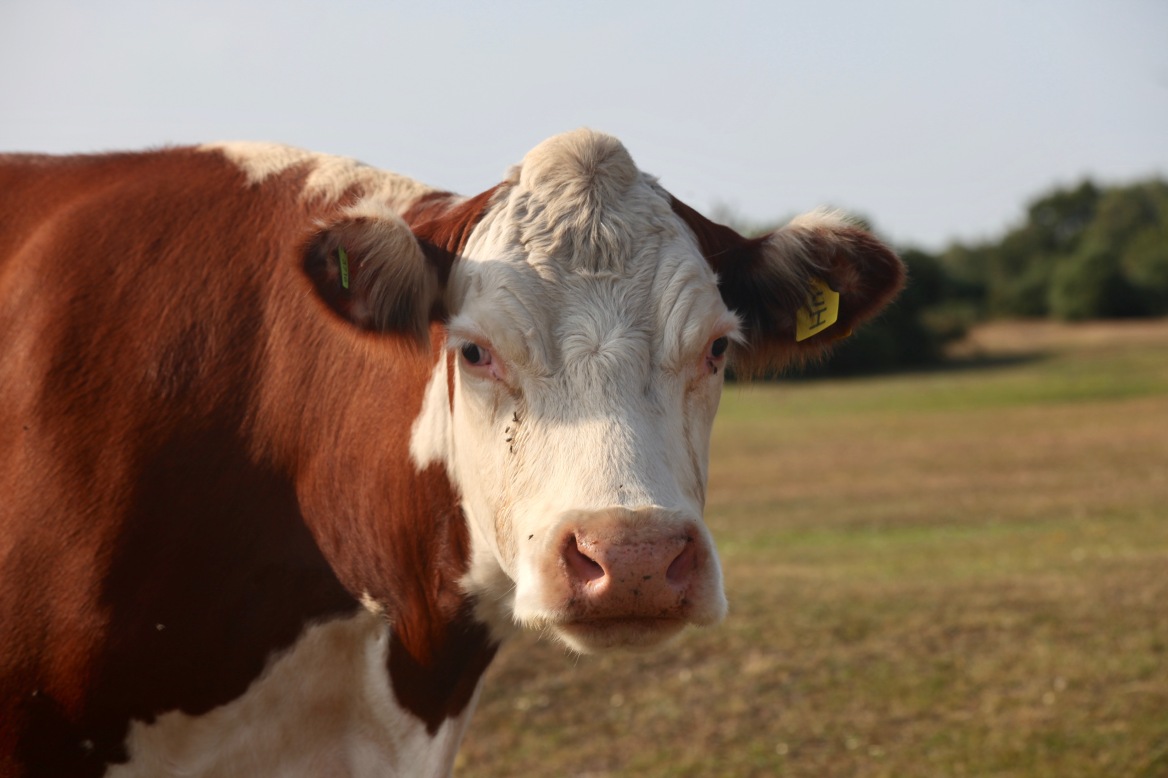
Further along the road quite big calves tried to latch on to their mother’s udders whilst on the move. The cattle seemed oblivious to the flies crawling over their faces.
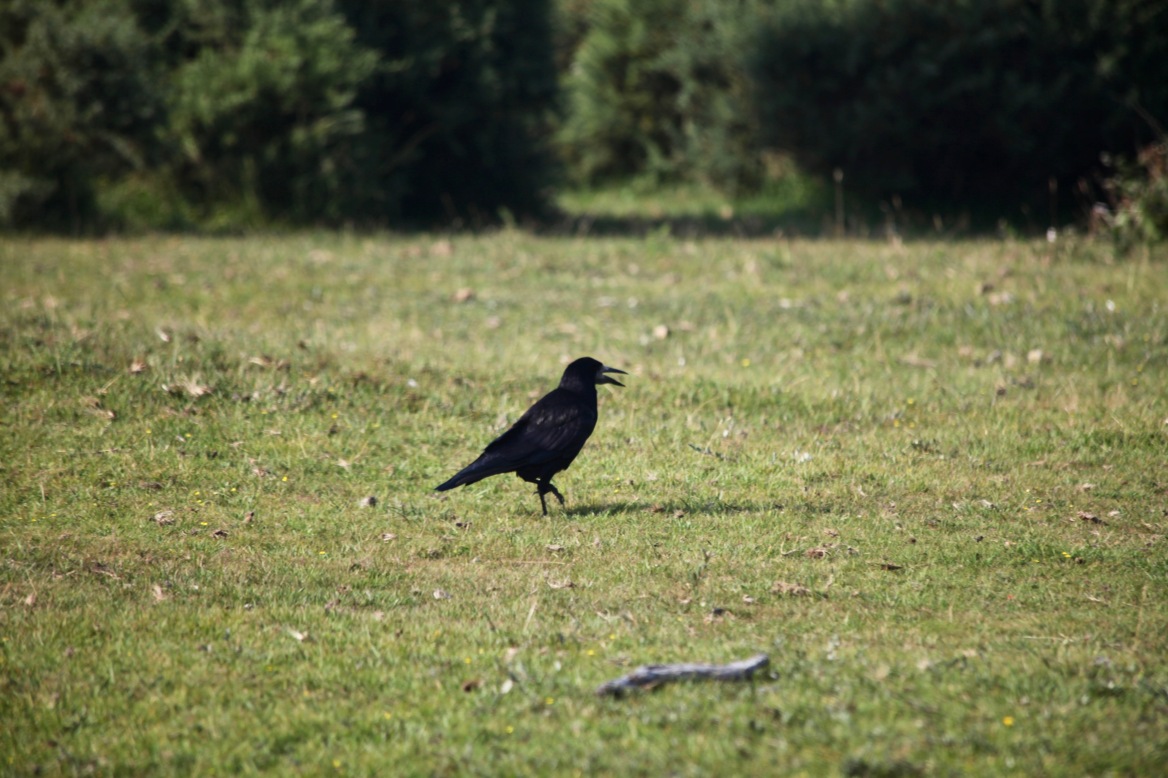
Vociferous crows ran about seeking pickings.
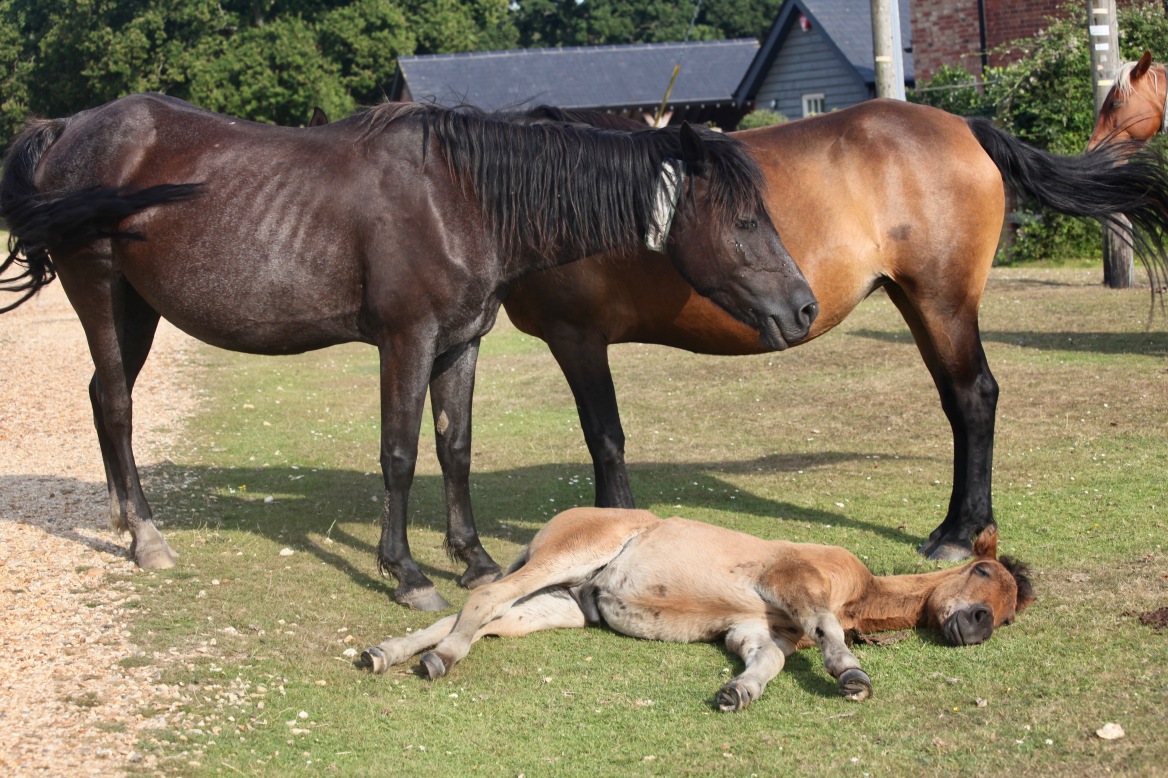
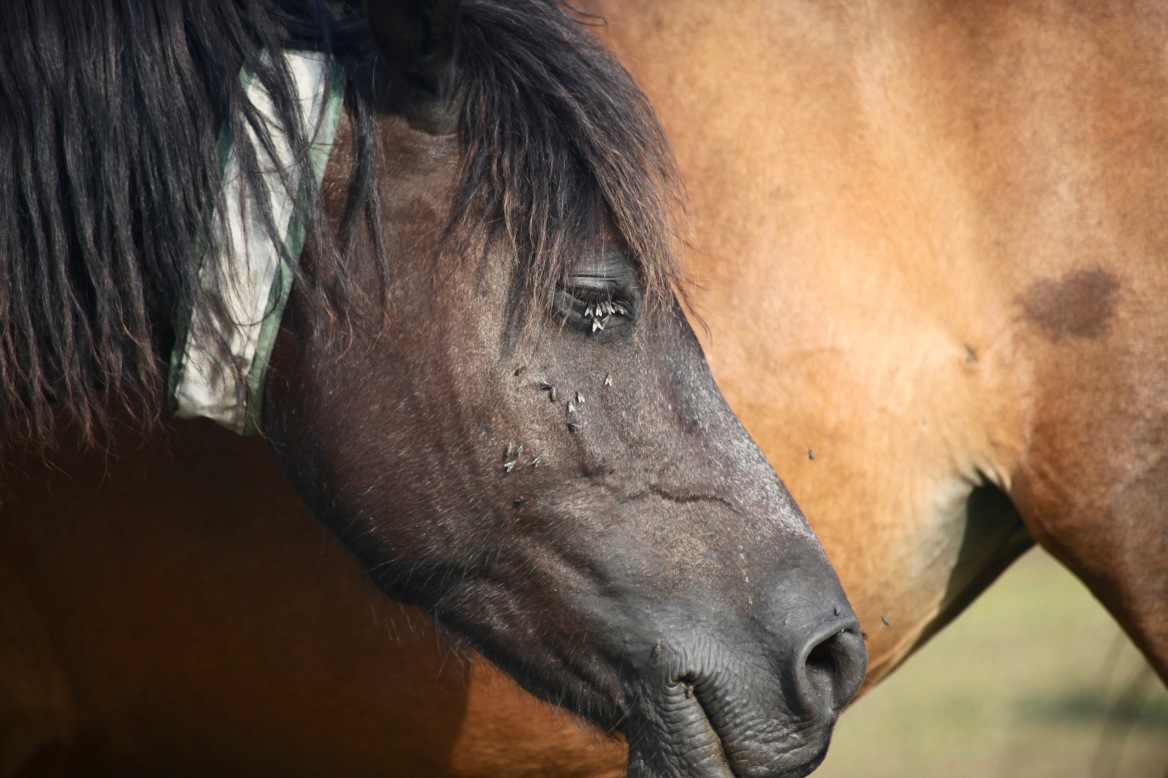
How on earth this pony guarding over her foal can tolerate her dreadful flies is beyond me.

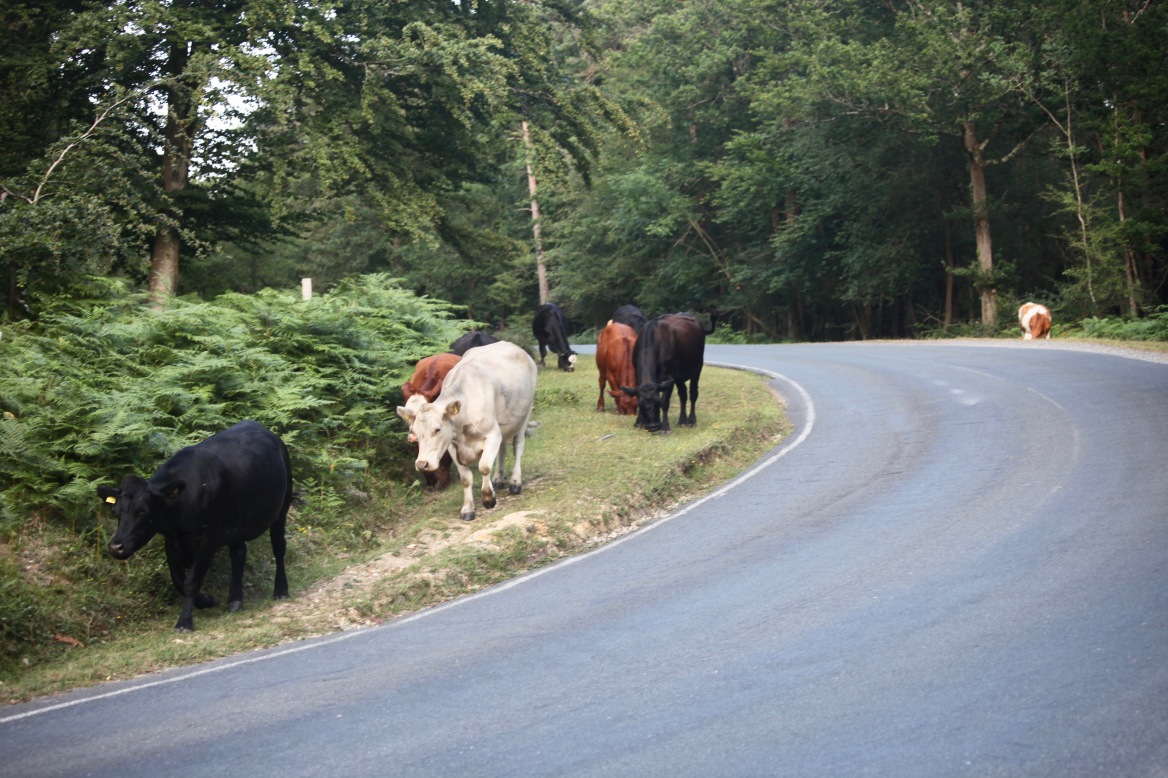
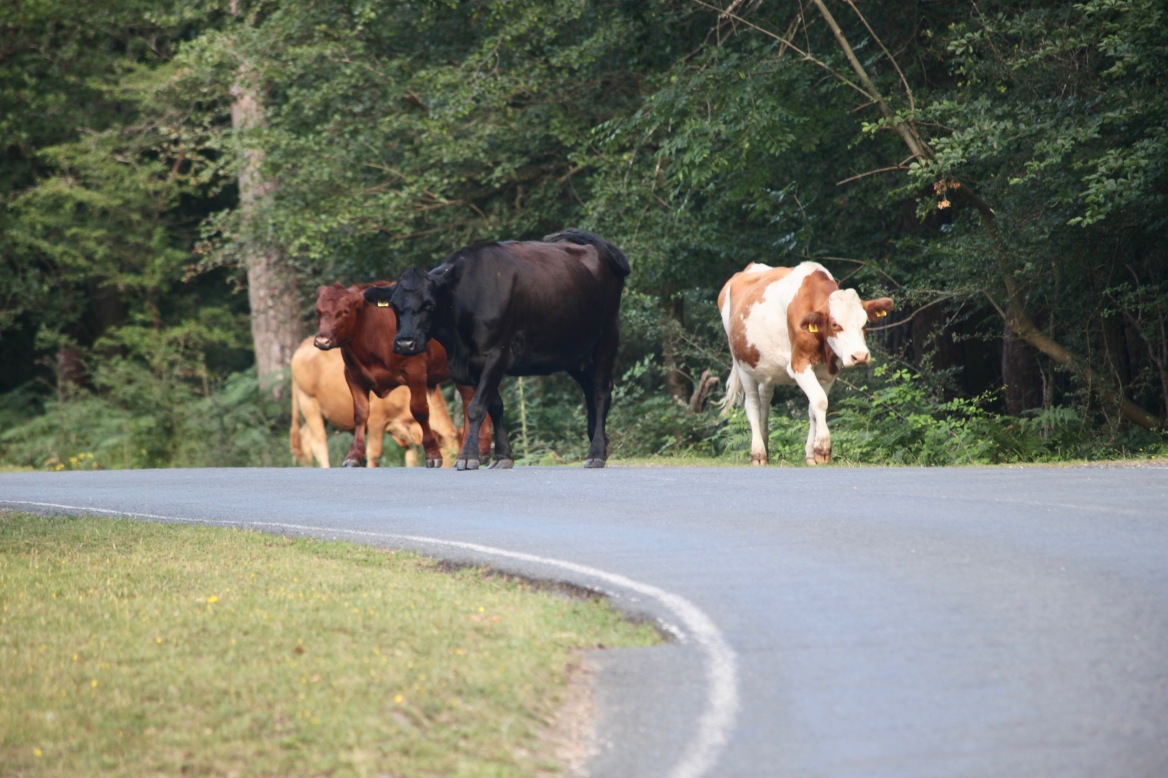
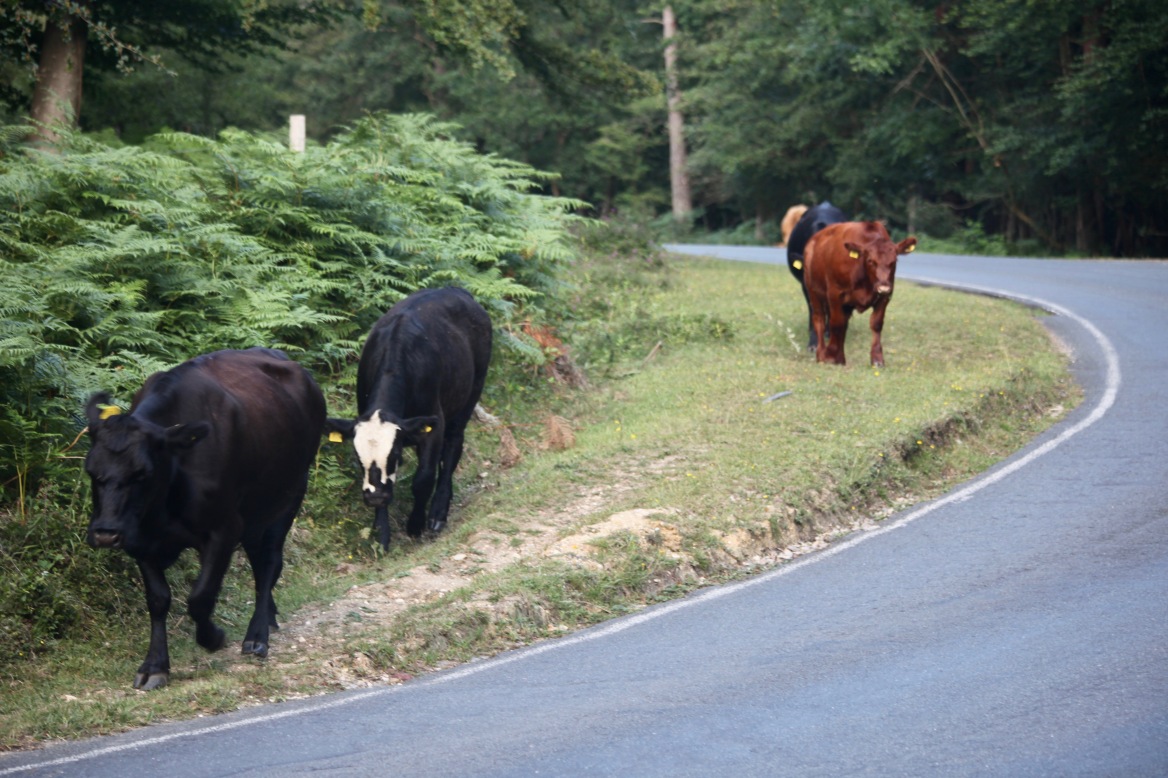
On the road from Beaulieu to Brockenhurst a bunch of cattle blocked the road. As Jackie steered us round the black calf in the centre, the creature paused for a scratch.

Rounding a couple of bends we stopped and waited for the arrival of this moving herd.
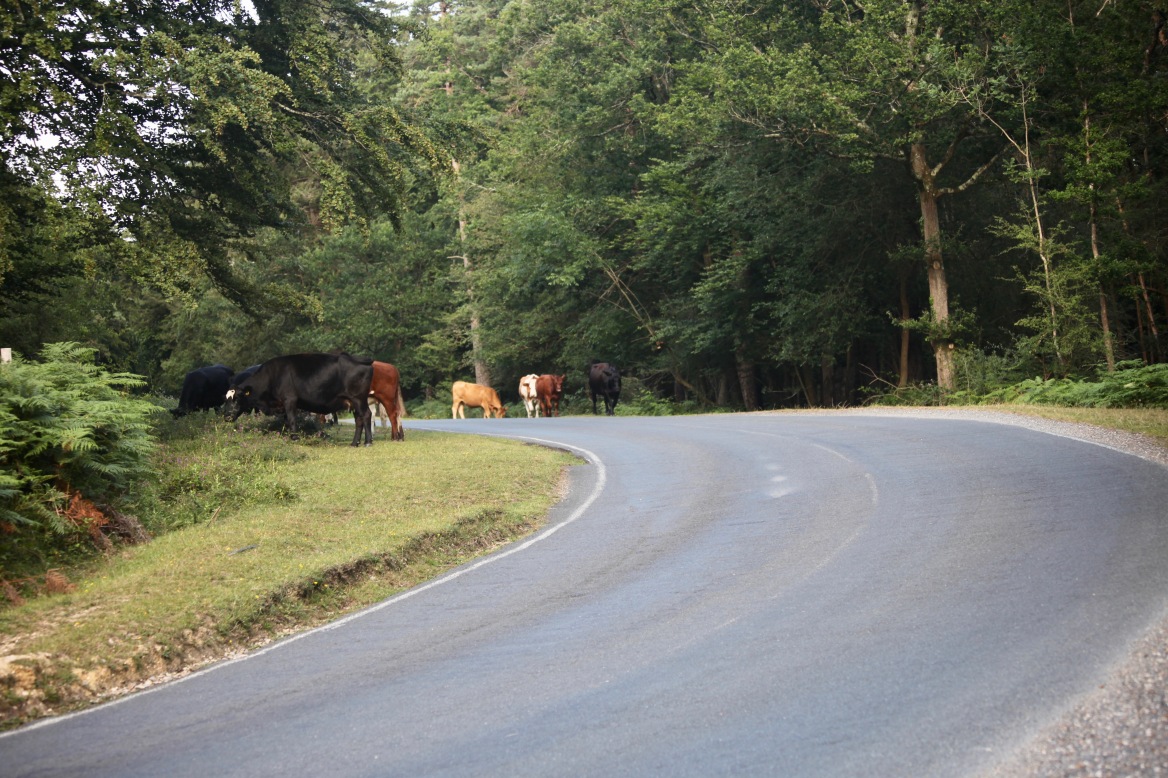
Soon they came into view, rounded the bend, and continued down the hill.

Becky’s Research

After lunch I retouched two more of the scans of https://derrickjknight.com/2019/07/20/a-free-afternoon/prints from 1926.

Here we have Mum and Uncles Ben and Roy on the beach at Conwy. It seems to have been essential to wear one’s best clothes, which, in some instances meant school uniform complete with cap.

Considering that this comes from a 5 x 10cm print the best part of 100 years old, I found the clarity of the water and the pebbles beneath it in this image of Mum and Grandma Hunter a tribute to my grandfather’s skill.

Becky has done more research on this portrait of her great grandfather from about 1919, which I also retouched today. Marcus Guttenberg came to the UK in 1851 from Poland via Russia and Germany. He moved to Manchester in 1878. Already a photographer he set up 24 different studios throughout the north of England including Whitby, Harrogate and Bridlington, eventually moving to Bristol where he died in 1891. This postcard portrait bearing the name Guttenberg would not be his work, although it is an example of such.

It may, however, be the work of his son, Percy, who took over the business and became a renowned photographer of theatrical personalities, having fourteen of his portraits in the National Portrait Gallery. On 20th October 1938 he changed his name to Percy Alexander.

My grandfather’s portrait above is certainly of an excellent professional quality.

Elizabeth Hunter, née Franks, his grandmother, could, however have been photographed at one of Marcus’s studios, aged about18 in 1885. Her parents ran a trawler fleet in Grimsby at the time, so the location could be right. She married Benjamin Hunter when she was 23.

Becky and I removed the back of the portrait featured in https://derrickjknight.com/2015/01/12/pictorial-female-lines, seeking confirmation of what Mum had told me. There wasn’t much to contradict her information.

This morning Jackie began planting up her new stumpery, The white powder evident on the stumps is an ant killer. When the Head Gardener exposed the nest she was ordered to stand back by her robin, Nugget, while he had his fill before she could apply the insecticide.

While making these photographs I was led to this blue eryngium setting well against the

white everlasting sweet peas.

This afternoon Jackie and I drove to Barton on Sea to catch up with Becky and Ian. Because we had missed them we drove to Old Milton and bought a new landline telephone. When we returned home an apparently displeased Becky rasped: “Where did you get that?” She then produced the one that she and Ian had bought us.

Back we went to the electrical store, obtained a refund, and, following Becky’s advice, bought a Dyson vacuum cleaner.

This evening the four of us dined on second helpings of yesterday’s Indian Takeaway with which Jackie drank Hoegaarden and I finished the Malbec.

“I Wish I Could Get Up Like That”

I am clearly no Val Erde, but today I made a start on retouching the images scanned yesterday.

Our Uncle Roy holds the shepherd’s crook in this scene from a parade during about 1927. I began with this picture because Becky has spent so long trying to establish the location. It was a safe bet that is somewhere in the North of England, given that our maternal grandfather was from Yorkshire, and grandmother from Lancashire. In vain did Becky, and later, Jackie try to identify the shop or to read the writing on the window. Trams ran on lines over cobbles in many towns in Yorkshire at that time. Shepherds’ crooks were widely used in May Day parades during the 1920s.

This portrait of Mum on the beach at Conwy in about 1926 deserved to come next. In my post, “Genes Will Out”, I had featured the likeness between my sister, Jacqueline, and her son, my nephew, James. I had been unaware of where this strain began – if not before. The deckchairs in the background would not be unfamiliar on any beach today, although the sand bucket would most likely now be made of plastic.

The third of today’s improvements was made on this photograph of Mum and Roy, who still lives in Leicester. Our uncle looks ready to take on the world. Shoes and socks are less likely to be seen on the seashore today.

When Elizabeth brought Mum over this afternoon, our mother demonstrated that she could have saved us all the research. She informed us that the location of the parade was Manchester, the occasion, Whit Monday, and Roy’s companion, Joan Heald. Grandpa, being a prison engineer, was based at Strangeways at the time. Joan was the daughter of a neighbouring officer’s family.

This led us to https://player.bfi.org.uk/free/film/watch-annual-whit-monday-procession-1927-online

After a brief explanation of the event, which continues today, this one minute silent film shows the likely procession Mum remembers.

Monday is the day for non-Catholics; Catholics parade on the Friday.

With a little further research, Becky and I were able to find the film which Mum could watch on my laptop.

My mother and sister had enjoyed a late lunch at Holmsley Old Station Tea Rooms. This did not deter them from scoffing cream teas.

Mum unwittingly cracked the joke of the day when, watching me haul myself out of my chair, she said “I wish I could get up like that”. Howls of laughter ensued.

Becky and Ian are still with us. Mum and Elizabeth left shortly before we ordered a takeaway meal from Forest Tandoori. My choice was prawn jalfrezi with special fried rice. I drank Uco Valley Malbec 2018. Should they be interested the others may speak for themselves.

A Free Afternoon

Just before lunch Danni, Andy, Elizabeth and Ella joined us, So that the parents could spend the afternoon alone while the rest of us looked after Ella.

We began with lunch laid out by Grauntie Jackie.

Eventually we got rid of the parents, but they felt the need of clocking in with

first ice cream and later beer bulletins via e-mail, as they wandered round Lymington.

Elizabeth brought me a task in the form of Mum’s old photograph album from which we plan to make a reminiscence album in a form that she can see. Except for the photograph of her father in World War I naval uniform, I was working from tiny 5 x 8 cm prints produced by the man himself. As far as we can tell this photograph of our mother was taken on holiday at Conwy in about 1926.

Here Mum poses with her brothers Ben, Roy, and others;

here with our Uncle Roy;

here with her mother;

and here with her mother and brothers, all, we think, on the same holiday.

Our grandfather was occasionally photographed with his three children.

Here our grandmother poses first with an unknown companion and then alone on a wall.

Grandpa Hunter stands alone on the shingle beach.

We think this was probably taken during, before, or soon after 1919.

This street parade, in which Mum and Uncle Roy both participated with others, probably took place in 1927. At this stage I have not repaired any of the images.

Many other important photographs have already been scanned for other occasions. These three colour prints were from June 1982. Mum and Dad often walked in Nonesuch Park. Here they were joined by Dad’s brother, Uncle Norman, on a visit from Adelaide to which he emigrated soon after World War II.

Danni and Andy returned late in the afternoon and for dinner we all tucked into Jackie’s succulent beef in red wine; crunchy carrots and cauliflower; tender runner beans and mange touts; and creamy mashed potatoes. Various red wines – I don’t remember which – were imbibed while the Culinary Queen and Ian drank Amstel.

Bumps

Welcome steady rain fell for most of the day. What’s that? An Englishman welcoming rain in July?

Yes. It is much needed at the moment.

This morning we drove to Crestwood of Lymington to book an assessment for replacing the very poorly laid flooring in our sitting room that we inherited five years ago.

Later Jackie drove me to Sears Barbers in Milford on Sea where she photographed Peter cutting my hair. Bobby Moore and Mohammed Ali were on hand to vet the proceedings.

This afternoon I scanned a set of prints from 3rd June 2000. These were of Sam and the Wadham Eight competing in the Oxford Eights Week.

Wikipedia reports that ‘Eights Week, also known as Summer Eights, is a four-day regatta of bumps races which constitutes the University of Oxford‘s main intercollegiate rowing event of the year. The regatta takes place in May of each year, from the Wednesday to the Saturday of the fifth week of Trinity Term. Men’s and women’s coxed eights compete in separate divisions for their colleges, with some colleges entering as many as five crews for each sex.

The racing takes place on the Isis, a length of the River Thames, which is generally too narrow for side by side racing. For each division, thirteen boats line up at the downstream end of the stretch, each cox holding onto a rope attached to the bank, leaving around 1.5 boat lengths between each boat. The start of racing is signalled by the firing of a cannon, each crew attempting to progress up their division by bumping the boat in front, while avoiding being bumped by the boat behind. Once a bump has taken place, both of the crews involved stop racing and move to the side to allow the rest of the division to pass. It is possible to “over bump” if the 2 crews in front of your boat bump (and so drop out) and your boat can catch the boat that was in front of them. They then swap places for the next day’s racing, whether that be the calendar day or the first day of racing in the next year’s competition.’

The nearest boat in each of the first two of these images is the Wadham First Eight of which Sam was a member.

I imagine it was a normal ritual for the crew to hoist the cox. Sam appears to be pleased to be grasping the young lady’s thigh. The man on the right covering a mate’s eyes

later received a ducking.

When you appreciate that this was the gentleman, a good two stone heavier by December 2008, who, as recounted in “Oiling The Lion”, tackled me to the ground during a game of touch rugby, you will perhaps understand that now, with tongue in cheek, I think he got what he deserved.

It had been some decades since Wadham College last won an oar at the Eights. They won two during Sam’s time there. He has kept his own from 2000. I have this one from the 2001 Torpid.

The Torpids are the other of the two bumping competitions held each year.

Early this evening Becky and Ian arrived to stay for the weekend. After a pleasant exchange of information about our various ailments we all dined at the Royal Oak. Jackie and Ian chose very good burgers, chips, coleslaw and salad, while Becky and I enjoyed chicken pie, with an al dente vegetable melange. We all shared a vast portion of real onion rings. Jackie drank Amstell; Ian drank Moretti; Becky drank Diet Pepsi; and I drank Malbec.

A Lindum House Holiday

Today I scanned a set of colour prints from April 2000.

It was the time of daffodils, tulips, and fritillaries in

Lindum House garden when Michael, Heidi, and their family drove up to Newark for one of their regular holidays.

In preparation for her visit, our friend, Errol’s Uncle Frank, had turned a beer crate into a baby’s swing for Alice.

I must have taken this family group on a day out somewhere because I don’t recognise the fence behind Michael, Heidi, Alice, Oliver, and Emily.

My older two grandchildren well knew the run of the garden by now.

In her comment on my Facebook page, Heidi has explained the running about, thus: ‘Yes Derrick I have copies of all those photos! It was Easter 2000, we had the roast on Easter Monday ! The swing was such a success and the eggs were hidden behind the logs. Probably Lindt Bunnies!!’. Her younger memory is better than mine.

Heidi, Louisa, and Jessica seem to be receiving the benefit of their knowledge.

Oliver and Emily seem less than enamoured of

their father’s roast.

Alice probably enjoyed something else.

This evening Jackie and I dined on her succulent sausages in red wine; boiled potatoes; crunchy carrots and cauliflower; and tender runner beans, with which she drank Hoegaarden and I drank more of the Shiraz.

The Stumpery

Jill Weatherholt, in her comment on “The Path To Deadman Hill”, described Jackie’s young robin as a little nugget. His name is now Nugget.

She spent the morning conversing with him whilst tidying the Oval Bed.

After taking the above photographs I wandered round the garden.

Hydrangeas need a lot of water, but the Head Gardener is keeping them going.

Day lilies continue to thrive,

as do many lilies proper,

and, of course, roses like Gertrude Jekyll and Special Anniversary.

This sidalcea leads nicely to the red hydrangea beyond.

Now that the Wedding Day is over, gladiolus and clematis veil its arch.

Dahlia’s time is now.

This everlasting sweet pea has a scent which justifies its name.

Plants accommodated in containers during the last few weeks have proliferated. The iron urn’s examples happily spill and spread, while

the wicker chair by the Westbrook Arbour is occupied to overflowing.

A clematis shawl has been cast over the arch spanning the Phantom Path between the Cryptomeria and Margery’s Beds.

In the latter, yellow Lisymachia Alexander stretches across the gravel;

and at its western end clematis and day lilies cavort with the red bottle brush plant.

Phlox blend nicely with other plants in the Palm Bed,

alongside the Gazebo Path leading to the stable door.

From Charlie Dimmock, Jackie has been inspired to create a “stumpery”. She will clean up the face of this heap of griselinia stumps and give it a fern makeover.

Just as the one o’clock news was about to expand upon Mr Trump’s latest exploits, Malachi phoned me from Fremantle seeking my help with a word search. We were unable to obtain full reciprocal vision on FaceTime, so we began a game of Lexulous instead. Because they are seven hours ahead of us, my grandson had to go to bed before we finished.

Later this afternoon we drove to New Milton to buy some shoes for Jackie, then back to Milford on Sea for a repeat prescription.

This evening we dined at Totton’s excellent The Family House Chinese restaurant, where we enjoyed our favourite set meal and Tsing Tao beer.

On Station Road

Jackie really enjoys the garden view from the stable door.

Here it was early this morning.

At the moment she is putting the rows of watering cans to repeated use on a daily basis.

After I had taken the above photographs my Chauffeuse drove me along Christchurch Road, where we passed

baled hay being loaded up, on our way to

New Milton Residents’ Association Wildflower Meadow. True to form the bees favoured cornflower blue.

Jackie then drove me round the roundabout and deposited me at the start of Station Road along which I walked to a bench providing a vantage point for people watching until she finished shopping at Tesco and carried me home.

I will let the photographs speak for themselves.

This evening we dined on Jackie’s succulent steak and mushroom pie; boiled potatoes; crunchy carrots and cauliflower; tender green beans; and tasty gravy, with which she drank Hoegaarden and I drank a fine Contenda Shiraz 2017 given to me for my birthday by Helen and Bill.

The Path To Deadman Hill

The day before yesterday I finished reading

being the final novel in the trilogy of the Larkin family, first featured in “Freak Of Fate” in which I described the first book; how I came by it; and the amazing coincidence of the address on the flyleaf, also borne by this Book Club edition published by Michael Joseph in 1960.

In his now familiar rollicking style the author continues to relate the cheerfully energetic romp through life of Pop Larkin, his friends and family. I have now realised that one of the chief pleasures of these stories is the ease with which Bates weaves beautiful bucolic descriptions into his innocently scandalous narrative. For the Larkins, life really is “perfickly” beautiful. Maybe, only 15 years after the ending of the Second World War, that is what the world needed.

This morning we visited Bill and Helen to exchange birthday presents.

We diverted to Abbotswell, near Frogham, on our way home, then decided to lunch at The Fighting Cocks at Godshill.

In the deeply pockmarked gravelled car park at the top of Abbotswell hill a couple of riders were persuading two splendid, reluctant, black horses into their trailered transport which, with their weight, seemed certain to increase the potholes.

I took a short walk among the undulating woodlands overlooking the sloping landscape below.

As always in such terrain it was necessary to tread gingerly over tree roots.

Bees swarmed among wild blackberry blossoms.

Cattle and ponies congregated in the valley below.

A lone cyclist sped along a footpath

and re-emerged on the path to Deadman Hill on the other side of Roger Penny Way. To think that just four years ago I would take that walk without thinking about it.

My lunch at the pub consisted of steak and ale pie, chips, and peas; Jackie’s was mushroom stroganoff with which she drank Hop House lager. My drink was Ringwood’s Best.

Long haired miniature ponies groped their way across the greens beside Cadnam Lane where

an enterprising hairdresser had given a bug-eyed tree stump an impressive Mohican.

The Head Gardener has a little friend in the form of a juvenile robin that follows her around during the day and has taken to joining us on the patio for a drink in the evening. Jackie, on this occasion, drank Hoegaarden, I drank sparkling water, and Robin drank water from a flower pot saucer.

After this, Jackie and I dined on pepperoni pizza and salad; Robin probably finished off what was clinging to his beak.

“Agony And Ecstasy Of The Highest Sporting Quality”

Our friend Pauline, having read yesterday’s post about Wimbledon tennis wondered whether I could repeat the performance with today’s men’s World Cricket Cup final between England and New Zealand. The title is a quotation from one of the commentators of a game which served up the most amazing finish.

I will try to explain the support in general, using this specific match as a vehicle. In the two images above we see the browner stretch of 22 yards between two sets of wickets which the batsmen must protect from the bowlers. In the second picture the batsman has hit the ball into the field. It is the task of fielders to catch or to stop the ball, while the batsmen run between the wickets to score runs. The two men in red shirts are the umpires whose task is to adjudicate on the play and interpret the rules. English players are in blue, while the New Zealanders are wearing black. Most people will understand that the cricket ball is red. In this version of the game it is white.

Around the perimeter is the boundary, which the ball in this image is about to reach, thereby scoring four runs. When the ball is hit over the ropes without bouncing the reward is six runs.

Behind the stumps stands the wicket keeper whose task is to stop the ball after it has passed the stumps. He may also catch the batsman out, or, if he is out of his ground – having crossed the white line in front of him – to stump him by breaking the wicket with the ball.

In this sequence the bowler has sent the ball past both batsman and wicket and the keeper has demonstrated great agility in catching it.

For a bowler the most satisfying dismissal of a batsman is to hit the stumps, or bowl him.

Another method is for the ball to strike the batsman’s pads on its way to certainly hitting the stumps. There are complicated rules about this.

Here are some batsmen in action. With balls often coming at them at 90 m.p.h. they all now wear protective masks,

and often need to take evasive action,

sometimes losing their footing.

Here we have some bowlers in action, their expressions betraying their feelings. The last image in this set demonstrates that some part of the bowler’s front foot must be behind the white line when he delivers the ball.

Fielding has become more important in recent years. Running, diving, catching, throwing to the wicket keeper, are all parts of the art. The last four images show a fielder taking a catch on the boundary. Because his feet touched the ropes the catch was disallowed and the shot counted for six runs.

One unpopular method of being dismissed is the run out. When running between the wickets a batsman must cross the white line. Here, a desperate dash was employed.

Here the batsman failed to ground his bat and was given out;

and this was the run out that, with the last of the extra six balls bowled to decide the otherwise tied match, decided the game, much in the manner of football’s penalty shoot out.

The spectators representing all corners of the globe were transfixed.

This evening Jackie produced a dinner of her own ratatouille, piri-piri chicken, and Lyonnaise potatoes, with which she drank Hoegaarden and I drank Doom Bar.