A Knight’s Tale (128: Waiting On Barbados, Part 1)

During the few days waiting for Sam to arrive in Port St Charles, Barbados, and afterwards, I took the opportunity to roam the Island with my camera.

Jessica, Louisa, and I began our stay in an hotel on the southern tip of the island, some miles from the finishing point, but soon transferred to join Chris, Frances, and Fiona in one in the luxurious developing holiday playground.

Coconut seller 5.04

This area presented a stark contrast to how the rest of the inhabitants of Barbados lived. Our hotel was surrounded by a compound patrolled by armed guards to keep out people like a coconut seller seated on the wall outside. His produce looked unappetising and he charged fairly optimistic prices.

Young woman against spray  5.04 002
Youn woman against spray 5.04 003
Young woman against spray 5.04 001

Some distance away, a young woman, seated on a rugged outcrop gazing out to sea, was persuaded to rise to her feet.

map-barbados-360x270-cb1434489582

Port St Charles (Speightstown on the map) lies on the Caribbean Sea to the north west of the Island. To the east storms the Atlantic ocean. The two bodies of water meet at the northern tip of the Island. Rowers need to navigate this point with precision. Too wide and the current would would carry them to Cuba, too near and they would be smashed on these rocks. The competitors rowed in pairs or solo. One of the pairs hit the rocks, and had to be rescued.

Caribbean Sea 5.04 002
Caribbean Sea 5.04 005
Caribbean 5.04 006
Caribbean 5.04 009

These seascapes are of the more gentle Caribbean.

Much less inviting was the dark, violent, Atlantic that, on the last couple of days, swept my son so fast towards his final destination that he dropped his anchor to slow himself down in order to arrive in daylight. Not for him, Cuba or the rocks.

Meanwhile, I traversed the island.

Flowering cacti

Cacti flowered profusely;

Unknown plant

I learned later that this is a calotropis;

Hibiscus

this is an hibiscus;

Bougainvillea

bougainvillea grows everywhere on the island;

Breadfruit

as do coconuts.

Stork

A lone stork stands out from the long grass by the sea,

Homes on coastline

on the coast of which expensive holiday homes contrast with

Chattel houses

the traditional wooden chattel houses.

Horse

I was surprised to see a horse lurking in the hedgerow, but have since learned that racing is a popular pastime, dating from the colonial years.

Grackle

This is possibly a grackle, or a Barbadian Black Bird.

Zenaida dove 5.04 02

The iridescent blue tinge on the neck of the Zenaida dove is intriguing.

Rusty drum

I expect there were plans for this rusting drum.

Succulent graffiti 1
Succulent graffiti 2
Succulent graffiti 3

I have seen graffiti in many forms, but only on Barbados has it been carved into succulents.

Slaking Its Thirst

On another bright-sunny-cool afternoon I took a tour of the garden

In the front crab apple blossom, and clematis Montana, the first accompanied by budding pink climbing roses, the second by hybrid bluebells.

I made a number of images from upstairs,

The views from the stable door and from the kitchen path towards the greenhouse were taken at ground level, as were

new rhododendrons and tulip.

Afterwards, Jackie drove me into the forest.

Golden gorse glows alongside Pound Lane where it reflects in a roadside pool.

The ancient bank with its mossy roots at the junction of Bennett’s Lane and Bisterne Close was striated by lengthy shadows.

A solitary pony slaked its thirst in a pool beside Wilverley Road,

on either side of which others cropped the dry grass.

For this evening’s dinner Becky added some chicken pieces to her perfect pork casserole and served it with more of her delicious savoury rice, and green beans, with which she and Jackie drank more of the Rosé, and I drank more of the red Ponce de León. Flo’s beverage was Kombucha Ginger and Lemon.

A True Tale Of Love In Tonga

Last night I read ‘A True Tale of Love in Tonga’ by Robert Gibbings, and spent some time today scanning

the dust jacket, the front and back boards;

the Foreword;

and the pages, which speak for themselves.

Between bouts of scanning Jackie drove me into the forest, where

I wandered among the gleaming golden gorse around Crockford Clump.

Ponies cropped the verges of St Leonard’s Road, while donkeys

tore at more prickly provisions,

and a pheasant tried camouflage in the long grass of a field.

This evening we dined on Becky’s delicious pork casserole; creamy mashed potato with nutmeg; and firm broccoli, with which Jackie and I each drank more of the Rosé and Rouge respectively.

Translation

I have previously stressed the importance of the translator in a book rendered into English, or any other language for that matter. None more so than The Forest Giant by Adrien le Corbeau.

Adrien le Corbeau is one of the pen-names of the Romanian born writer, Rudolf Bernhardt (1886-1932), who, writing in French entitled his work ‘Le Gigantesque’. The translator was T.E. Lawrence (of Arabia), who used the name J. H. Ross.

Because the prose in my 1935 edition was not as fluent as, for example, in Reginald Merton’s translation of ‘A Hero of Our Time’ featured in https://derrickjknight.com/2022/04/21/predestination/ I researched the internet for the original French version, which I assumed not to be the first language of Bernhardt, in order to obtain some idea of the quality of the author’s prose. It seems that the novel has lapsed into obscurity and the nearest I could find was the Castle Hill Press 2004 edition which presents parallel French and English texts at prices which tested my desire to investigate further.

Le Corbeau’s work is described as a novel that, through the story of a fictional sequoia from conception to death and beyond, discusses the histories of all forms of life.

I found this a philosophical exploration of life and death, not with great literary merit, but presented in a fascinating manner. The opening sections, following the journey of the seed to germination are those most smoothly flowing, but all does become more cumbersome further on. I can forgive the author for doubling the life expectation of the giant sequoia and for testing the vocabulary of his translator, but I am no wiser concerning the ultimate style I have read.

It seems that Lawrence (Ross), although he had apparently asked for the commission to translate it, did not like the book at all. While working on the translation, completed in 1923, he wrote: ‘At last this foul work: complete. Please have [it] typed and send [it] down that I may get it off my suffering chest before I burst. Damn Adrien le Corbeau and his rhetoric. The book is a magnificent idea, ruined by jejune bombast. My version is better than his: but dishonest here and there: but my stomach turned. Couldn’t help it.’

To my mind ‘jejune bombast’ is itself simply pompous.

Preferring the earlier, more sinuous, Art Nouveau, this Art Deco period of illustration is not my favourite, but the exquisite wood engravings of Agnes Miller Parker are very skilled examples.

This afternoon Becky, now somewhat recovered, came back for a few days. She had arranged for Jacob, a neighbour, to deliver a replacement mattress for Flo’s bed, which he did later.

This evening we dined on Jackie’s pasta Bolognese and runner beans, with which she and Becky drank Bordeaux Rosé 2020 and I drank Ponce de León 2020.

Resisting The Spanish Invasion

This morning Jackie and I drove to our annual pilgrimage to Boldre’s

Church Lane, with its high ancient hedgerows and its

private bluebell woods.

Banks and verges are now adorned, in addition to the bluebells, with white stitchworts, and yellow celandines and dandelions.

Jackie and and I saw differing images in the gnarled bark of an aged oak.

Rodlease Lane forms a T-junction with this first ancient thoroughfare, and also hosts this native variety of the blue flowers. When taking these pictures I was careful not to disturb

a bee pollinating a dandelion.

The reason we regularly visit this little area is because it continues to be populated by our own native plants as here

photographed and described by Jackie. The long, slender stems bear dark blue bells bending down one side. The leaves are long and narrow.

The Spanish variety is an invasive plant having largely replaced our home grown examples. To illustrate the difference our Head Gardener

photographed these interlopers when we arrived home. They are larger, more upright, plants with clusters of blooms all round the stems which rise from larger strap-like leaves.

I photographed these hybrids in our front garden. Their bells do hang down, but cluster all round the top of their stems. They also have larger leaves than our natives, none of which, sadly, are to be found on our plot.

This evening I dined on spicy pasta arrabbiata while the ladies enjoyed the chilli free version with Bolognese sauce. We had planned on Louisa, Errol, Jessica, and Imogen coming for Easter, but Covid put a stop to that, so tonight we all had the same Easter pasta in the shapes of chickens, eggs, and bunnies. Jackie drank Hoegaarden and I finished the Shiraz.

Time To Let The Cattle Loose

On a largely overcast yet dry day Jackie donated some property to one Charity Shop in Highcliffe before lunch and we both did the same with two small filing cabinets to the Oakhaven Hospice shop in the afternoon.

We then took a drive into the forest.

On the first green at Bramshaw a couple of donkeys shared their pasturage

with a sheep and two lambs.

I photographed Jackie’s attempt to catch me focussing on the most inquisitive of the donkeys which, when I left them for the sheep, stuck its head through Jackie’s window.

Further along the road was claimed by cattle including our old friends Splash and Blackie the Highland Bulls. Jackie produced the close-ups of these two fearsome beasts.

A solitary pony perched precariously on the slope of the verge.

Another bovine group trampling the woodland at Furzley reminded us that this is about the time that cattle who have been kept under shelter during the winter are generally released to roam.

This evening we dined on succulent fillet steaks; chips, roast tomatoes, and garden peas with which Jackie drank Hoegaarden and I drank more of the Bordeaux.

Predestination

After lunch I posted https://derrickjknight.com/2022/04/21/a-knights-tale-127-the-big-c/

Later I finished reading

The beautifully flowing descriptive writing in this short novel reveals the true calling of this precocious poet. The elegantly simple prose is packed with details of place, people, and events. There is no excessive padding. The introspective nature of the author is reflected in the emotional life of his main protagonist who is introduced in earlier sections, before we meet him through his diary. As usual I will not reveal details of the story, which involves insights into early 19th century Russian culture familiar to those of Lermontov’s class.

As always, the work of the translator was important. Reginald Merton seems to have caught the exquisite essence of the original in a language which I cannot read.

Peter Foster’s informative introduction puts the work and the author in the perspective of the times and the author’s literary contemporaries.

Dodie Masterman’s lithographs delicately suggest mood and atmosphere with use of muted colour and sparing detail. For example, the fifth picture in this gallery demonstrates that the encounter is not going too well.

I hope I am not giving anything away by saying that the design on the .front and back boards has reverberations both for the author and for his protagonists. Ultimately this book is an exploration of predestination.

This evening we dined at Lal Quilla, where my main meal was Chicken Jaljala; Jackie’s, Chom Chop Chicken; and Flo’s, Lamb Makhani; we shared pilau rice, sag paneer, and egg paratha. Jackie and I drank Kingfisher, and Flo, J2O. Food and service was as excellent as always.

On our way home Jackie photographed gulls at sunset from Milford on Sea.

A Knight’s Tale (127: The Big C)

Next, Sam displayed his boat, Pacific Pete, at Crick Boat Show in Northamptonshire. As a publicising exercise, my son sat on board and answered questions about what this was all about. One gentleman went to great lengths to obtain a good view; another seemed more interested in his lunch; was a third offering Sam a pint?

Back home in Newark, during the Dragon Boat Festival,

Louisa took a turn at fielding the questions. The gentleman seemed more engrossed than did his partner.

Sam’s friend Lewis Cove carried a bucket collecting donations for the Atlantic row, undertaken the following year.

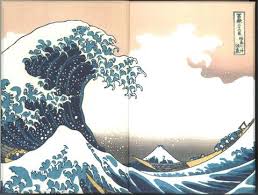
Inspired by

Hokusai’s Great Wave, I designed the logo Lewis totes. The idea was a play on The Big Sea and The Big C, in aid of which Sam was rowing.

Spring Verges

Rain yesterday had prevented me from photographing Martin’s garden work.

First he completed the tidying of the Back Drive. When our neighbours put up a new section of the fence between us the hook retaining our five barred gate disappeared. Martin fitted a new one, straightened the last of the line of bricks, removed refuse from beyond the gate, and transplanted some geraniums to brighten the bank opposite the raised bed.

Next, he cut the grass, then

weeded the Phantom Path and the southern half of the Brick Path.

Early this morning Jackie and I took a brief drive along the lanes to the east of the forest,

where wild flowers pack the verges, like these on the lane approaching Portmore;

and on the narrow section of Jordans Lane,

featuring a hole for a gate cut into a conifer hedge, and a horse and hound weather vane.

After lunch Jackie finished planting violas to complete the aforementioned Raised Bed, which she photographed herself.

We still have many camellias, a Vulcan magnolia, and burgeoning rhododendrons.

This evening we dined on fillet steaks, oven chips, and peas, with which Jackie finished the Cabernet Sauvignon and I drank Bordeaux Supérieur 2019.

Rudolph

Martin spent the whole day working in the garden. Jackie and I left him to it later this afternoon, but I will need to photograph his results tomorrow, because soon after we came home from an afternoon’s drive heavy rain hammered down.

Before lunch Shelly visited for a coffee and catch up after Covid in both families. All is well now.

My camera today found plenty of subjects along Beachern Wood.

A solitary pony cropped the verges beside the car park where

a horse being led from its box attracted visitors’ attention.

Various ponies dotted the landscape as we approached

the waking woodland, walked by people of all ages.

Alpacas basked on a hill opposite the trees;

cyclists and riders ambled down the road;

ungainly gaited crows trotted around the banks of

the rippling Ober Water, which reflected the surrounding trees,

one of which still bore Christmas decorations.

This evening we dined on Jackie’s omelette-topped savoury rice served with three preparations of prawns, namely tempura, hot and spicy and salt and pepper with which the Culinary Queen and I drank Valle de Casablanca Sauvignon Blanc 2021, while Flo didn’t.