Walking in Aquitaine

With five more chapters of Little Dorrit under my belt I now present five more of Charles Keeping’s splendid drawings.

‘Mr Flintwinch held the candle to her head’.

‘It was a charming place, on the road by the river’ is reminiscent of the paintings of John Constable. https://en.wikipedia.org/wiki/John_Constable

In ‘He applied spoons to his eye’, Keeping has ably depicted that Young Barnacle had not exactly engrossed the assembled company.

As the artist shows with ‘Now or never was the time to speak to her’ never would have been preferable.

Charles Keeping will not be constrained by the blocks of type on his pages.

‘The brothers, walking up and down the College-yard, were a memorable sight’, gives him the opportunity for a double spread.

This afternoon I scanned and labelled another set of recently rediscovered colour slides. These are from France in April 2009.

During my sojourns in Sigoules I walked many miles in and around the town.

The blossom trees in the first picture were in the garden immediately across rue St Jacques from my front windows; the white blob receding in the far distance of the garden collecting tyres was on regular five mile circuit; for a while cattle in the field behind the supermarket were displaced for development; the church and war memorial are at Ste Innocence, near Eymet; I would pass the ploughed field on another circuitous ramble. What was built on the development site and the trip to Ste Innocence are described in https://derrickjknight.com/2012/06/10/le-code-bar/

I passed these rape fields on my fairly regular 8 mile walk to Eymet. It was probably a little after this particular time that I began to struggle with this one. The general advice when encountering the marathon runners’ “wall” was to run the through the pain. I had never experienced that particular difficulty, but surely, it seemed, the pain in my left hip would benefit from such an effort. Not so. 6 months later I was fitted with a new one. Although I continued walking very quickly after the operation, I never ran again.

Chris, Frances, and Elizabeth were staying with me that spring. We took the opportunity to visit Chris’s long-term friend Mike Ozga and his wife Oonagh who lived about 30 miles away.

A walk in the Dordogne woodland ensued. I wondered whose fossilised skull had been covered in moss.

This evening we reprised Jackie’s scrumptious beef pie dinner with similar beverages.

Preening Swans

Today the air was cold; the cotton-clouded cerulean skies bright and sunny.

After lunch we took a drive as far as Hatchet Moor and back, enabling me to tramp over the

burnt gorse Nash battlefield beside the lake.

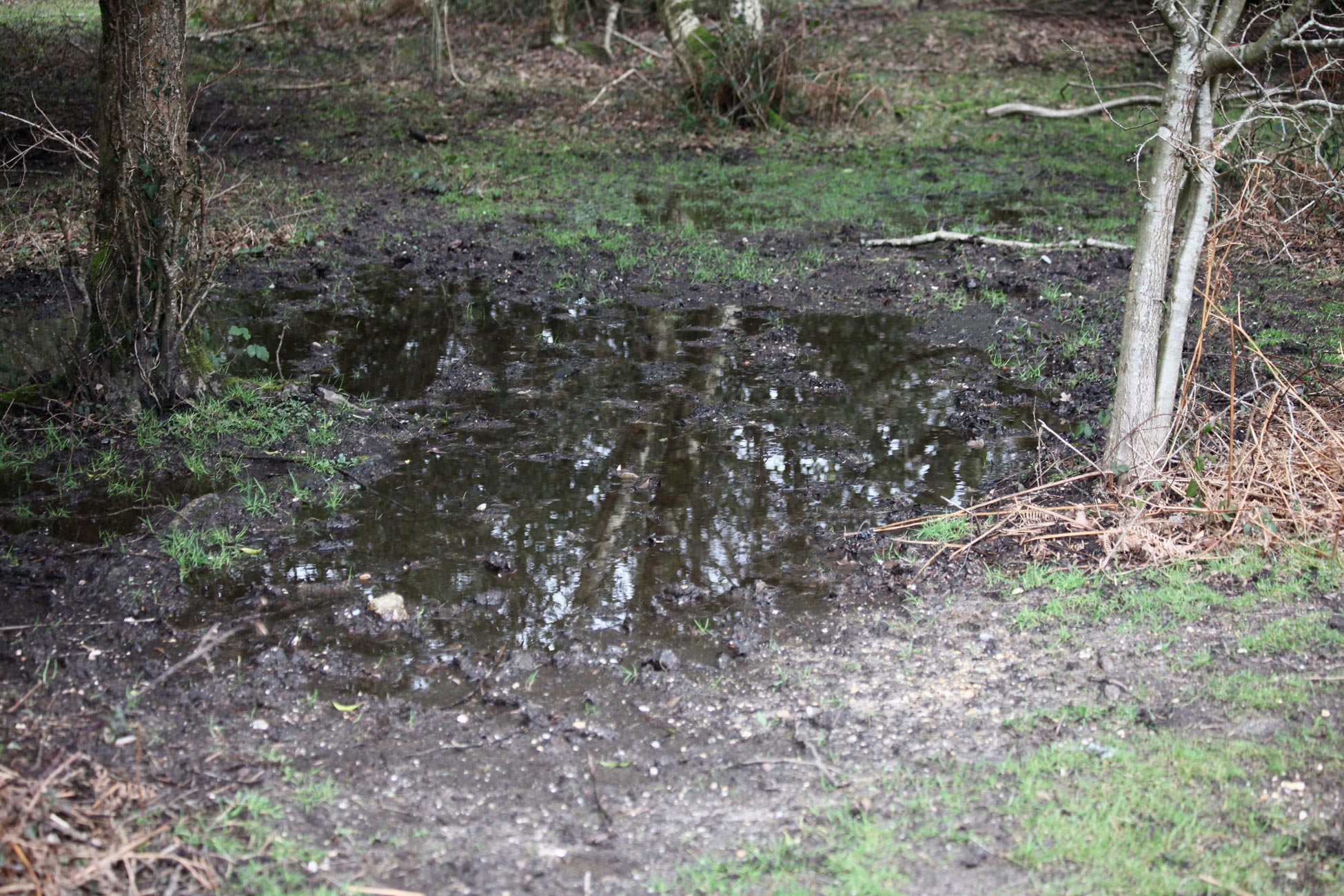
Beaulieu Road is lined with pools surrounding the rooted feet of trees which are generally dry in summer.

Walkers with dogs sought dry land and children sought pools in which gleefully to splash.

Muddy tracks surrounded this extension of Hatchet Pond and its environs, paradise to

stately swans exploring the tufted grasses.

Here is Jackie’s take on the swans as they preened and investigated the tussocks.

She waved from her vantage point on the far side of the water, from which she also photographed fishermen in the battlefield and “Where’s Derrick?” (4).

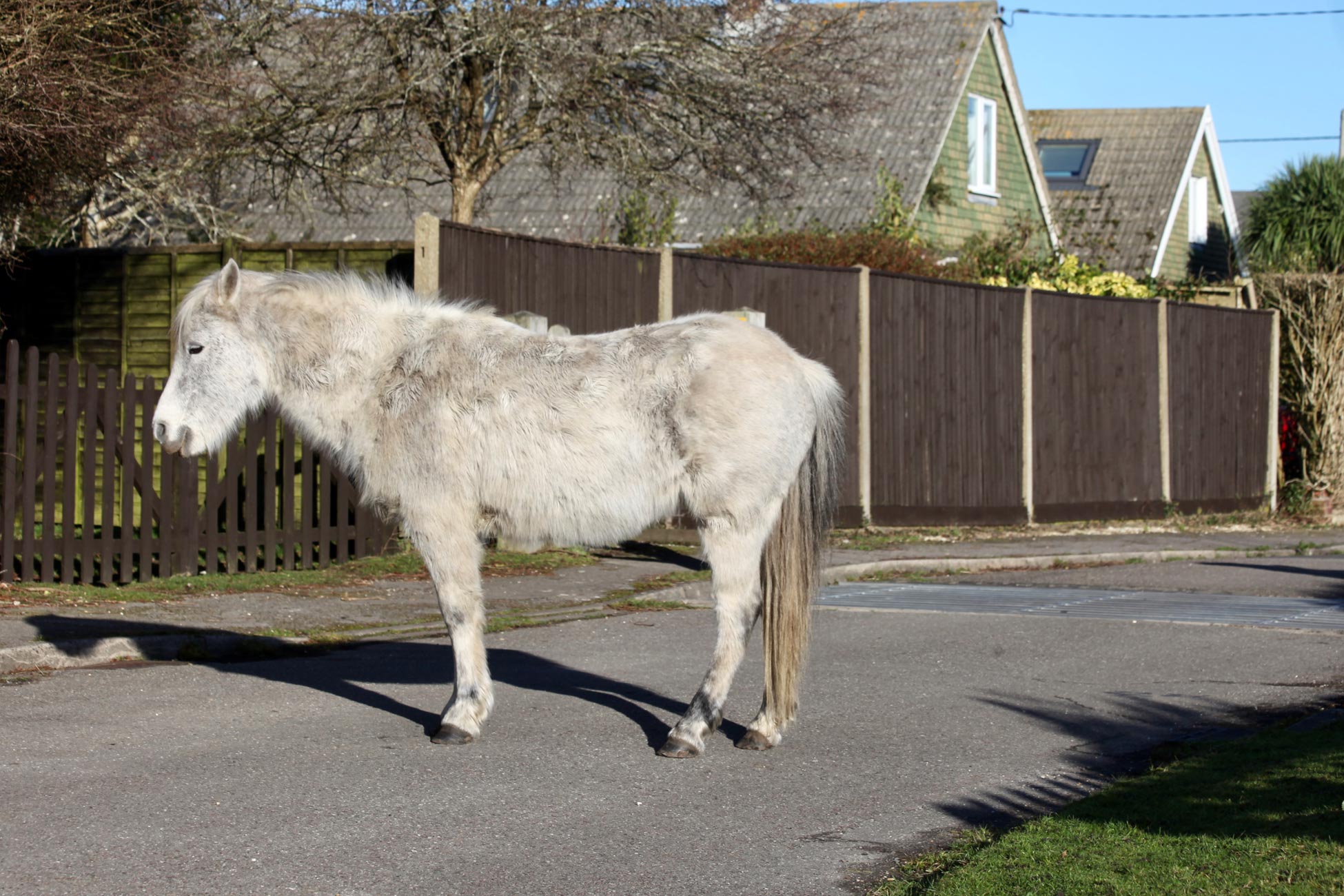
On our return a shaggy grey pony blocked the entrance to Gaza Avenue in East Boldre, opposite which her equine cousins grazed.

One bay crossed the soggy reflective terrain and was immediately followed by a slightly more mottled specimen.

This evening we dined on Jackie’s succulent beef and mushroom pie; creamy swede and potato mash; firm carrots, tender cabbage, and meaty gravy, with which she drank Hoegaarden and, having opened another bottle, I drank more of the Macon.

Rough Sleeping

This afternoon I scanned a few more recently rediscovered colour slides from August 2008. These are from a visit to Kew Gardens.

Beside the lake huge gunnera grow; upon it plays a splendid fountain.

The Titan Arum, or Amorphophallus Titanum, otherwise, on account of its putrid pong, known as the corpse plant, a native of Sumatra, is grown in the tropical hothouse. My second image bears a loose resemblance to the unfortunate hooded Elephant Man of Victorian England.

Later, I received a text inviting me to book an appointment for a Covid vaccine at our own surgery in Milford on Sea. This has to be done on line. If I don’t do it I will receive a phone call next week. Having already been offered and booked one in Christchurch I tried to telephone to discuss this. It was, of course, not possible. It looks as if I will take the bird in the hand.

With two more chapters of ‘Little Dorrit’ read, I scanned two more of Charles Keeping’s inimitable illustrations.

First we have ‘It became necessary to lead Mr F’s Aunt from the room’, which offers three different, accurate portraits.

‘Past homeless people lying coiled up in nooks’ depicts a social ill which to some lesser extent is still with us, as demonstrated by this East End Review article of April 15th 2015:

‘The homeless person sleeping rough might be a common image in London today, but in the 19th century there were hundreds spilling onto the streets every night.

Short but powerful, the new exhibition Homes of the Homeless: Seeking Shelter in Victorian London at the Geffrye Museum seeks to illuminate the daily struggle of the bitterly poor in the city 200 years ago. What this exhibition highlights most candidly is the juxtaposition between the Victorian ideal of the home and the reality of destitution in this period.

Some took to sleeping in London’s parks, while others tumbled into shelters and workhouses, where conditions varied massively. Queueing for accommodation was something frequently seen on the streets come dark, even in central locations like Covent Garden, and protests broke out as hundreds camped out in Trafalgar Square.

The Pinch of Poverty by Thomas Benjamin Kennington 1891. Credit: The Foundling Museum

Touching in so many different ways, the exhibition features paintings, photographs, testimonials and engravings all depicting homelessness in its various guises. The destitute family was a common image, with children evoking particular sympathy, and billboards and newspapers both carried adverts imploring people to give whatever they could to support the city’s more unfortunate souls. The government did, by today’s standards, much to stem the flow of homelessness in the capital, but as the century progressed, the problem became more difficult to contain.

Homes of the Homeless charts this challenge, touching on the different approaches to homelessness – from casual wards where ‘inmates’ could exchange hard labour for a place to sleep, to model lodging houses that were designed to more closely imitate a real home – as well as real people’s reactions to their dire circumstances, collected from investigative journalism and charity reports.

Thoroughly researched and straightforwardly presented, this exhibition is accessible to anyone interested in the history of London. With glaring relevance today, it presents a significant slice of history that should not be overlooked, and an important lesson in charity and compassion. Homes of the Homeless is a succinct, enlightening exhibition in one of London’s most charming museums.’

This evening we dined on Jackie’s wholesome chicken and vegetable stewp with crusty bread, with which I drank more of the Macon.

Bleeding Heart Yard

After two more chapters of ‘Little Dorrit’ I scanned two more of Charles Keeping’s excellent illustrations.

In ‘He ate all that was put before him’, Keeping has accurately depicted the character Christopher Hibbert described as the ‘one truly evil character in the book’.

‘You got out of the Yard by a low gateway into a maze of shabby streets’. Keeping has accurately represented the yard that Dickens knew.

‘Bleeding Heart Yard is a cul-de-sac leading off Greville Street, near Hatton Garden. The yard’s name probably derives from an old inn sign, the Bleeding Heart of Our Lady, which depicted the heart of the Virgin Mary pierced through by swords. However, the sanguinary imagery has inspired several colourful legends, which Charles Dickens summarises in Little Dorrit (1855–7) – where he also suggests that the name actually relates to “the heraldic cognisance of the old family to whom the property had once belonged.”

One tale has it that a lovelorn young lady, imprisoned in her bedchamber by her cruel father, pined away at her window, murmuring ‘bleeding heart, bleeding heart, bleeding away’ as she expired. Dickens says that this story was “the invention of a tambour-worker, a spinster and romantic, still lodging in the Yard.”

The goriest fable suggests that sometime in the early 17th century the much-wooed Elizabeth Hatton was murdered here by the Spanish ambassador – whom she had jilted – and was found at dawn with her heart still pumping blood onto the cobblestones. Another angle on this story, this time featuring Sir Christopher and Lady Alice Hatton and the Devil, was set to verse by Richard Barham in his Ingoldsby Legends.

“Of poor Lady Hatton, it’s needless to say,
No traces have ever been found to this day,
Or the terrible dancer who whisk’d her away;
But out in the court-yard – and just in that part
Where the pump stands – lay bleeding a large human heart …”

Richard Barham, ‘The House-Warming!!’ (1840)’ (hidden-london.com)

The Elizabeth Hatton story is thoroughly dismissed in https://d33c33.wordpress.com/elizabeth-hatton-and-the-legend-of-bleeding-heart-yard/

My own acquaintance with this historic street is detailed in https://derrickjknight.com/2017/12/06/changes/

The lamp in my photograph is very similar to that in Mr Keeping’s drawing.

This afternoon, the winds of three day storm Christoph having desisted, Jackie drove us to Ferndene Farm Shop. So smooth was the shop that my wait in the car was just a four page one, after which we diverted on our journey home via Forest Road, giving me the opportunity to wander among the ponies in

the soggy woodland alongside.

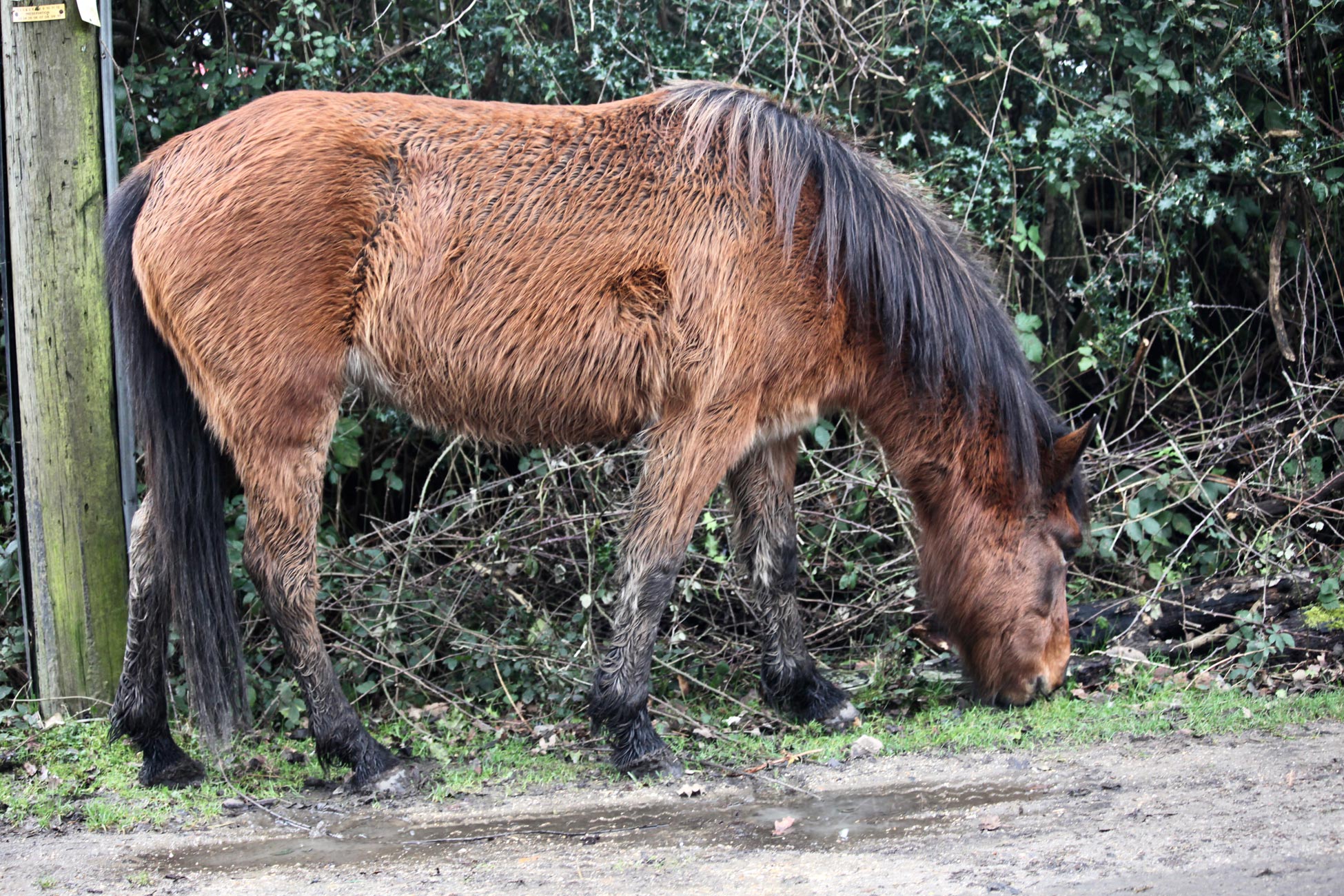
The damp, muddy, matted shaggy haired animals bore the effects of days in the wind and rain,

one adding the battle scars of torn out tufts.

Jackie photographed a helicopter flying overhead as I approached the ditch I needed to cross to enter the woodland.

The minute I returned to the car heavy rain set in once more.

This evening we dined on roasted sturdy chicken thighs, extremely tasty parsnips, and crisp potatoes; Yorkshire pudding, sage and onion stuffing; firm carrots, cauliflower, and broccoli, and flavoursome gravy, with which Jackie drank Hoegaarden and I drank vin de Bourgogne Macon 2019.

An Unknown Soldier

Just before I spent the week in Eymet with Maggie and Mike in September 2008, culminating in agreeing to buy their house in Sigoules, I enjoyed various locations with Mike and Heidi, Emily, Oliver, and Alice. One of these was at

Onesse in Les Landes. Oliver doesn’t seem to be in this family shot from the selection I scanned today from the recently recovered colour slides.

I am not sure where this beach was, but I remember picnicking on the bank in the foreground.

We took a number of walks in the sun-dappled forest with its tall pines, red-brown streams, and sandy banks of bright purple heather.

The farmhouse and its field; the nodding sunflowers; and the village perching above it are all outside Eymet, while the colourful garden and the church spire behind the rooftops are probably inside it. Without notes I am a little hazy after twelve years.

I really regret not being sure where this wonderfully sensitive sculpture of an unknown soldier adorns a war memorial. Maybe someone will enlighten me.

Having read another four chapters of ‘Little Dorrit’ I now present four more of Charles Keeping’s skilful illustrations.

Here we have a ruined uncle well portrayed by the artist;

‘My eldest daughter and my son Mr Clennham.’ The essences of one weak and one haughty captured by the artist’s pen;

‘Oh, Maggy, What a clumsy child you are!’ Drawn to perfection is Dickens’s portrait of this simple soul, including her clothing’s ‘general resemblance to seaweed’;

‘He seemed to have been sitting for his portrait all the days of his life’. Keeping has caught Dickens’s vivid description of the aptly named Tite Barnacle, down to his very clothing.

This evening we dined on a second sitting of Hordle Chinese Take Away’s excellent fare, with which Jackie drank Hoegaarden and I finished the Recital.

The Father Of The Marshalsea

This morning I received my Covid vaccine invitation in the post and booked my appointments at a centre less than eight miles away by telephone. The first jab will be in one week’s time. The whole process went very smoothly. The service has been quick and efficient.

I have now read the first 6 chapter’s of ‘Little Dorrit’ and this afternoon scanned five more of Charles Keeping’s drawings.

The artist faithfully describes Miss Wade’s appearance and aloof manner;

his rendering of the Clennam home is most evocative of a neglected edifice;

the diminutive Mr Flintwinch shakes his much taller wife out of a nightmare;

our first sighting of our eponymous character is rendered exactly as the author described;

‘the Father of the Marshalsea’ enjoys a good number of perks from departing residents.

This evening we dined on Mr Chan’s excellent Hordle Chinese Take Away fare, with which Jackie drank Hoegaarden and I enjoyed a Recital encore.

West London Gardens

‘Little Dorrit’ is one of Charles Dickens’s great novels. My Folio Society Edition of 1986 is, at 834 pages with 72 of Charles Keeping’s exquisite illustrations, so great that I intend to deviate from my normal approach to books in this blog.

The tale has been reproduced so often in books and films and there are so many Internet pages on it that I think I do not need to refrain from any story spoilers, and my observations may or may not be superfluous.

Just as the author published the work in serial form I will do the same with my presentation of Mr Keeping’s drawings. I will write something about each picture as I make my leisurely journey through the weighty tome.

The frontispiece represents Marshalsea Prison.

Wikipedia tells us ‘The Marshalsea (1373–1842) was a notorious prison in Southwark, just south of the River Thames. Although it housed a variety of prisoners, including men accused of crimes at sea and political figures charged with sedition, it became known, in particular, for its incarceration of the poorest of London’s debtors.[1] Over half the population of England’s prisoners in the 18th century were in jail because of debt.[2]

Run privately for profit, as were all English prisons until the 19th century, the Marshalsea looked like an Oxbridge college and functioned as an extortion racket.[3] Debtors in the 18th century who could afford the prison fees had access to a bar, shop and restaurant, and retained the crucial privilege of being allowed out during the day, which gave them a chance to earn money for their creditors. Everyone else was crammed into one of nine small rooms with dozens of others, possibly for years for the most modest of debts, which increased as unpaid prison fees accumulated.[4] The poorest faced starvation and, if they crossed the jailers, torture with skullcaps and thumbscrews. A parliamentary committee reported in 1729 that 300 inmates had starved to death within a three-month period, and that eight to ten were dying every 24 hours in the warmer weather.[a]

The prison became known around the world in the 19th century through the writing of the English novelist Charles Dickens, whose father was sent there in 1824, when Dickens was 12, for a debt to a baker. Forced as a result to leave school to work in a factory, Dickens based several of his characters on his experience, most notably Amy Dorrit, whose father is in the Marshalsea for debts so complex no one can fathom how to get him out.[6][b]

Much of the prison was demolished in the 1870s, although parts of it were used as shops and rooms into the 20th century. A local library now stands on the site. All that is left of the Marshalsea is the long brick wall that marked its southern boundary, the existence of what Dickens called “the crowding ghosts of many miserable years” recalled only by a plaque from the local council. “[I]t is gone now,” he wrote, “and the world is none the worse without it.”[8]‘

In his introduction to my copy, Christopher Hibbert, speaking of Dickens’s childhood experience, states that ‘throughout his life thereafter Dickens had been obsessed with prisons, prisoners and imprisonment. In England, in America, Italy and France he found his way to the prison in each new town he visited in the way that another man might seek out a museum or a church.’

The jailer of Marseilles Prison takes his little daughter on a tour of the cells.

During my brief spell of residence in Sutherland Place, W2 I served as a Committee member of the local Neighbourhood Association which enjoyed an annual gardens competition. In the summer of 2008 I toured the few streets around my flat making a series of photographic prints of likely contenders on which a small sub-group voted. A set of colour slides from the recently rediscovered cache dated July/August was my basic material. I scanned them this afternoon.

Although these West London properties are highly sought after and very expensive they mostly have negligible gardens. I was genuinely impressed by the ingenuity shown by the nurturing of colourful plants in all kinds of containers laid on paving and walls, on window sills, fixed to railings, and straggling down steps.

I wonder whether anyone will share my favourite. As a clue I will say it was not the stunning header picture.

This evening we dined on Jackie’s deliciously spicy pork paprika; roast potatoes, including the sweet variety, in their skins; firm broccoli; and tender runner beans, with which she drank Hoegaarden and I drank Languedoc Montpeyroux Recital 2018.

Sigoules and Eymet

I spent most of the afternoon scanning and labelling another selection of colour slides from the recently rediscovered boxes. Apart from the two of Michael and Heidi, which I now think were taken twelve months later, these were all made in August 2008. During that summer I spent three weeks at various French bookings with my son and his family, saw them on their way to Spain, and stayed another week with my friends Maggie and Mike at Eymet in Aquitaine. As told in https://derrickjknight.com/2012/06/04/the-gite-from-hell/ this set of circumstances was instrumental in prompting me to buy

No 6 rue St Jacques, Sigoules. Mike is seen here opening the door for my viewing.

On this trip I took a few of the many walks around the town and its streets over the next few years. There were hardly any hillside slopes lacking prolific vineyards; vigorous sunflowers flourished in flatter fields; rustic stone buildings provided age-old charm,

My friends had moved from No 6 to be nearer the amenities of Eymet, a veritable English enclave.

Although I had to help Maggie with a pronunciation confusion when she was buying from a fruit seller, there seemed to be more English than French voices heard in Eymet’s popular market. In later years I found it easier to root out second-hand English books on the stalls than French ones.

This was also the occasion of the first of my ramblings around Eymet’s streets and lanes (rouelles). Most French towns and villages have splendid war memorials of which this is a fine example.

This evening we dined on Jackie’s perfect paprika pork; scrumptious savoury rice; and tender runner beans, with which she drank Hoegaarden and I finished the Shiraz.

Hard Times

Early yesterday morning Jackie photographed some of our current garden blooms. Each is labelled in the gallery.

We decided to hold these back to today because of the quantity we had published of the St John the Baptist Cemetery photographs. Later, Elizabeth e-mailed me a selection of hers.

This is her take on the inserted death medals;

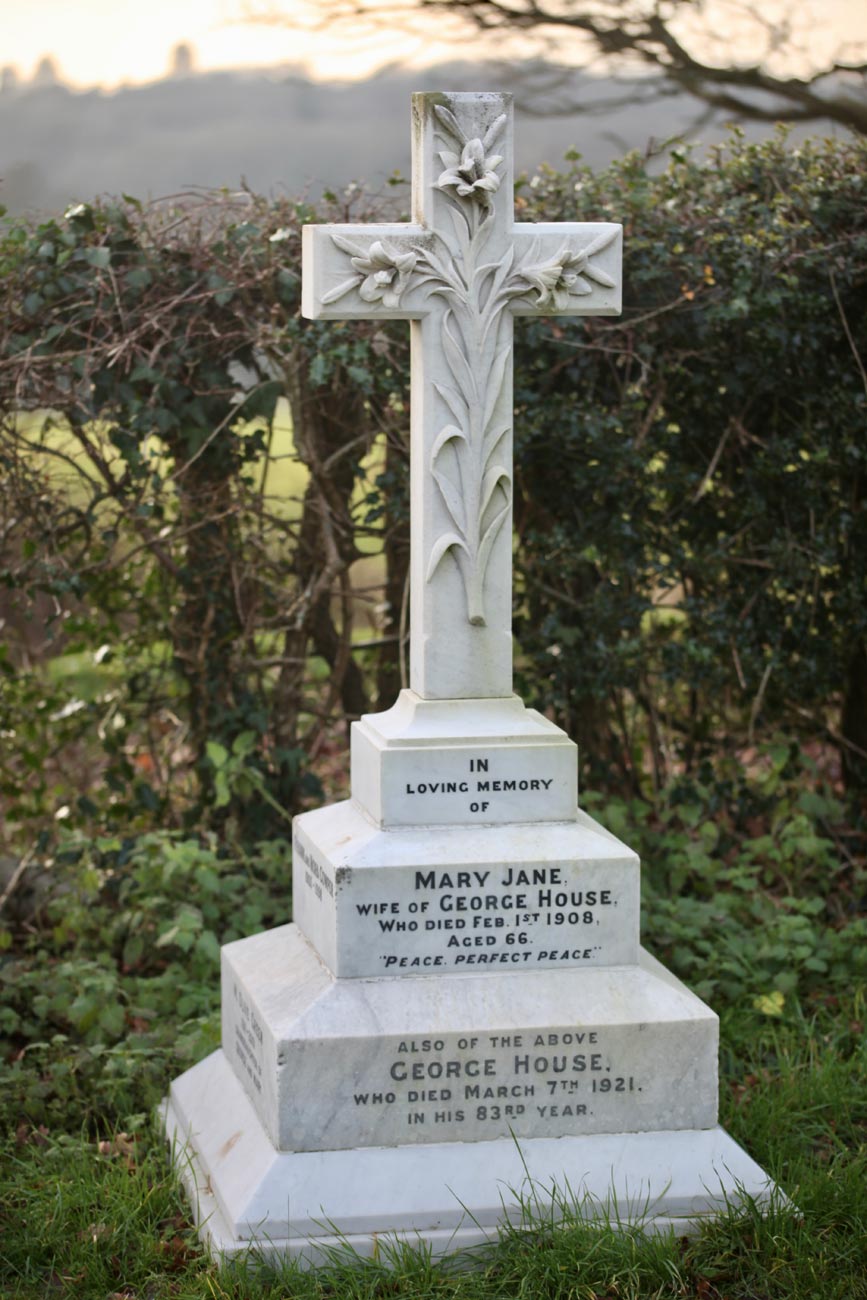
she also added her version of the House memorial carved lilies;

she was intrigued by the cremation plaques and their offerings from loved ones and from autumn;

I had refrained from photographing these daffodils, but she made the best of them.

I spent much of today finishing reading

Christopher Hibbert in his knowledgeable and informative introduction places this work in the context of Dickens’s time and his works. He tells us that this begins the writer’s focus on social ills.

This is a well wrought story which largely keeps a good pace and culminates in conclusions with surprises and revelations which I will leave open to anyone wishing to read the book for the first time. The descriptions are good. Despite the harshness of the theme the author’s wry humour is much in evidence. I felt that the dialogue of two characters was irritating enough for me to skim them. One was conveyed in the supposed vernacular; another wath ath thpoken with a thevere lithp. The first indicated the humble origins of the man; the thecond I imagine wath a clownith interval. (I do apologithe WP, but I ethpect you get my point).

Regular readers will need no introduction to the exuberant, animated, illustrations of Charles Keeping, ever faithful to the text, and unbound by the page formats.

This evening we dined on Jackie’s variation on Cottage pie, with the addition of mashed potatoes and cheese; crunchy carrots and cauliflower, with tender cabbage, firm Brussels sprouts and tasty gravy. The Culinary Queen drank Hoegaarden and I drank more of the Shiraz.

Nature’s Palettes

On a bright and sunny afternoon we drove to the Parish Church of St John the Baptist on Church Lane, Boldre, where we met Elizabeth for a wander round the cemetery. These two images are Jackie’s.

She also pictured largely lichen-covered arboreal delights, and

various gravestones and crosses,

including the Burton family memorial to father, mother, and five year old son. Col. William Henry Burton (late Madras), according to the London Gazette, retired on an Indian pension and extra annuity in December 1890.

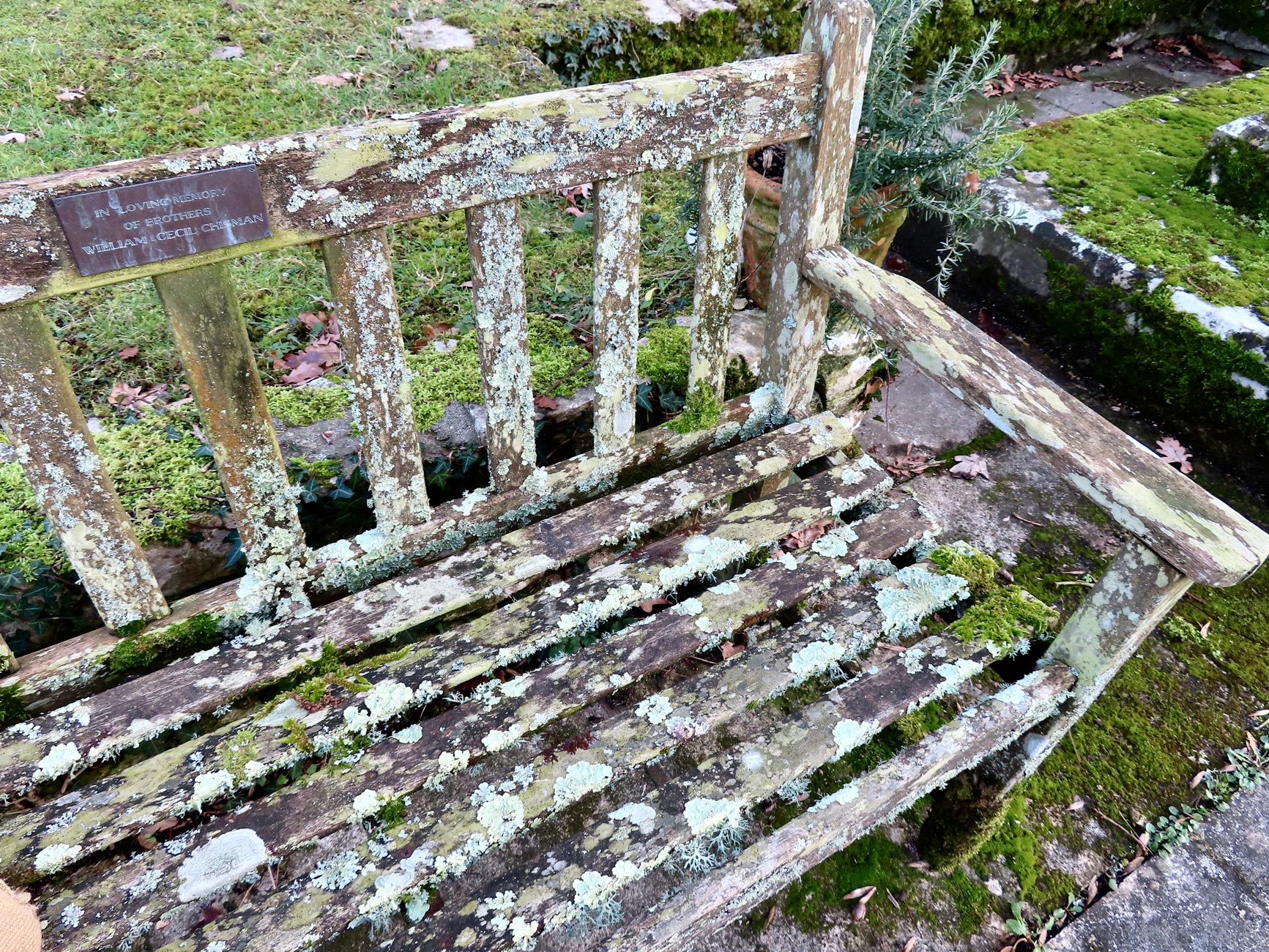
She finally focussed on the Chisman Brothers’ lichen-splashed memorial bench. Cecil died suddenly aged 40. I don’t know about William.

I, too, focussed on various flora;

on general views; on individual lichen and moss layered stones;

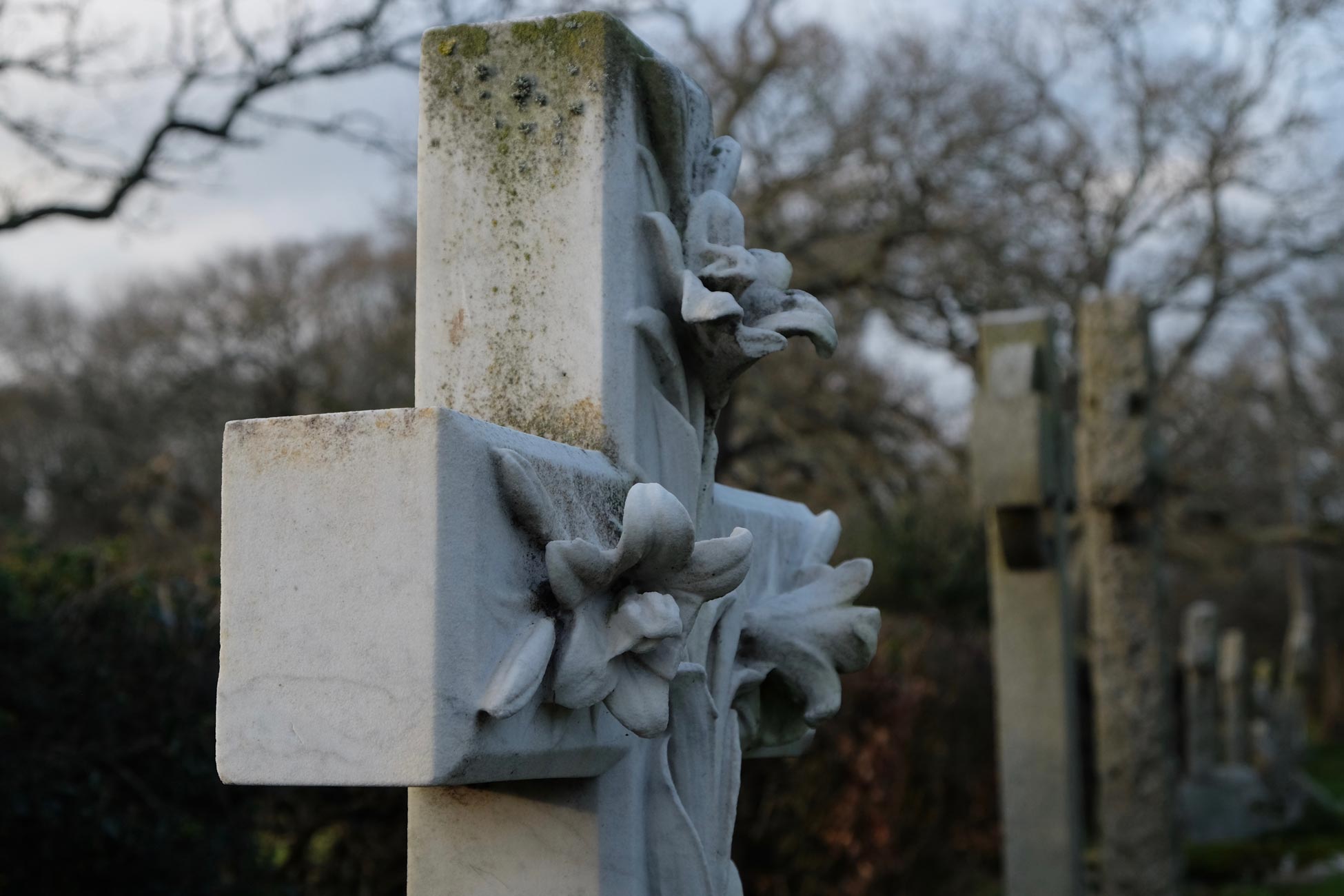
and on the House family monument of which Jackie had featured the semi-profiled lilies.

We still cannot make out the identity of either this little girl photographed on our last visit or the person watched over by this spotted angel.

Nature has converted wood and stone into palettes on which to apply her own gentle hues.

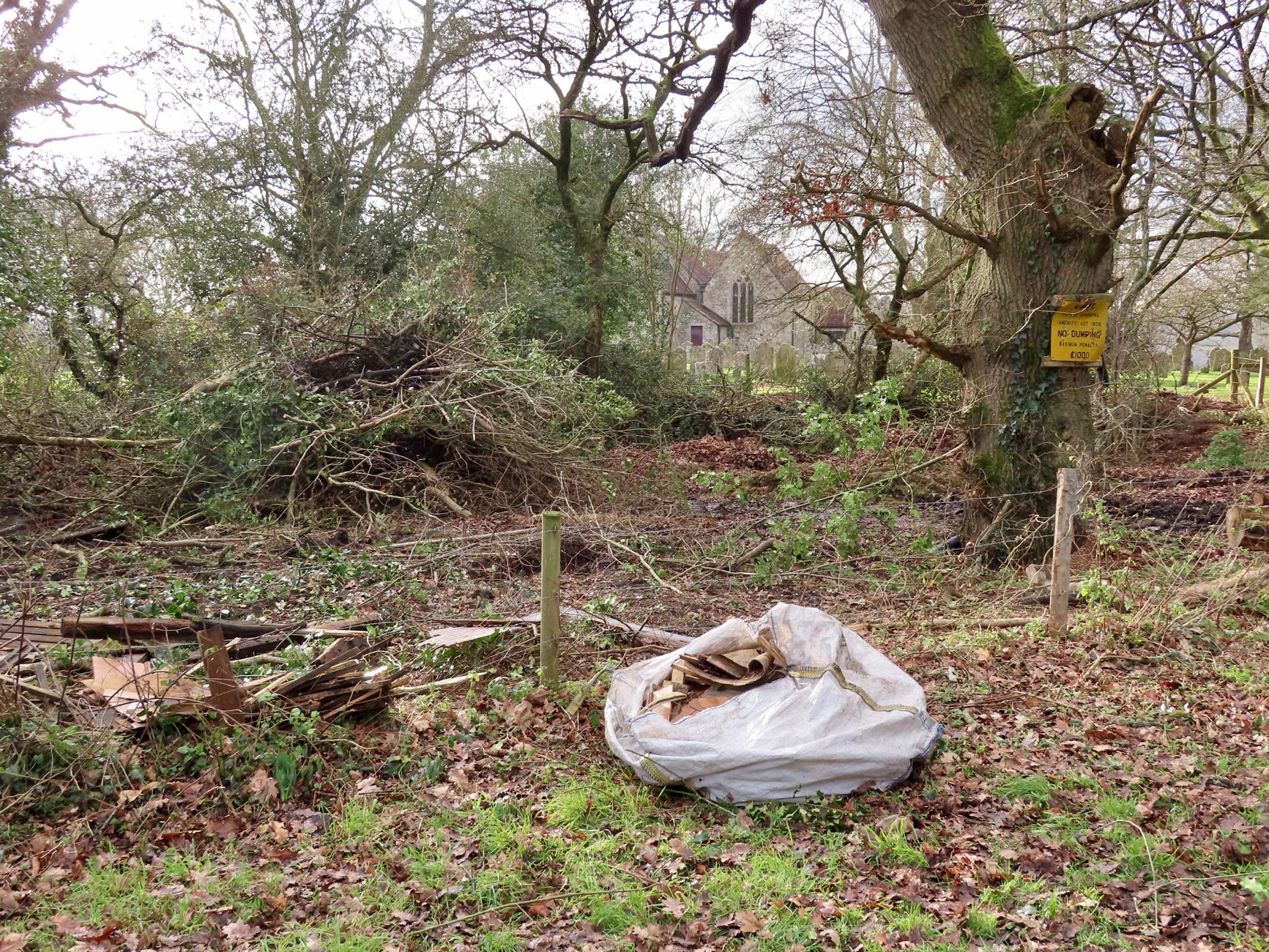
Unfortunately I have to report that, despite the warning sign, dumping even occurs on hallowed ground.

This evening we dined on Jackie’s creative cottage pie flavoured with cumin and thyme, and topped with potato and parsnip slices; flavoursome Brussels sprouts; crunchy carrots and meaty gravy with which she finished the Sauvignon Blanc and I drank Barossa Valley Shiraz 2017.