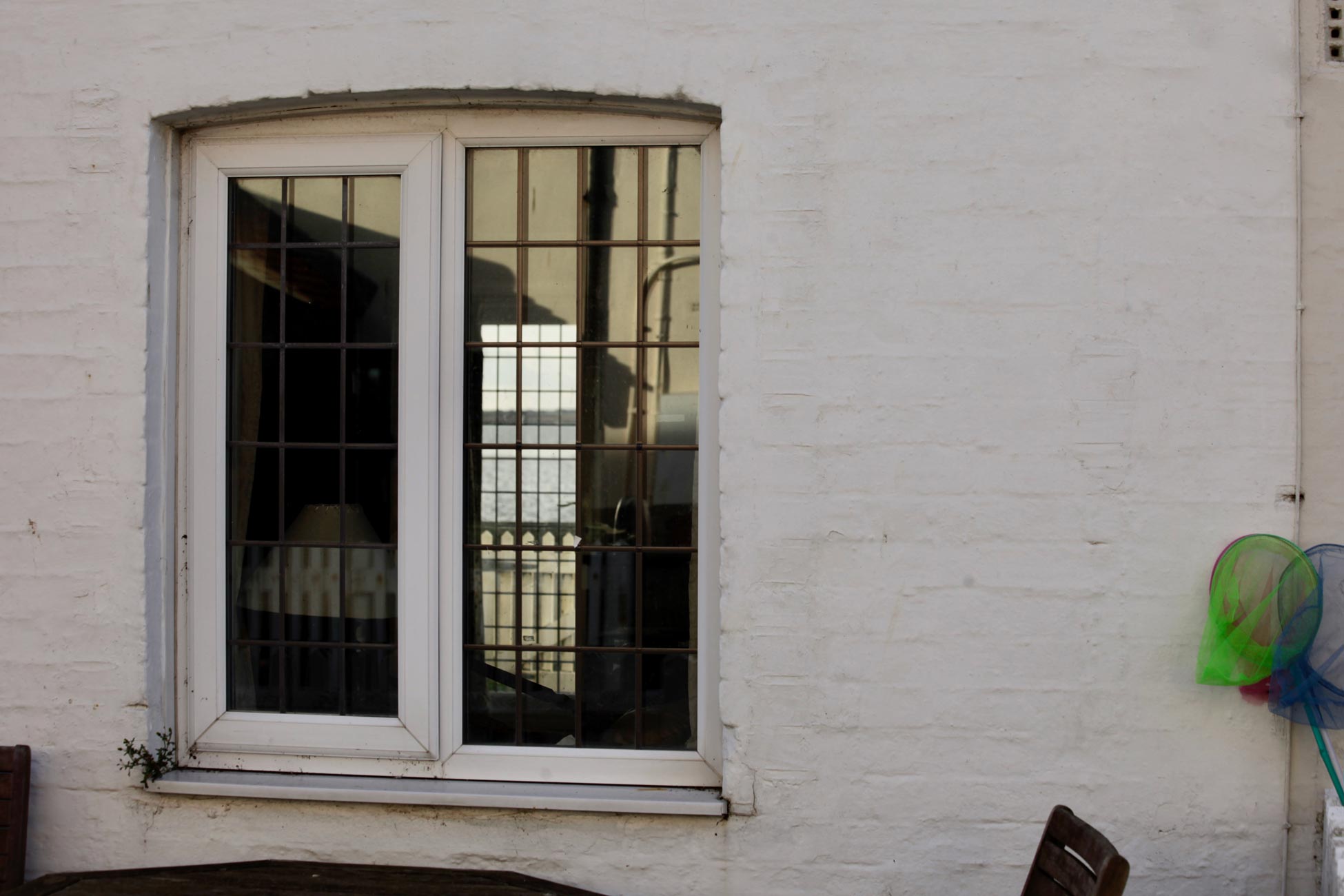
After another wet morning I made a set of A4 prints of his last session on our roof for Barry, then scanned the next five of Charles Keeping’s illustrations to ‘Little Dorrit’.
In ‘The cloudy line of mules hastily tied to rings in the wall’, our vision is certainly clouded.
With ‘He found a lady of a quality superior to his highest expectations’, both author and artist have the tongues firmly in their cheeks.
‘As they wound down the rugged way, she more than once looked round’, depicts the slender limbs of these beasts of burden. The circle of the sun balances the picture nicely.
There is a wealth of period detail in ‘I write to you from my own room at Venice’.
‘To the winds with the family credit!’, cried the old man’, displaying far more animation than we have seen before.
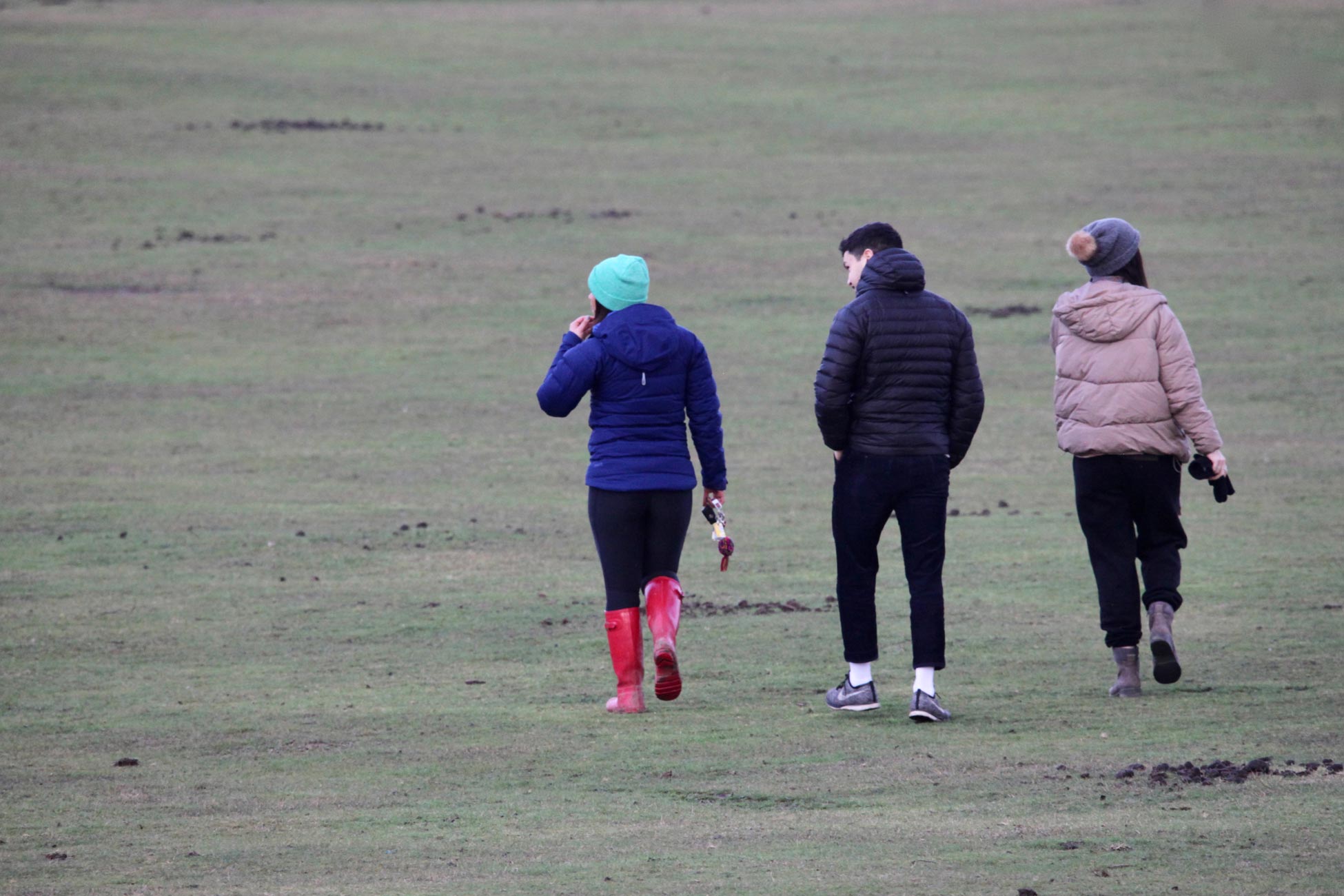
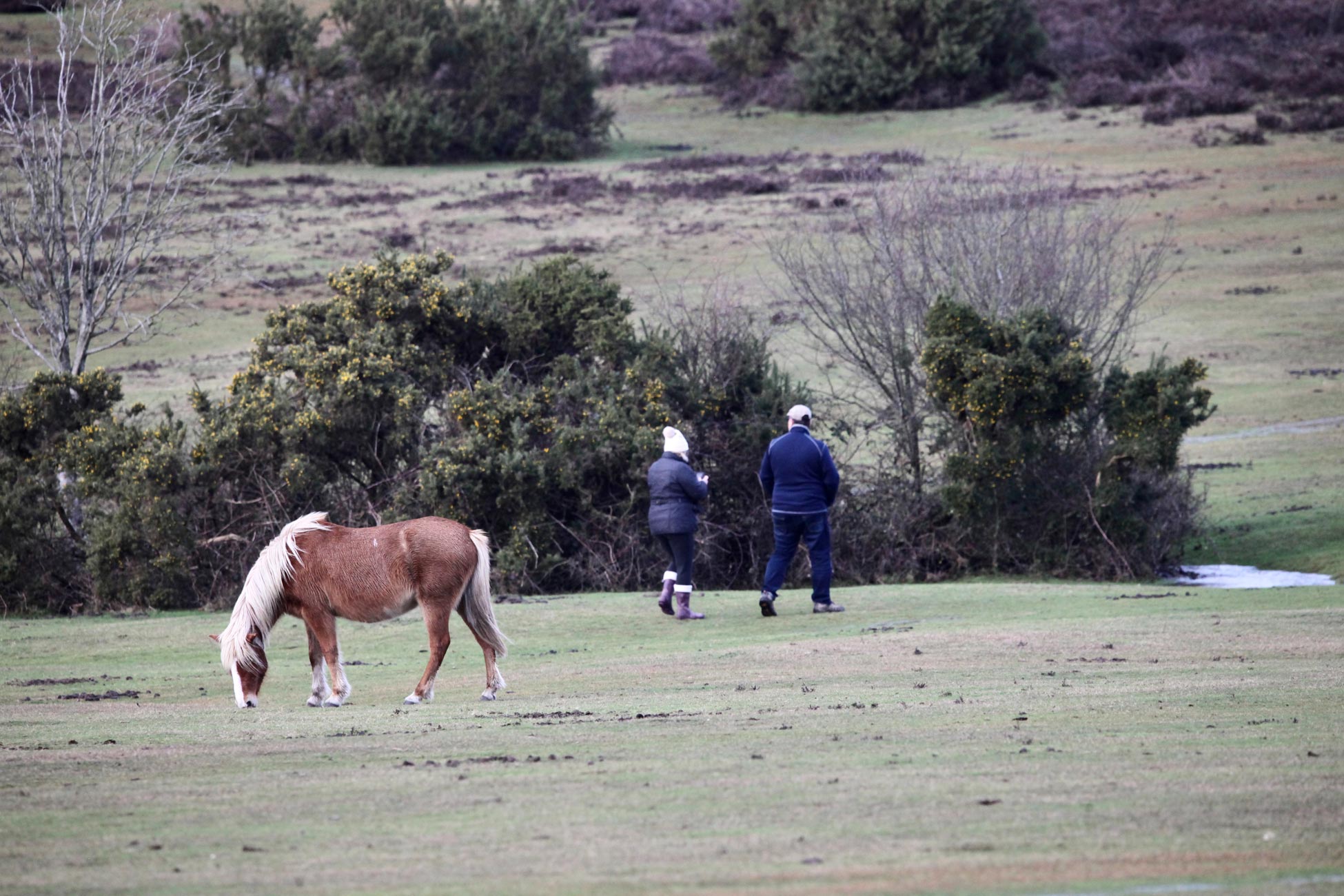
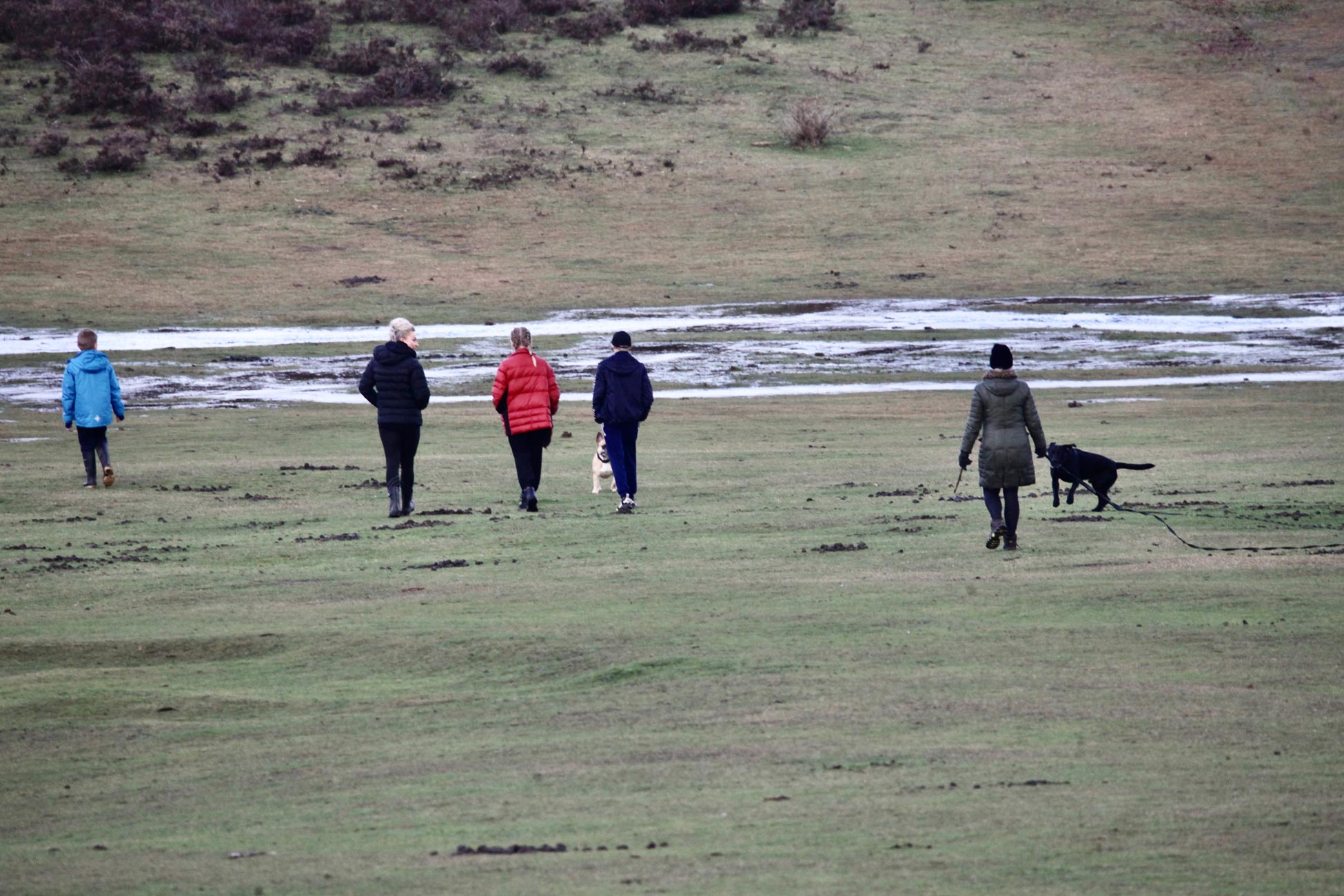
Later this afternoon the weather brightened and we took a drive to Longslade Bottom, a favourite venue for
walkers and frolicking dogs.
The stream at the bottom of the slope is a Winterbourne – only flowing in winter.
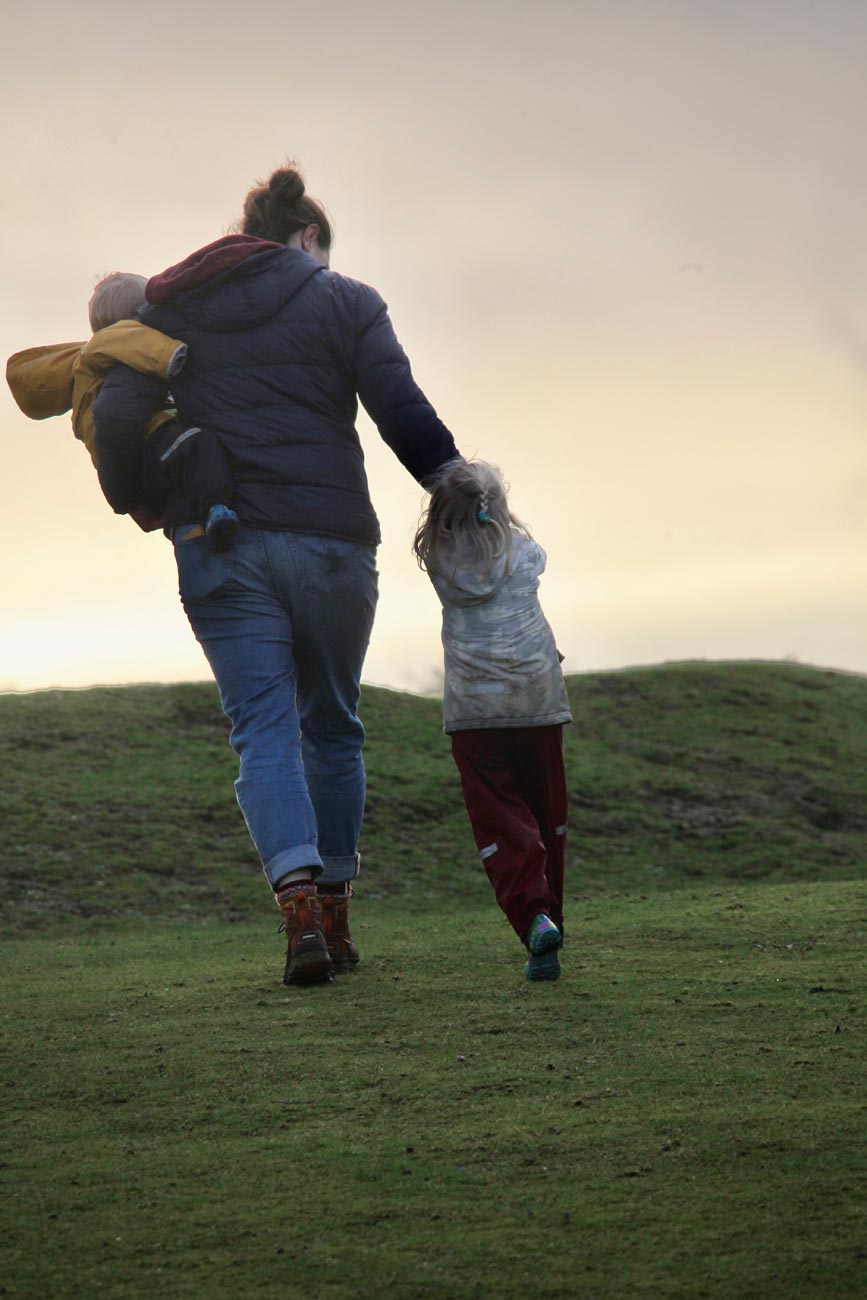
Keep an eye on the young woman with two children beginning to make her way back up the slope.
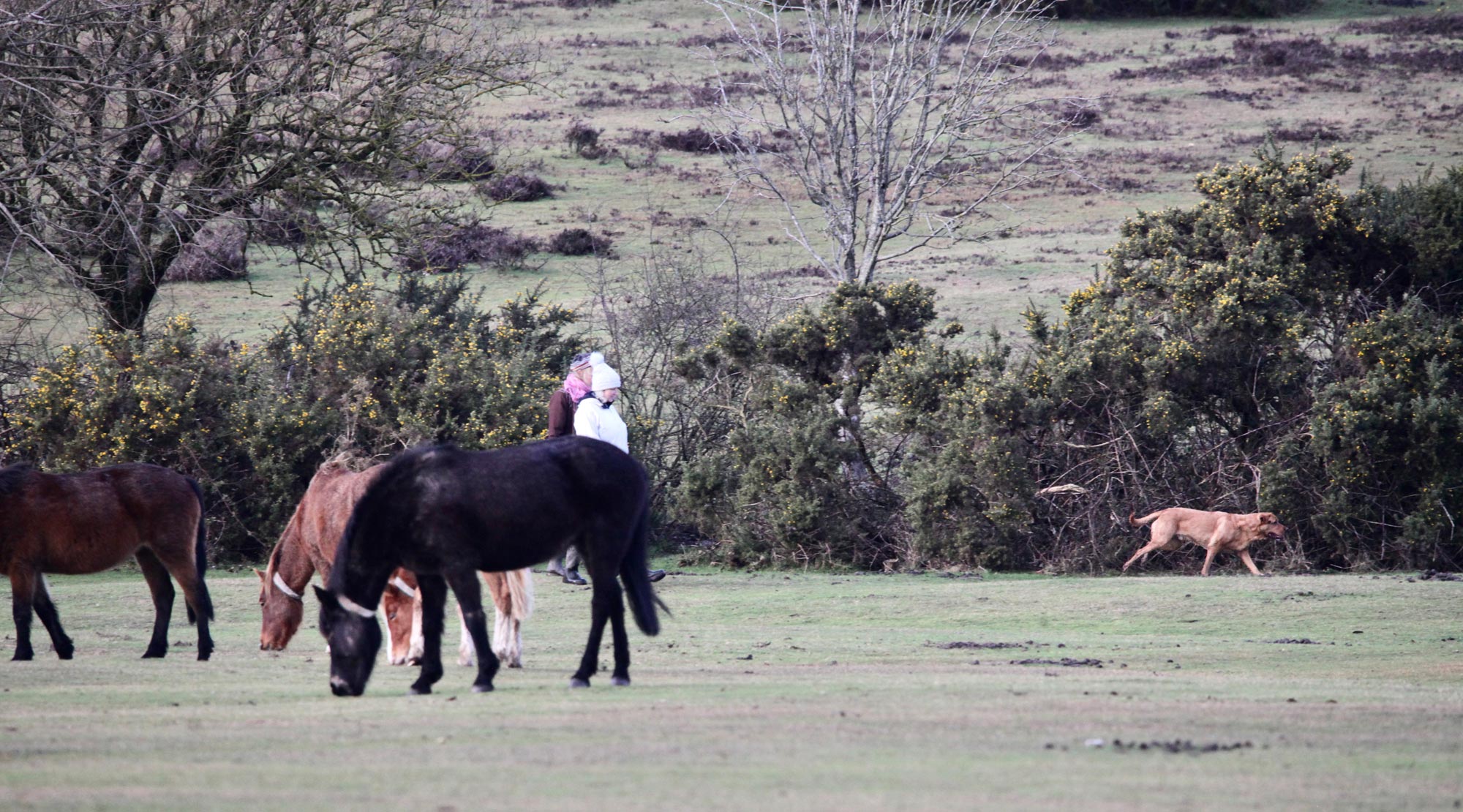
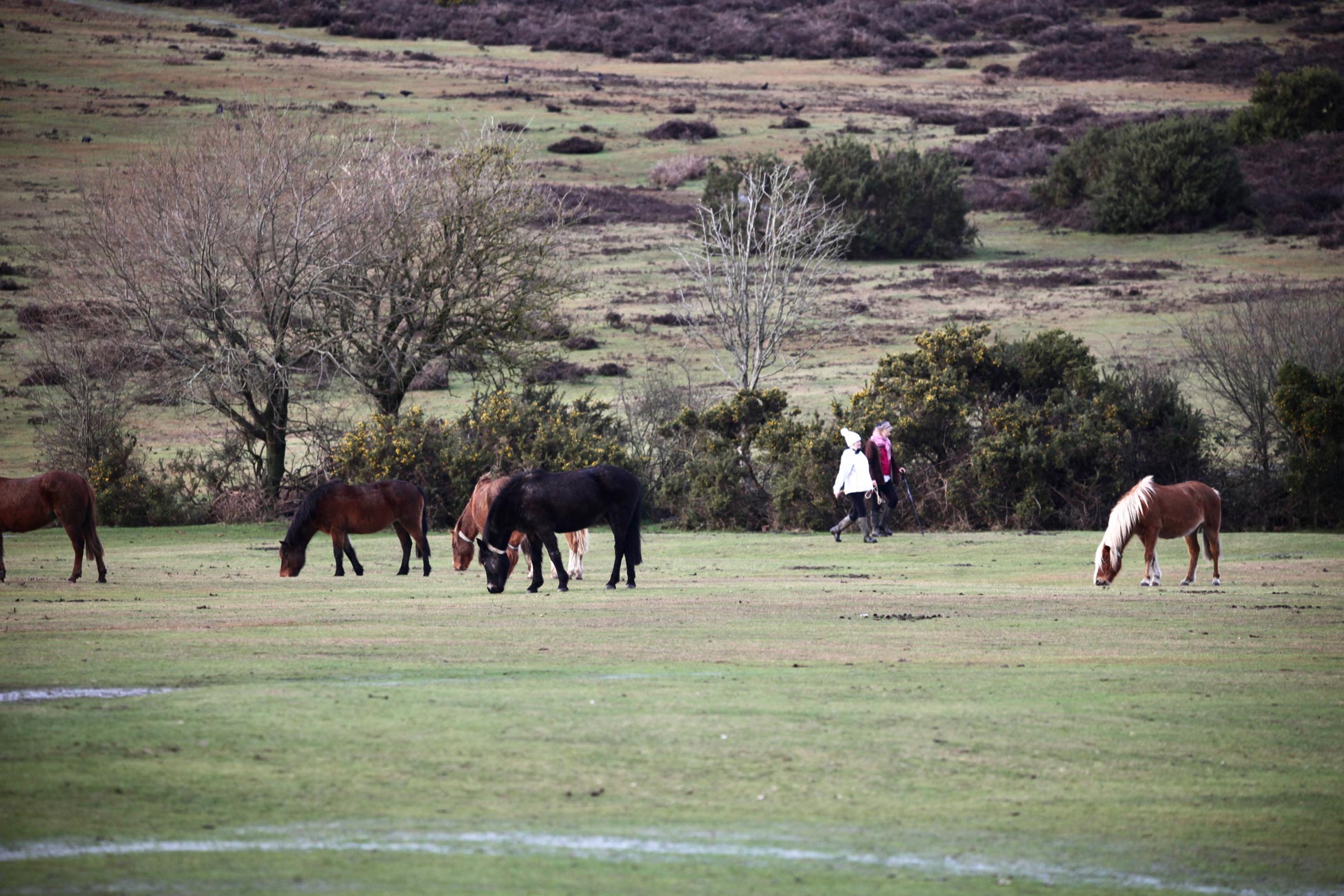
Ponies quietly crop grass and crows noisily gather in the treetops.
As I ambled down the slope, who should I pass but the woman, now struggling with the two children, who still managed to find the energy to respond to my greeting.
Can anyone spot the changes in the writhing burdens?
Having reached their vehicle the battle to install the children inside it continued against a threatening sky to the shrieks of “I don’t want to”.
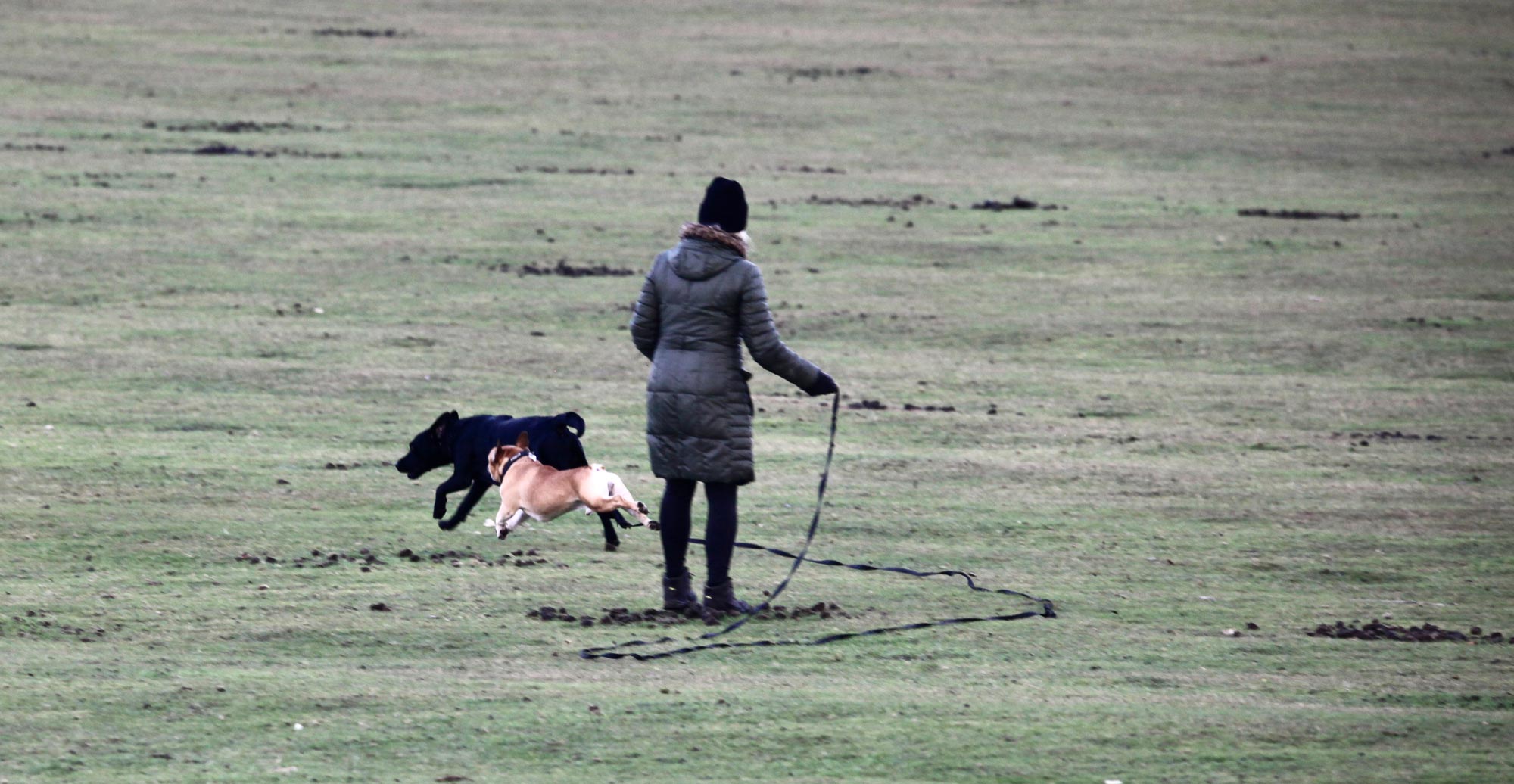
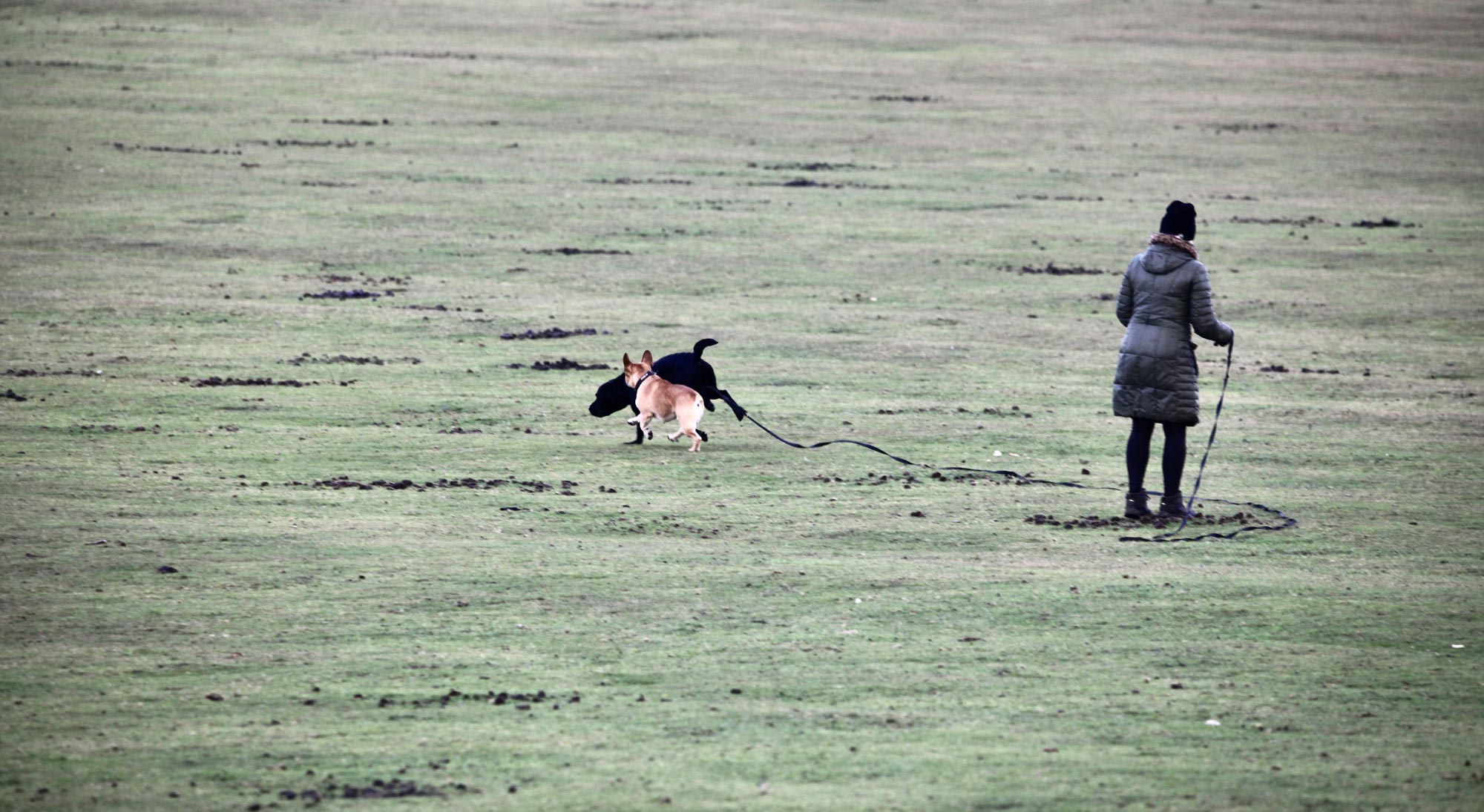
Particularly having watched so many children and dogs on these slopes, I must mention that the piles of canine excrement which I needed to avoid rivalled those of the ponies. Do the dog owners have any idea of the danger that what they leave to fester among the grass presents to children? (Anyone who doubts this should read John Knifton’s comment below).
This evening we dined on Jackie’s tasty chicken and vegetable stewp, with which she drank Hoegaarden and I drank Macon vin de Bourgogne 2019.
On a decidedly dank morning we took a damp drive to Ferndene Farm Shop via Otter and Everton Garden Centres. We didn’t find what we were looking for in the garden centres, but the Ferndene shop was well stocked and not crowded.
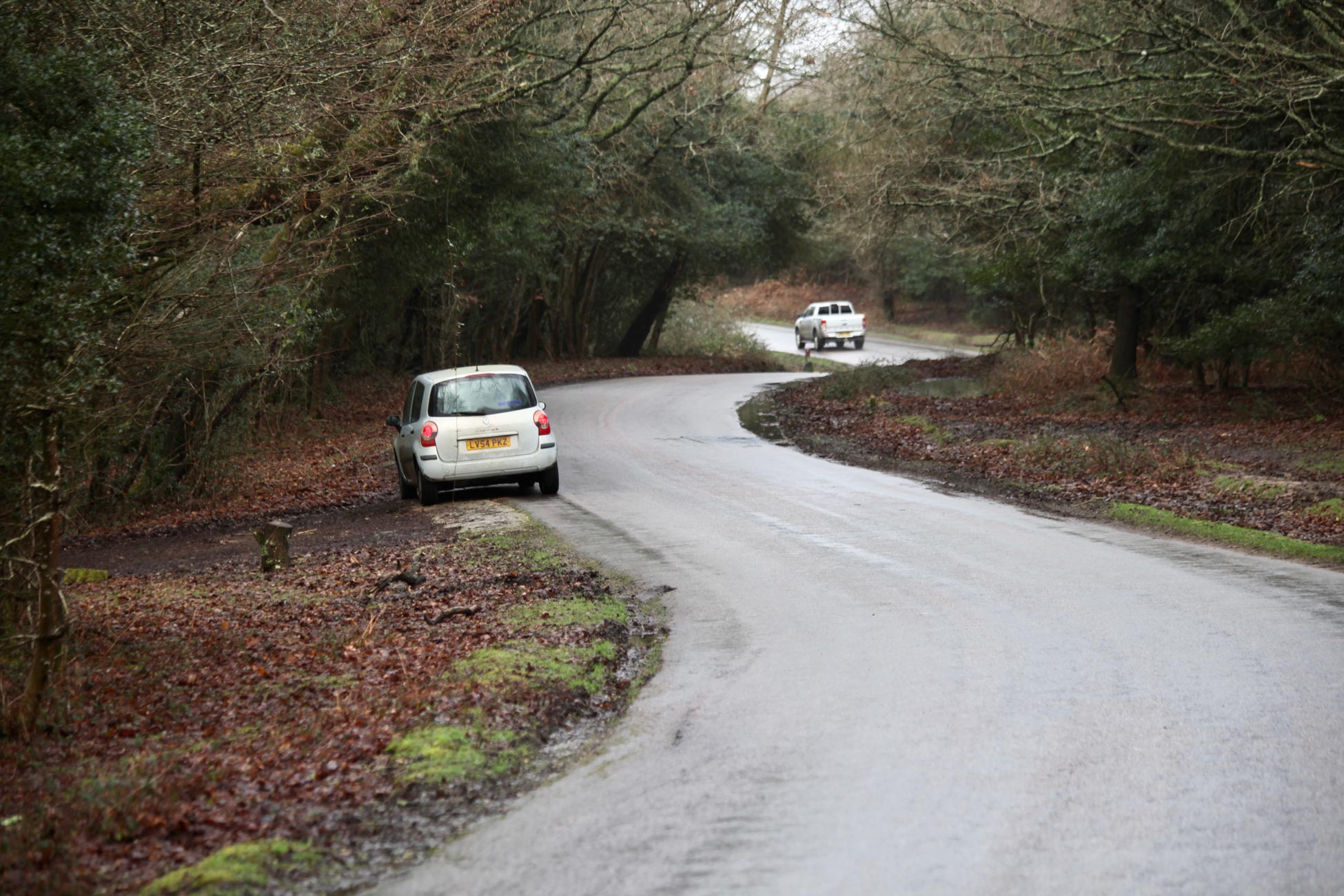
We returned home via Holmsley and Forest Road.
Although there were a number of walkers on Forest Road,
where Jackie parked the Modus while I wandered woodland with my camera,
just three sheltering ponies beside Burley Golf Course seemed to be only ponies we would see.
I squelched across the muddy terrain
with its fresh, reflecting, pools;
bright green moss- and lighter coloured lichen-covered woodland, smelling of delicious damp.
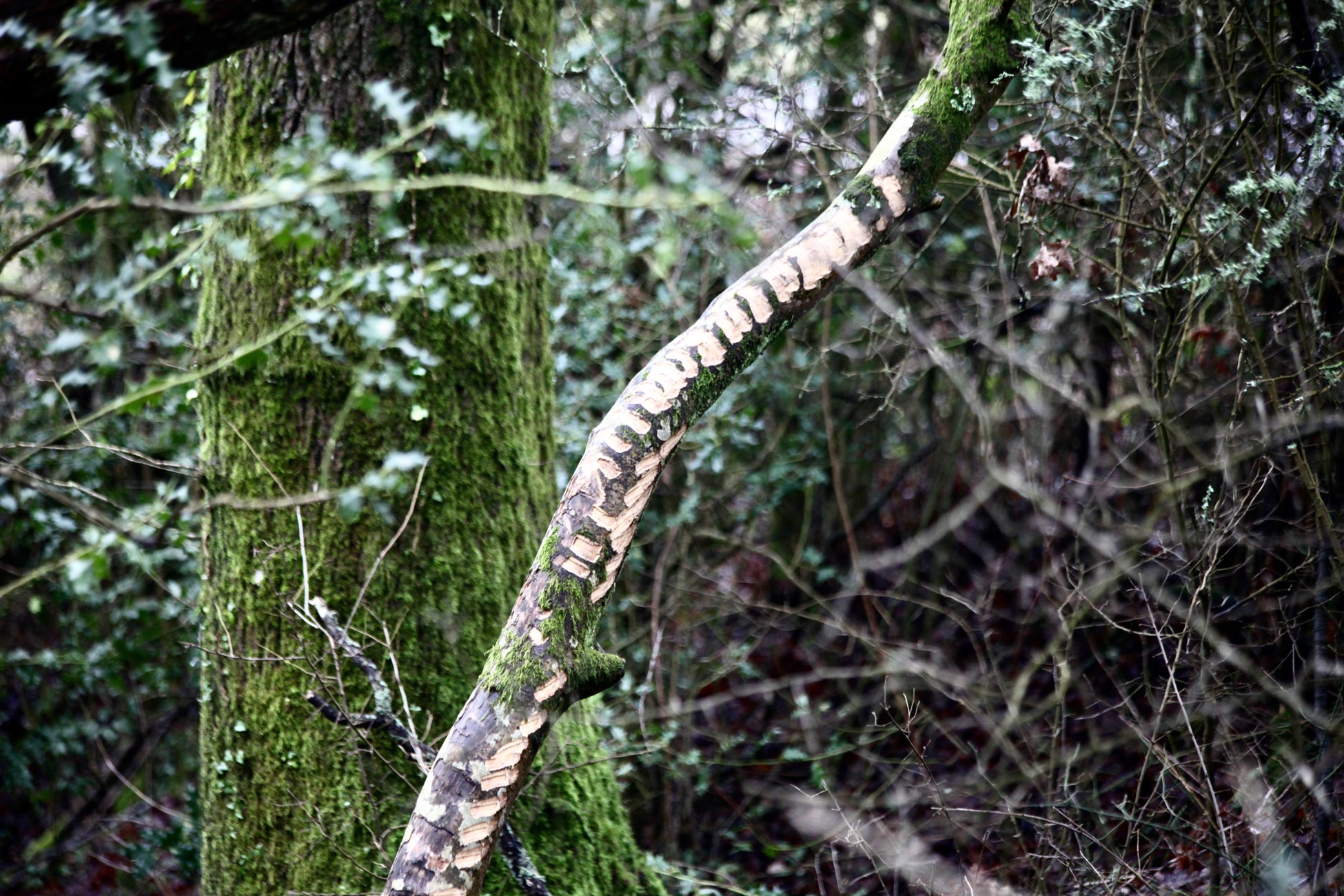
It must have been a long-necked creature that nibbled this zipper up a slender trunk;
possibly a relative of this pony that emerged from the forest and crossed the road in front of as we moved off. Naturally I had to disembark once more and pay my respects.
This evening we dined on Jackie’s flavoursome savoury rice; a thick omelette; and a rack of pork spare ribs marinaded in plum sauce, with which she drank Hoegaarden and I drank more of the Bonpas.
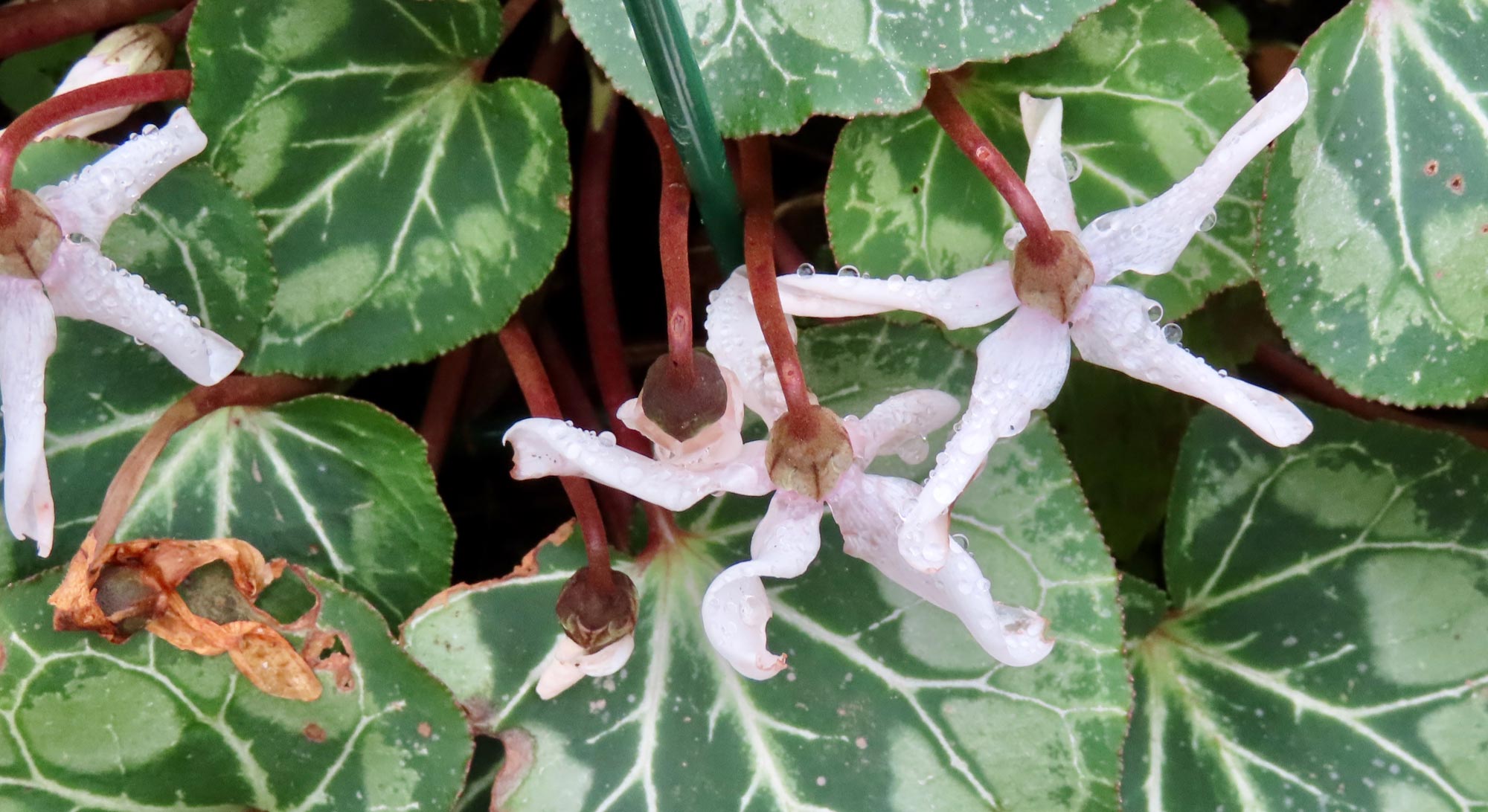
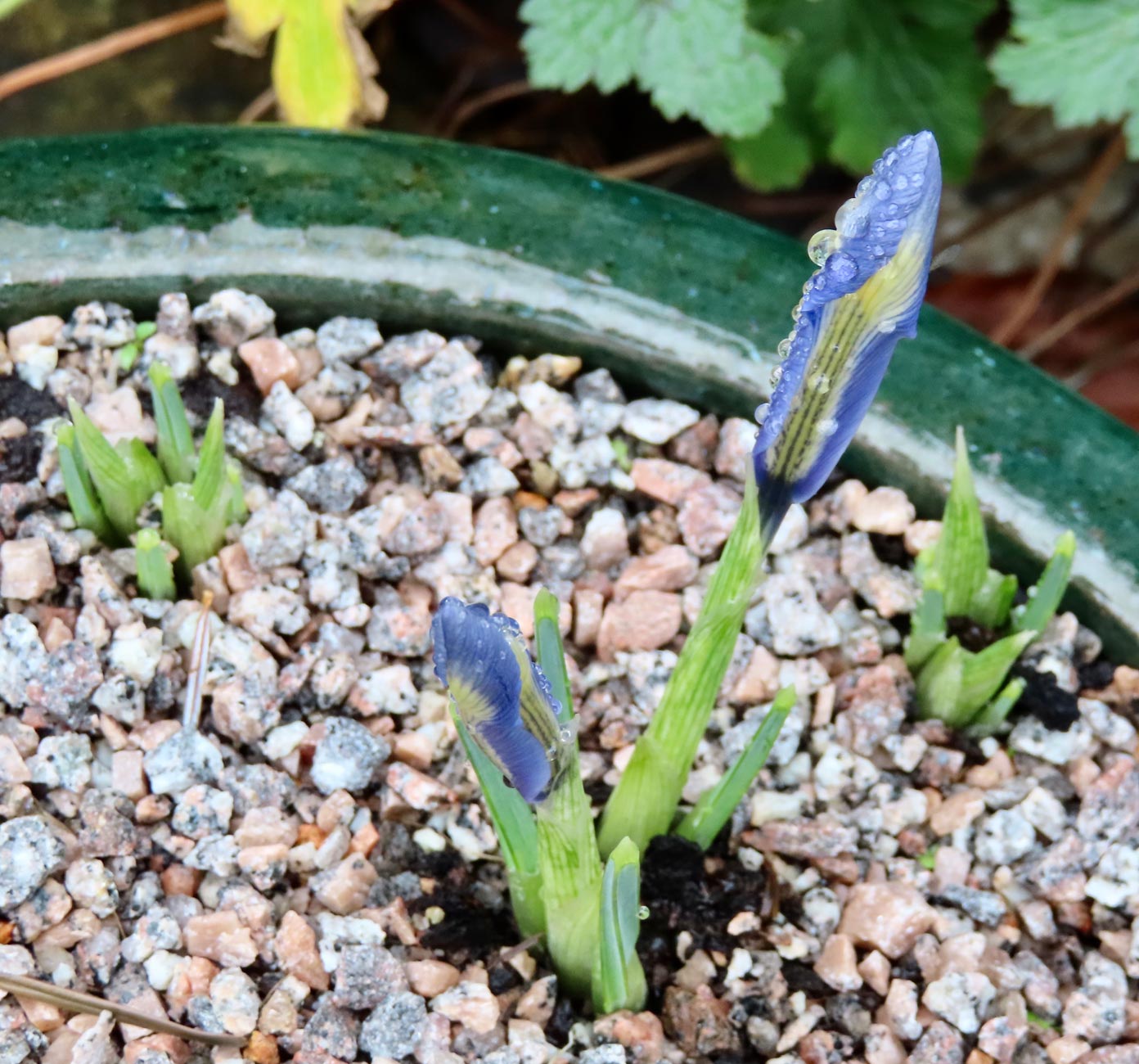
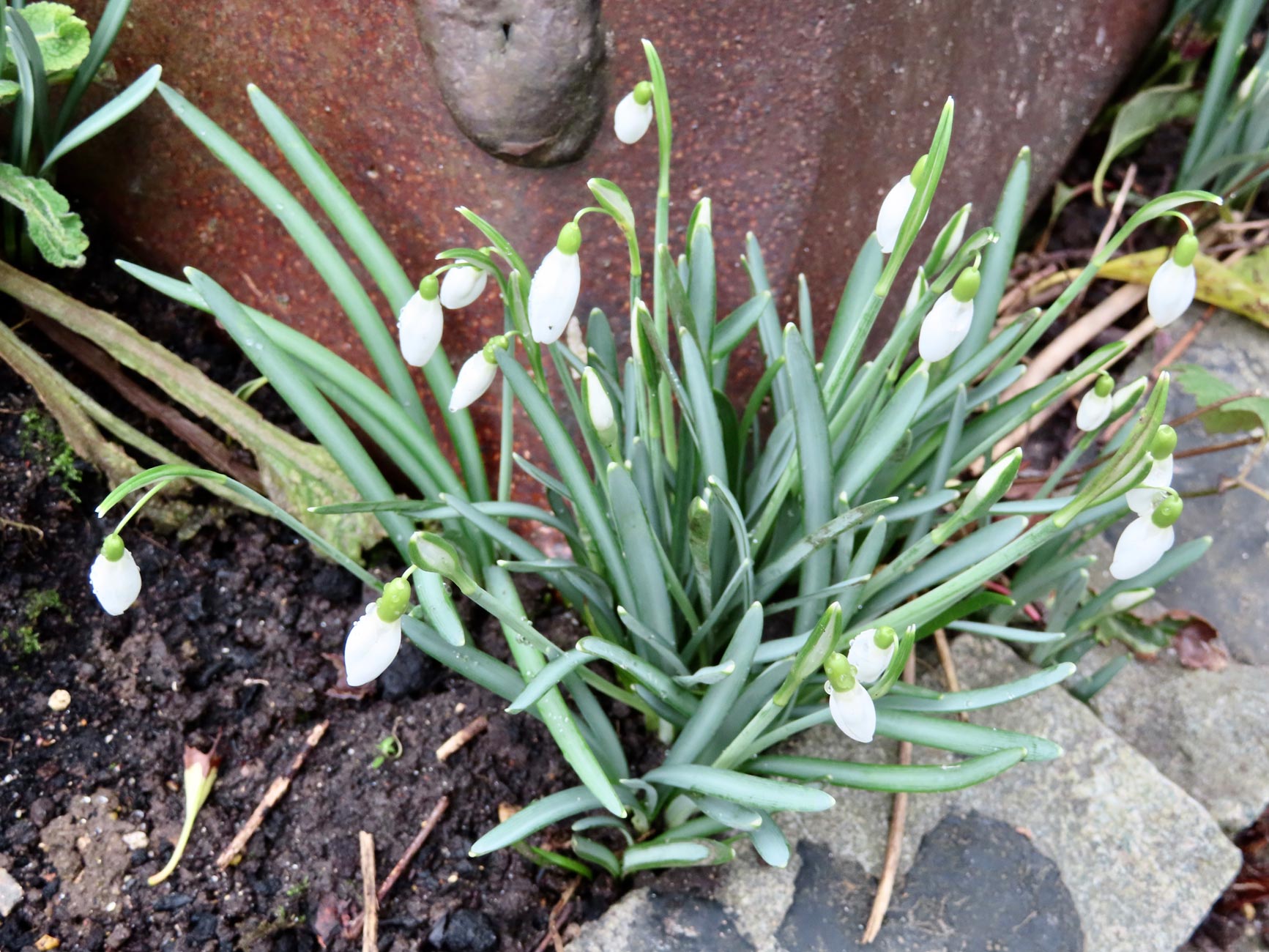
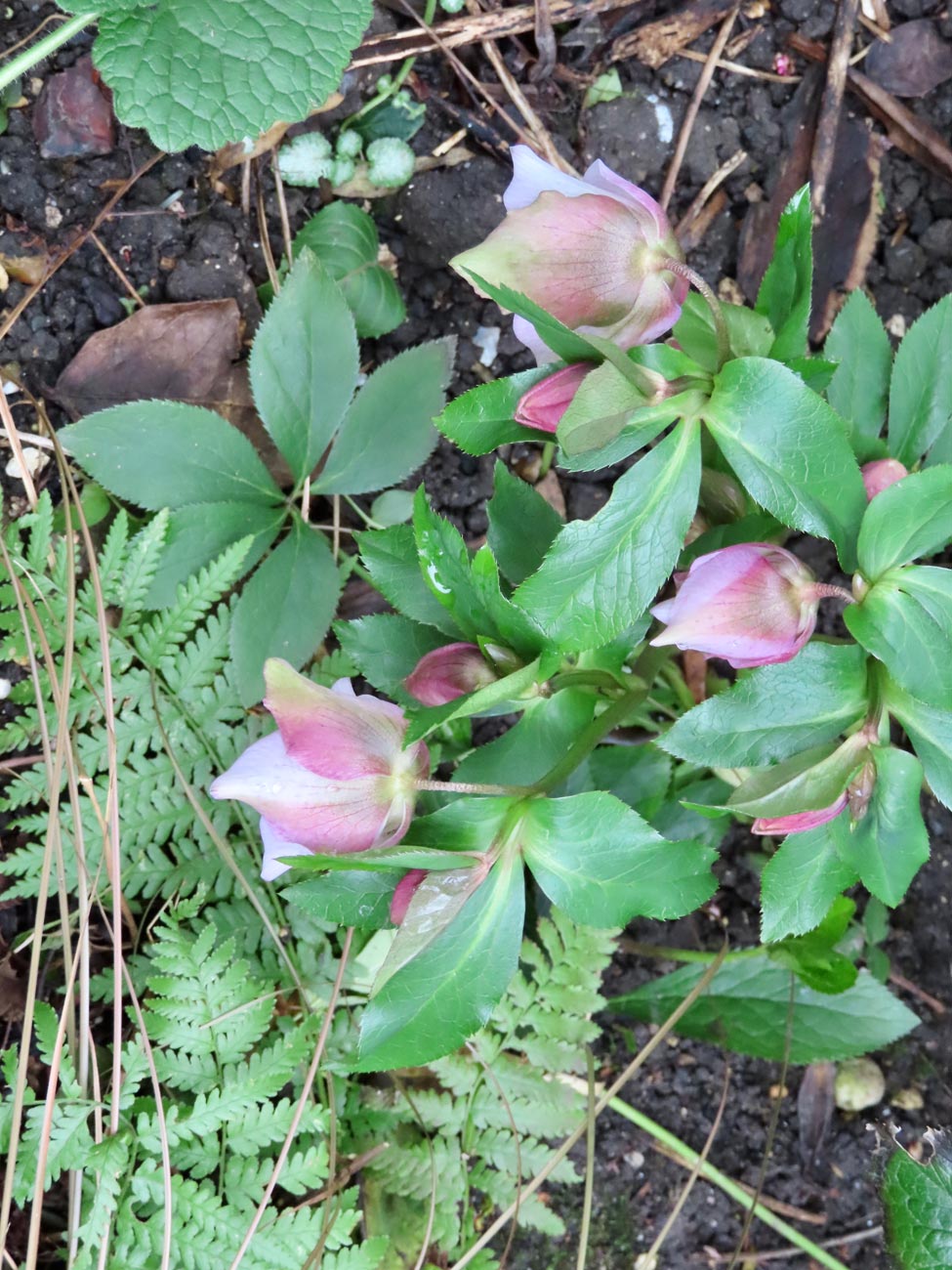
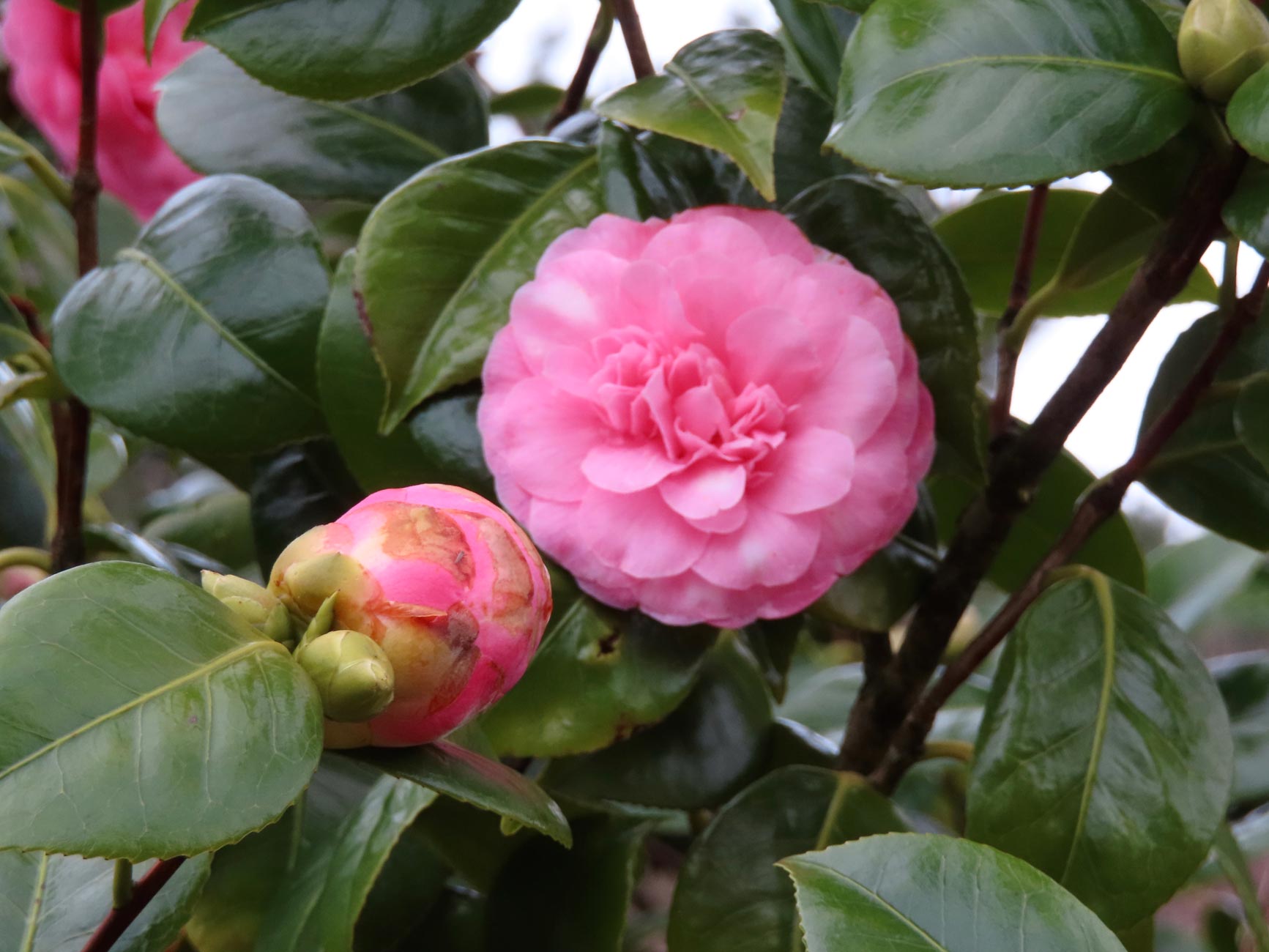
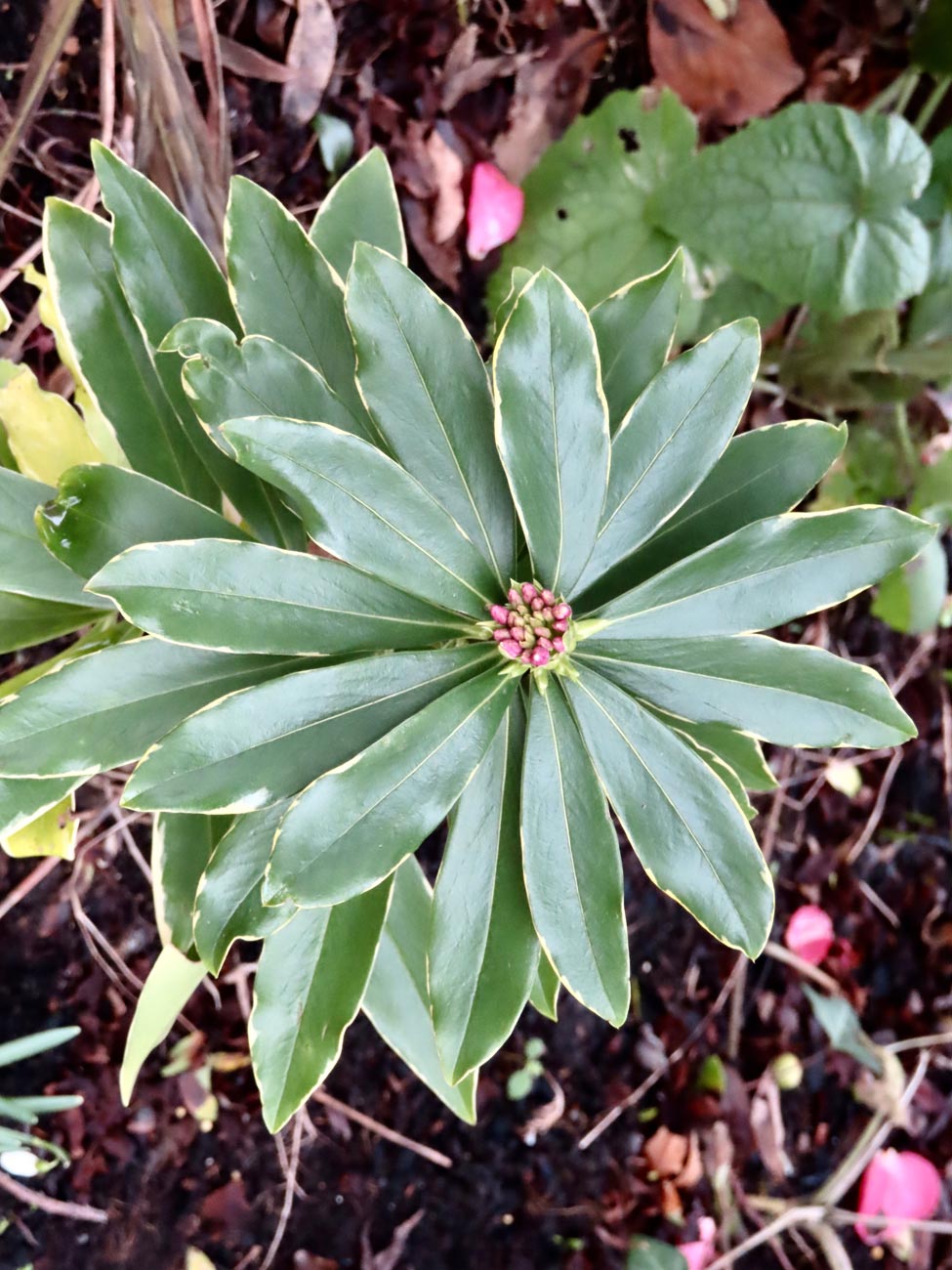
On another gloomy wet morning Jackie photographed a selection of our current garden blooms, some decorated with pearls of rainwater.
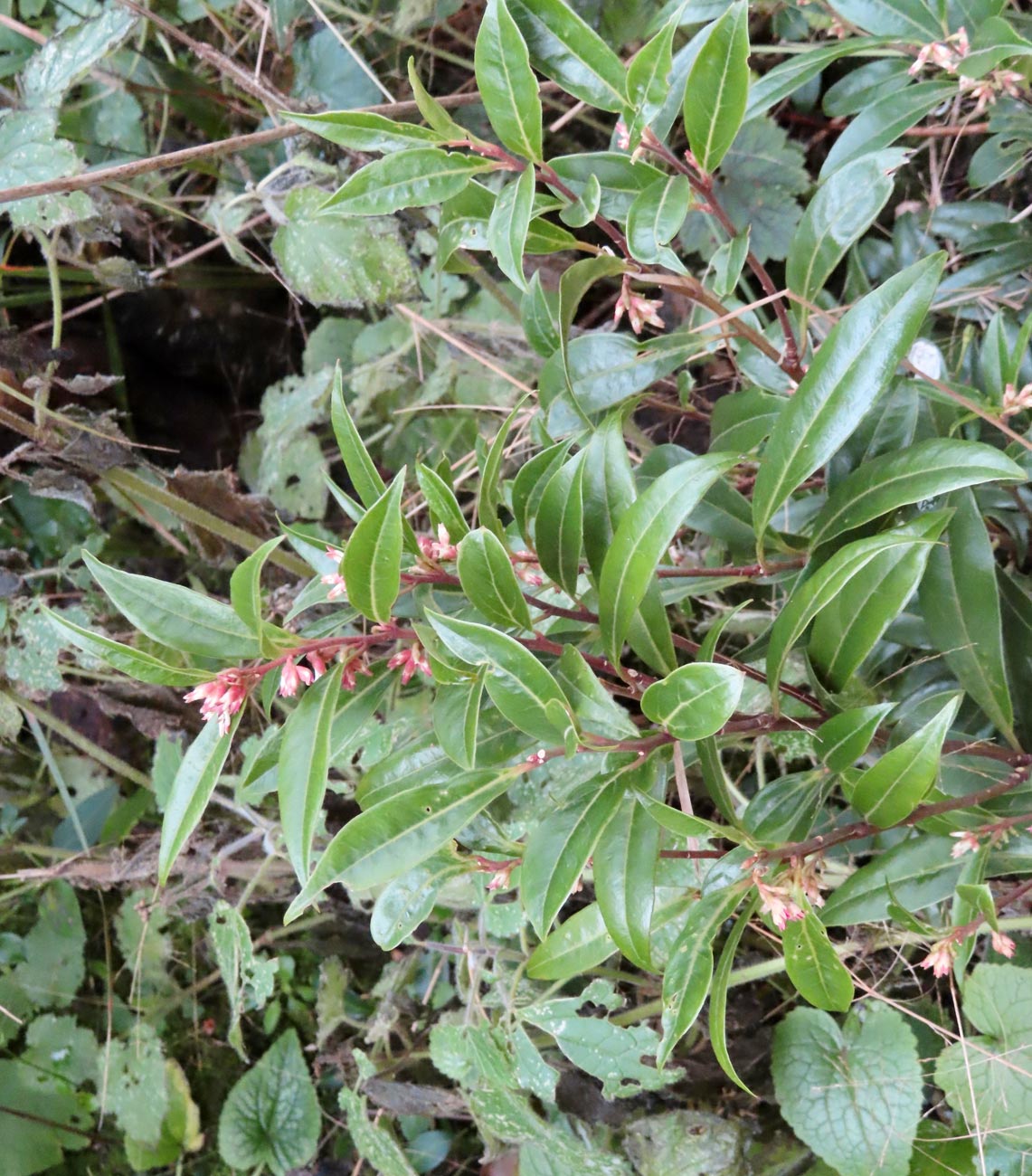
Here we have sarcocca Hoskeriana, cyclamen, daffodil, iris reticulata Katharine Hodgkin, snowdrops, hellebore, camellia, daphne odorata marginata, and crocus.
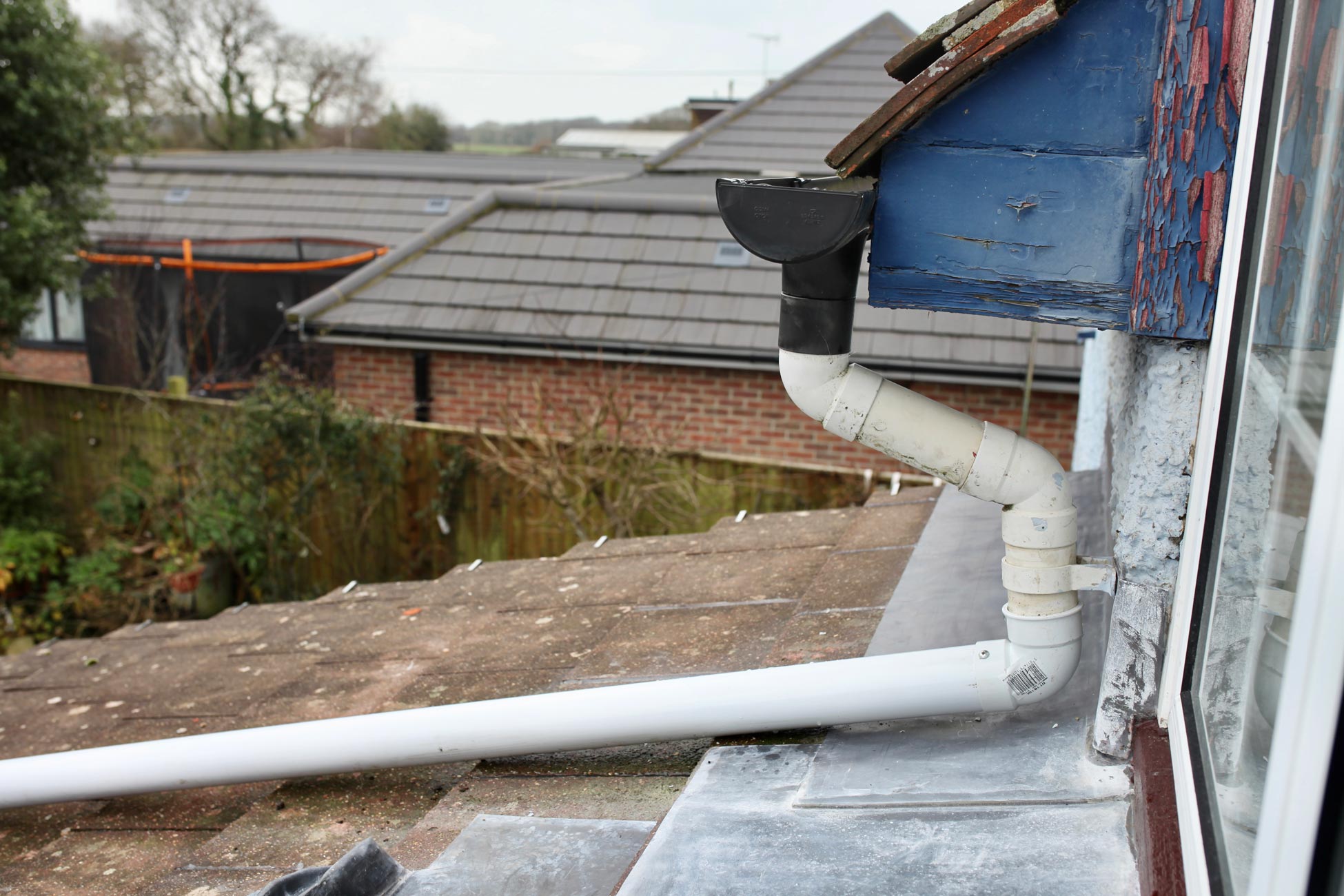
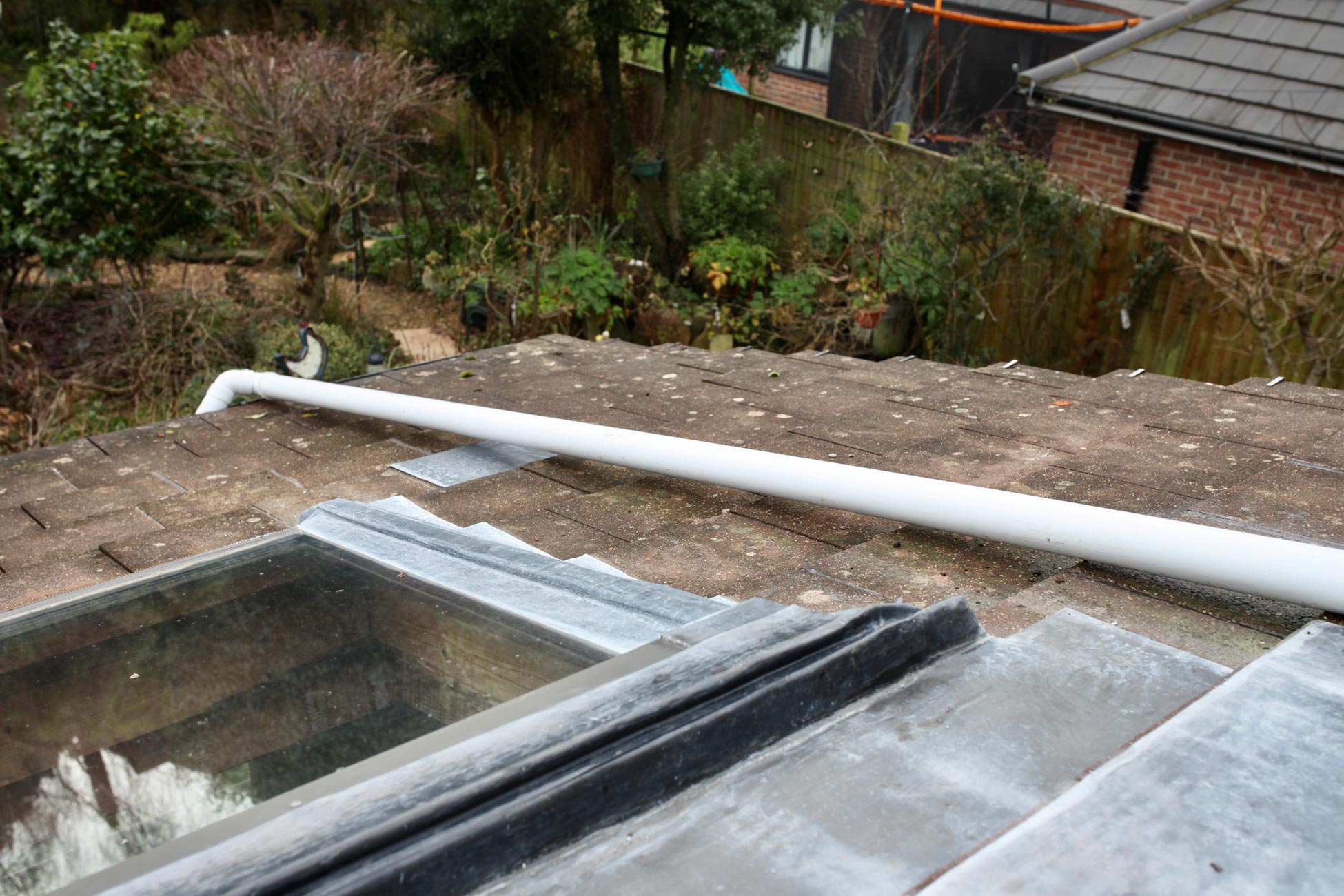
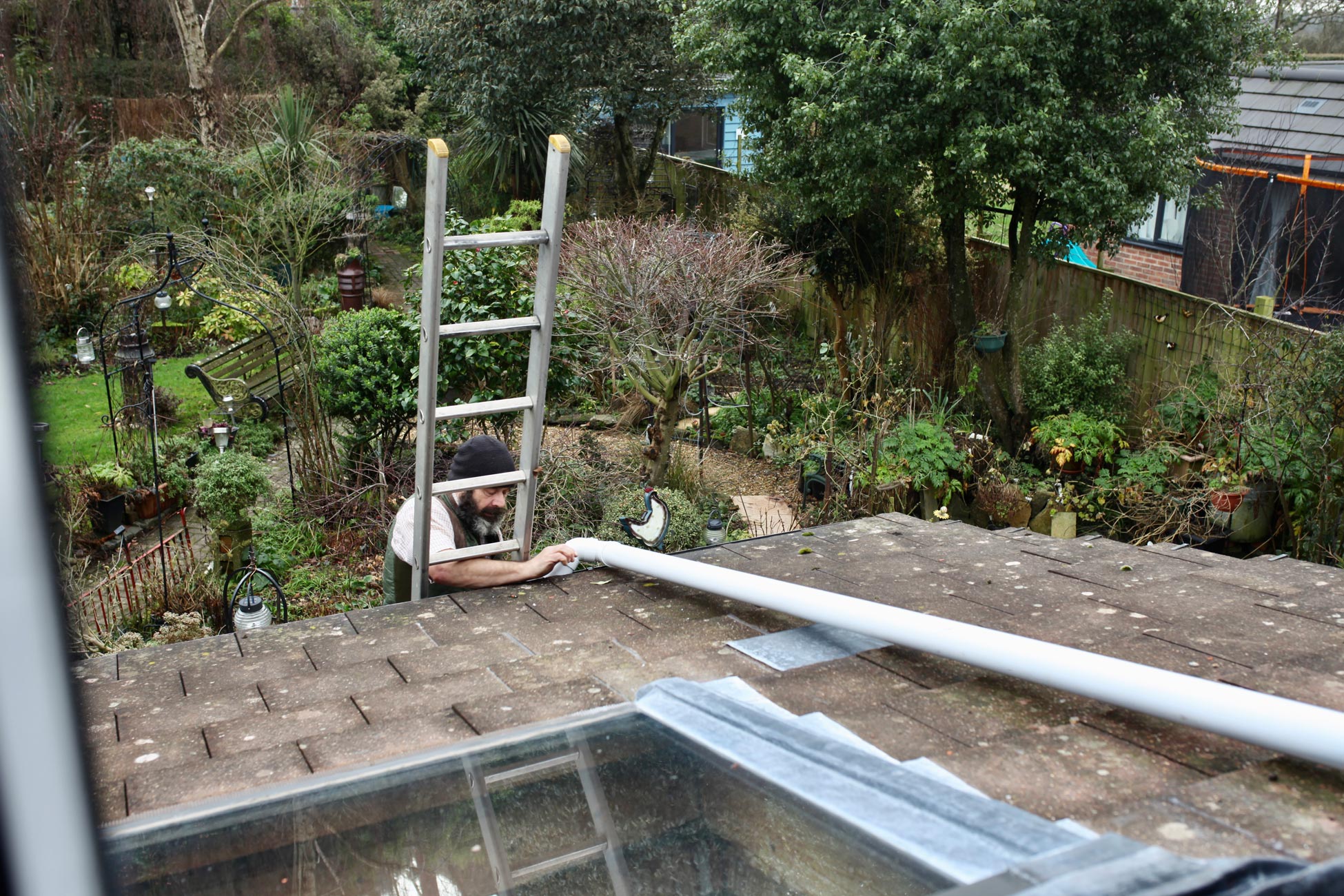
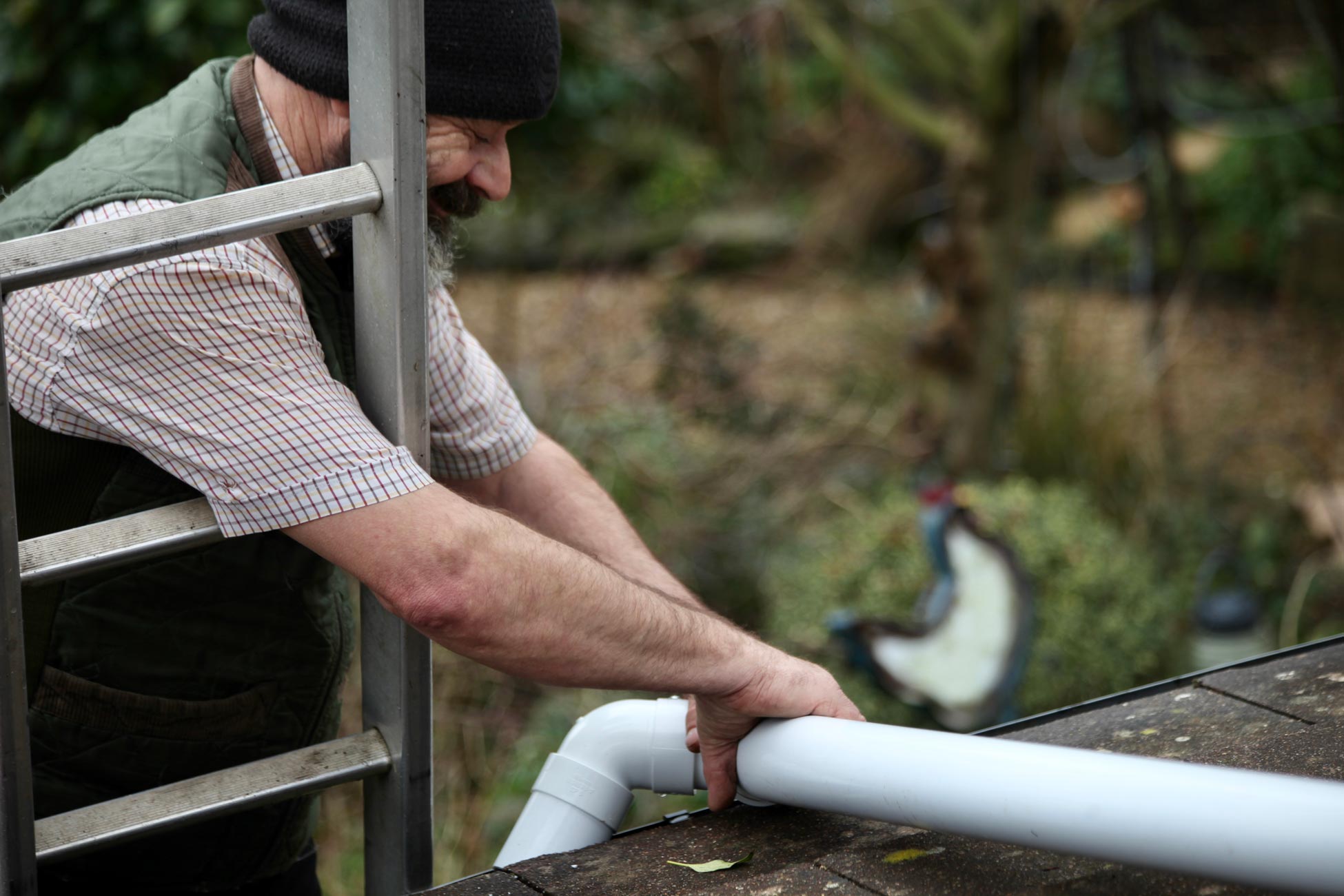
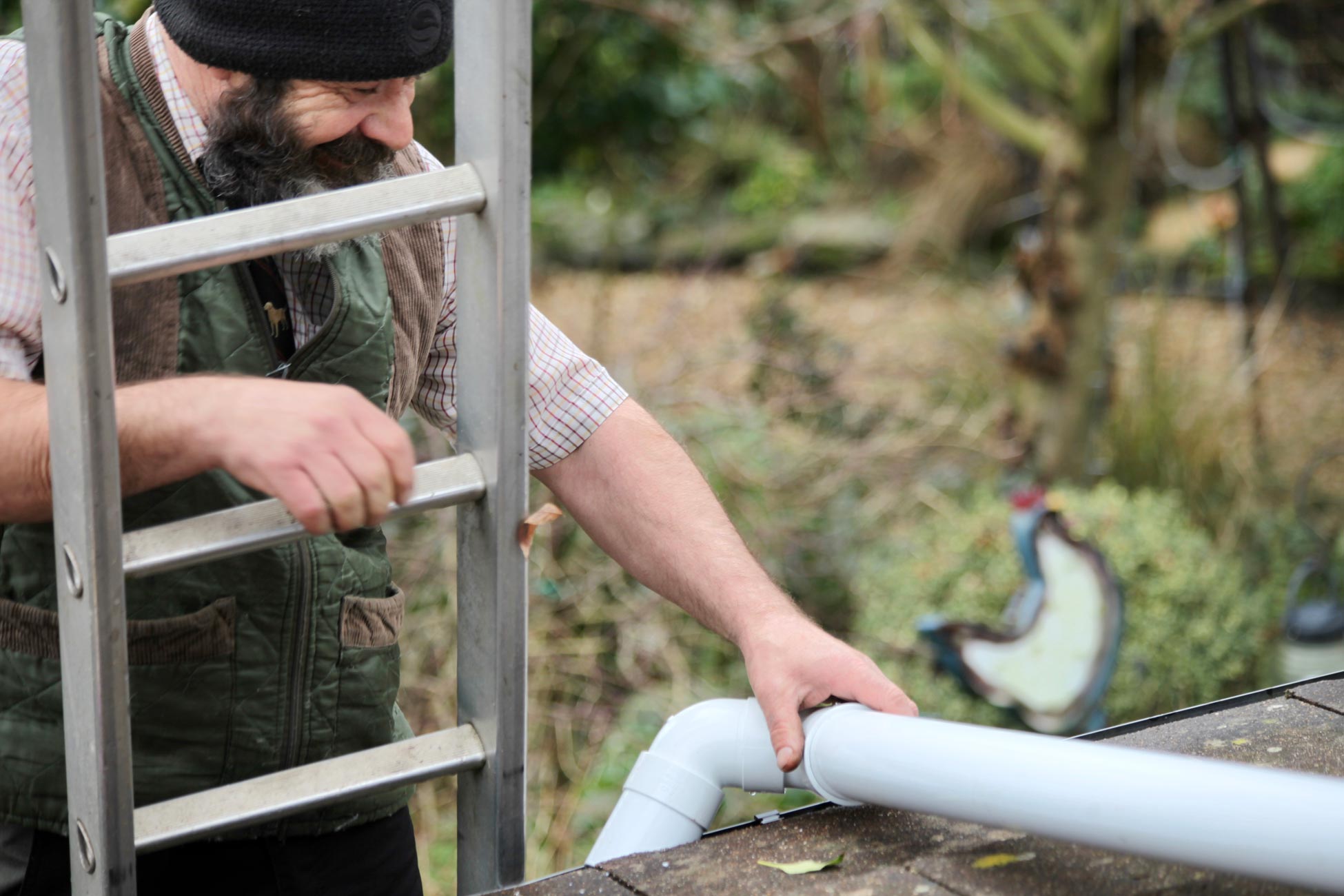
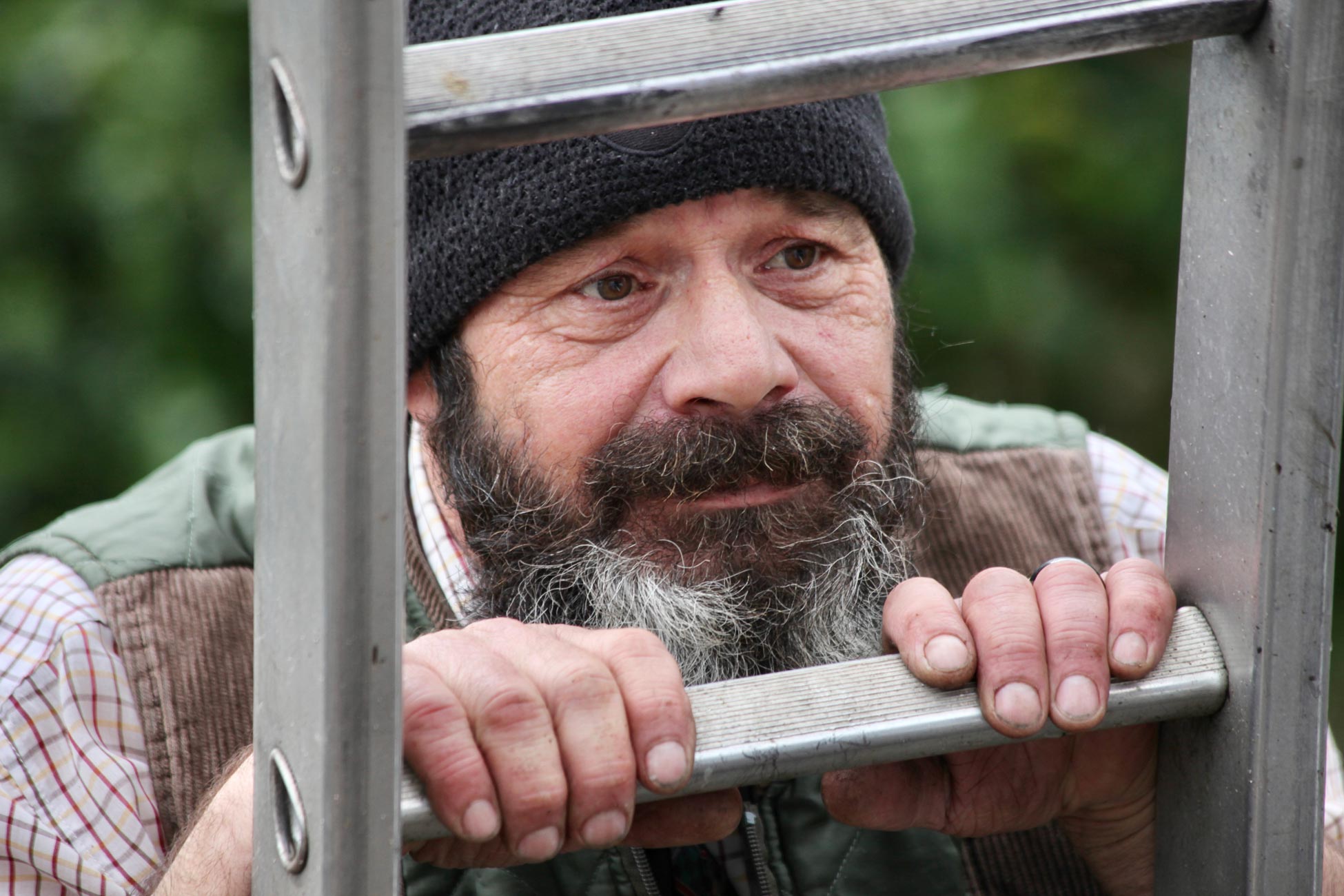
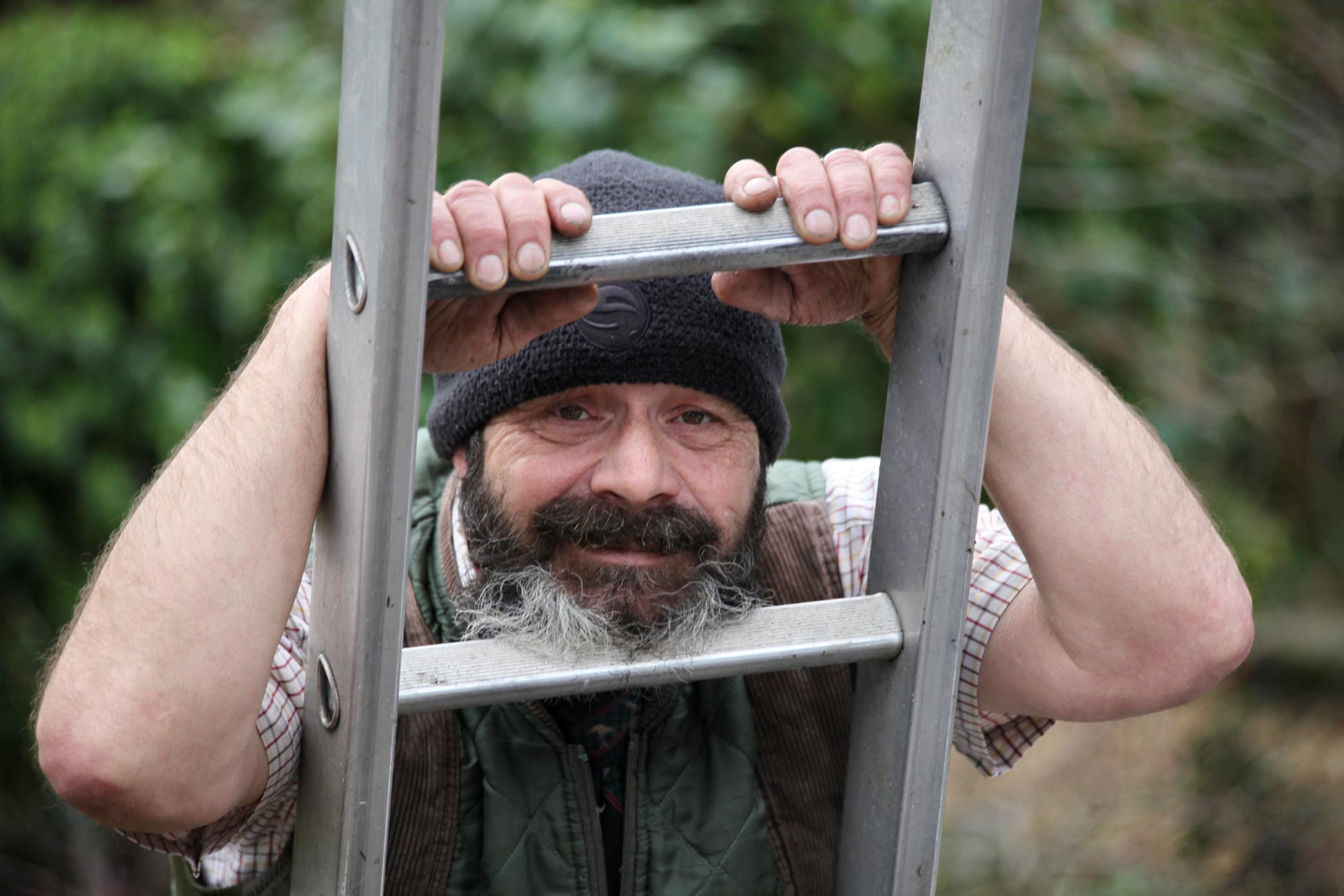
Barry, of New Forest Chimney Sweeping & Repairs, then visited to extend the
downpipe across the kitchen extension roof to the guttering.
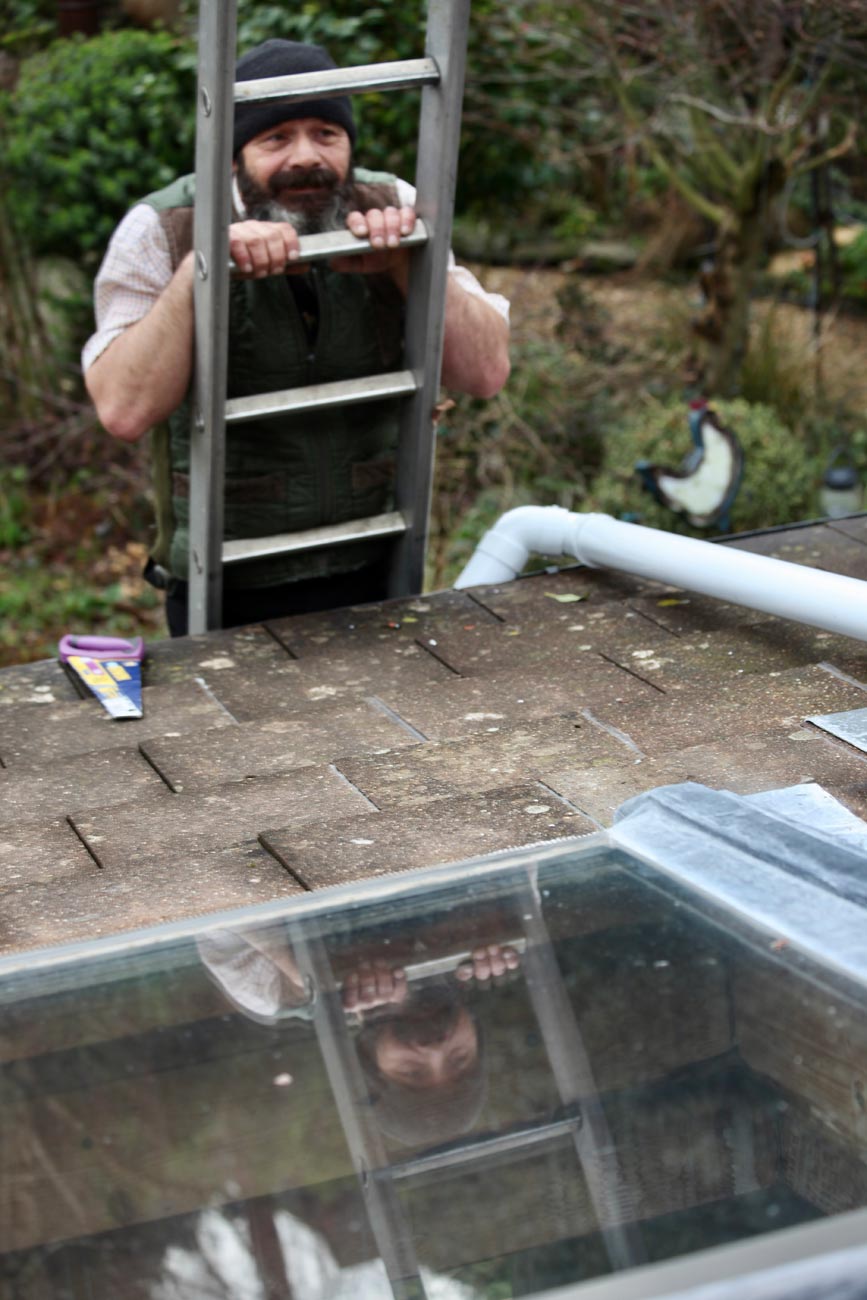
With our friend reflected in the Velux window he and I enjoyed a very pleasant conversation.
Five chapters further on in ‘Little Dorrit’ prompts a scan of five more of Charles Keeping’s illustrations to this novel of Charles Dickens.
‘Mr Pancks requested Mr Rugg to take a good strong turn at the handle’ of the street pump, which were common sources of water for residents in the mid-nineteenth century. https://johnsnow.matrix.msu.edu/work.php?id=15-78-80 carries a long entry on “The Broad Street Pump: An episode in the cholera epidemic of 1854”.
in ‘My dear soul, you are my only comfort’, we recognise the earlier profile of the magnificent Mrs Merdle.
‘The three expensive Miss Tite Barnacles’ are somewhat less than delightful.
The jubilation of ‘The Collegians cheered him very heartily’ has the artist throwing his hats through the text.
‘The little procession moved slowly through the gate’ demanded the span of a two page spread. No doubt readers will recognise earlier acquaintances.
This evening we dined on Jackie’s savoury pilau rice topped with a five egg omelette served with both tempura and hot and spicy prawns with which she drank Hoegaarden and I drank more of the Réserve de Bonpas.
Another gloomy day and a joyful batch of rediscovered colour slides. The morning’s task – obviously – was to scan them.
These are from Nottingham’s Race for Life in June 2006.
Daughter-in-Law, Heidi is the tall woman in the centre of the throng gathering for the off.
Louisa, Gemma S, Heidi, and Emily raring to go; Gemma and Louisa taking on early refreshments.
Confident granddaughter, Emily, two months after representing Croydon in the Mini London Marathon, meant serious business.
Louisa and her friend, Gemma, were out to have fun, as well as
raise funds for Cancer Research in honour of Gemma’s Dad and Louisa’s mother who was also Heidi’s mother-in-law, and Emily’s grandmother.
Like her daughter, Heidi was comfortable throughout.
It was perhaps a little tougher for some.
Here, the ladies proudly sport their medals. Gemma was Gemma B on the day. She would soon marry Paul S, who stands beside her, as Louisa would soon marry Errol, standing beside her.
This afternoon’s scanning was of the next four ‘Little Dorrit’ illustrations by Charles Keeping.
‘Minnie was there, alone’, giving the artist an opportunity for a romantic, bucolic, scene;
while, in ‘She started up suddenly, with a half-scream’, and ‘Mr Flintwinch gravely pledged him’, we recognise the book’s most evil character (adopting an alias) and the elderly couple from their earlier manifestations.
‘She bounced across to the opposite pavement’ depicts the haughtiness of Little Dorrit’s sister taking offence at the humbler young woman’s escorting a pauper.
This evening we dined on well-baked pork chops topped with almond flakes; sage and onion stuffing; crisp Yorkshire pudding; roast potatoes and parsnips; firm carrots and cauliflower; tender cabbage and runner beans, with spicy gravy. The Culinary Queen drank Hoegaarden and I drank Réserve de Bonpas 2019.
With today’s incessant steady rain pattering overhead I scanned another set of recently discovered colour slides. These form another batch for my Streets of London series – I think from May 2008.
There are always building works going on somewhere in the capital. These were in Craven Hill Gardens W2, not far from my flat in Sutherland Place.
Similarly roadworks are ubiquitous, as in Gloucester Terrace.
Unfortunately I cannot decipher the street name, too far back in this typical W2 scene.
For much of the 20th century, the large houses were subdivided into multi-occupancy rentals. Caribbean immigrants were drawn to the area in the 1950s, partly because of the cheap rents, but were exploited by slum landlords like Peter Rachman and also became the target of white Teddy Boys in the 1958 Notting Hill race riots.
Then known for its slum housing, in the early 21st century, after decades of gentrification, Notting Hill has a reputation as an affluent and fashionable area,[4] known for attractive terraces of large Victorian townhouses and high-end shopping and restaurants (particularly around Westbourne Grove and Clarendon Cross). A Daily Telegraph article in 2004 used the phrase “the Notting Hill Set“[5] to refer to a group of emerging Conservative politicians, such as David Cameron and George Osborne, who would become respectively Prime Minister and Chancellor of the Exchequer and were once based in Notting Hill. North Kensington is also home to the Grenfell Tower, which burnt down in 2017.’ (Wikipedia)
‘A turnpike gate was constructed at the foot of the hill on the main road from London to Uxbridge, now Oxford Street, Bayswater Road and Holland Park Avenue along this part of its route. The point at which the turnpike gate stood was known as Notting Hill Gate. The gate was there to stop people passing along the road without paying. The proceeds were applied towards the maintenance of this important road. The gate was removed in the 19th century and the high road was widened and straightened in the 1960s, involving the demolition of many buildings, the linking of two separate tube stations and the construction of two tower blocks.’ (Wikipedia)
Spring Street W2 is in the area of Paddington known as Tyburnia, ‘a part of Paddington created to an 1824 masterplan by Samuel Pepys Cockerell to redevelop the historic lands of the Bishop of London, known as the Tyburn Estate, into a residential area to rival Belgravia.’ (Wikipedia).
Tyburnia was a name used in the early 19th century for the south-eastern corner of the parish, the first part of the Paddington Estate to be built up. (fn. 1) It was adopted presumably because ‘Tyburn’ was already well known, as a reference to the gallows at Tyburn tree. (fn. 2) The old name of the execution site was itself misplaced since the Tyburn, teo or ‘boundary’ stream, (fn. 3) ran much farther east, from Hampstead across Marylebone to Oxford Street. The Marylebone manor of Lisson lay west of the stream, along Edgware Road, and that of Tyburn to the east. (fn. 4)Paddington’s Tyburnia, in the angle between Edgware and Bayswater roads, stretched westward from the former gallows to merge with Bayswater. In the 1870s the name was confined to a fashionable area, bounded on the west by Westbourne and Gloucester terraces, north of Lancaster Gate. (fn. 5) The area described below extends westward only to Eastbourne Terrace and the southern end of Westbourne Terrace (fn. 6) but northward to the industrial belt beyond Praed Street, as far as the canal basin. It covers Hyde Park ward and a southerly part of Church ward, as created in 1901, and also includes St. George’s burial ground. (fn. 7)
The execution site (fn. 8) was chosen presumably because there was a prominent group of trees at the parting of two main roads out of London. Some medieval references to ‘the elms’ may have been to those at Smithfield, but it was at Tyburn that William FitzOsbert was hanged in 1196 and at the elms there that Roger Mortimer, earl of March, died in 1330. From the 14th century many political executions took place at Tyburn, where the trees probably made way for temporary gallows before a permanent triangular frame was set up in 1571. The frame was depicted by Hogarth, (fn. 9) in whose day it was known as Tyburn tree and served as London’s chief place of public execution, where 21 victims could be hanged simultaneously. Often there were triumphant processions and huge crowds, an estimated 200,000 attending the death of Jack Sheppard in 1724. A grandstand on the west side of Edgware Road was sometimes used, (fn. 10) before and after the triangular frame was replaced by a movable gallows in 1759, until criticism led to the choice of a new site outside Newgate gaol in 1783.
The triangular gallows stood in the centre of the wide southern extremity of Edgware Road until the building of the Uxbridge road tollhouse in 1759. The approximate site has been marked by successive plaques: against the railings of Hyde Park, in 1909 in Edgware Road, and in 1964, after road widening, on a traffic island at the junction with Bayswater Road. The position of the later movable gallows was c. 50 yards farther north in Edgware Road and was thought in the 1870s to have been that of a house at the south-east corner of Connaught Square (formerly no. 49), (fn. 11) although several sites close by have been suggested.
Burials of corpses from Tyburn were recorded from 1689 and brought profit to the minister and churchwardens of Paddington in the late 17th and the 18th century, (fn. 12) when execution days came to be known as ‘Paddington fair’. (fn. 13) Remains were also buried under the scaffold and unearthed when the area came to be built up. Among them were the presumed bones of Oliver Cromwell and fellow regicides, whose posthumous consignment to a pit at the gallows’ foot in 1661 probably gave rise to William Blake’s allusion to ‘mournful ever-weeping Paddington’. (fn. 14)‘
The Craven Hill Gardens W2 sign hangs on the railings of one of the two communal residential gardens typical of Victorian Bayswater estates.
Jackie received her vaccination invitation this afternoon and was able to make an appointment for 5th February.
This evening we dined on succulent roast pork; sage and onion stuffing; crisp potatoes, including the sweet variety, and well frosted parsnips, roasted in jalfrezi-flavoured oil; crunchy carrots and cauliflower; tender runner beans, and tasty gravy, with which Jackie drank Hoegaarden and I finished the Comté Tolosan Rouge.
This morning I scanned a few more recently rediscovered colour slides, of West Brompton Cemetery from February 2009.
As can be seen from these first four images, this was the time for daffodils to bloom. At least two of the stones in the second picture bear the name Hannam; single blooms have been laid on the cross on Nicholas Wenevitinon’s plot in the third, and beside the crucifix on the fourth. Perhaps one of my readers will be able to read the inscription on this last stone. (See John Knifton’s response to this, and koolkosherkitchen’s confirmation, in the comments below).
This is the memorial to Robert Coombes who features in this page from https://www.royalparks.org.uk/parks/brompton-cemetery/explore-brompton-cemetery/robert-coombes
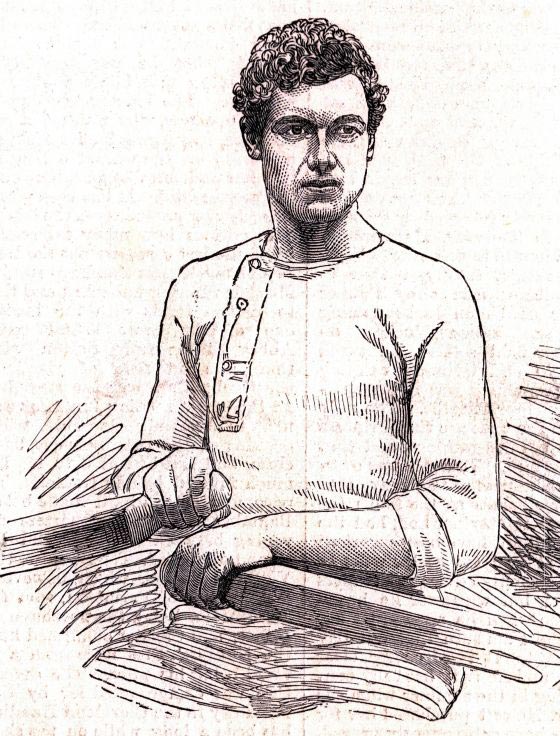
‘Robert Coombes (1808-1860)
The fastest man on the Thames and the Tyne.
Coombes was one of the greatest professional oarsmen of his time. He began rowing when he was still a boy, working as a waterman carrying passengers on the River Thames.
Thames watermen rowed passengers up and down the river, while lightermen carried goods and cargo. Both required great skill, strength and an intimate knowledge of the river and its tides. (Credit: Wikimedia Commons via Flickr)
He started winning rowing races when he was in his late twenties, becoming English Sculling Champion three times. Though he was small and light, Coombes’s considerable rowing skill meant he could beat bigger and stronger men.
He competed individually but also had notable rowing success as part of a crew of four. Coombes’ team beat renowned rower Thomas Clasper and his crew on the River Tyne for the first time in 1842, and several times afterwards on the Thames.
(Credit: Illustrated Sporting & Dramatic News)
Coombes went on to coach teams from both universities competing in the Oxford and Cambridge boat race, leading Cambridge to victory twice. He stopped coaching when controversy arose over the use of professional (working class) watermen to teach the amateur (upper class) university teams.
The Oxford and Cambridge Boat Race in 1841, a year after Robert first became involved as a coach. (Credit: Wikimedia Commons)
Despite his incredibly successful rowing and coaching career, Coombes died in poverty in Kent Lunatic Asylum in 1860. His impressive monument, topped with an upturned boat, was paid for by friends and members of the public. Many Thames watermen came to his funeral.
In 1700, the men who rowed people and goods on the Thames joined together form The Company of Watermen and Lightermen. The Company, based at The Watermen’s Hall in the City of London, remains a working guild and is actively involved with the life of the River and those who work on it. (Credit: Steve Cadman / Wikimedia Commons via Flickr (CC-BY-SA))‘
(Garrulous Gwendoline’s comments below offer more information on Watermen and Lightermen)
This bas relief plaque commemorates
‘Samuel Leigh Sotheby (1805-1861)
The third and final generation of the Sotheby family to be involved with the famous auction house.
Samuel Leigh was the grandson of bookseller and auctioneer John Sotheby, who helped establish the celebrated auction house that still bears the family’s name.
John’s son Samuel expanded and rebranded the family business, then Samuel took on his own son, Samuel Leigh. Father and son worked well together. Samuel Leigh proved to be a good businessman, and was responsible for many of their finest catalogues. However, the company got into difficulties in 1825 and was declared bankrupt.
Samuel Leigh changed the company name to S L Sotheby in 1837 and, when his father died five years later, took on his accountant John Wilkinson as a partner. John was a great salesman, and Samuel produced beautiful auction catalogues. Between them, they rebuilt the business into the premier auction house for antiquarian books.
Samuel Leigh also edited and completed books begun by his father, and wrote and published his own work, including a volume on John Milton’s autographs. He was a great collector too, particularly of auction house and library catalogues, and the works of English artists.
Samuel Leigh died tragically and unexpectedly in June 1861. He was walking near Buckfast Abbey in Devon, when he fell into the River Dart and drowned.’ https://www.royalparks.org.uk/parks/brompton-cemetery/explore-brompton-cemetery/samuel-leigh-sotheby2
The Coldstream Guards are well represented in the military section. (For more information on this, see the link on Quercus’s comment below).
These last two black and white conversions feature one of the covered arcades and a sculpture I haven’t identified.
This evening we dined on Jackie’s tasty cottage pie; toothsome cauliflower, carrots, and cabbage, with meaty gravy. She drank Hoegaarden while I drank more of the Comté Tolosan Ruge.
Barry of New Forest Chimney Sweeping & Repairs finished most of his work on our kitchen extension roof today. While he was doing so, I made him a set of A4 prints from my pictures of him from the last two days.
He sent me his own images of the new lead flashings and my mug. One of our problems has been the down pipe running rainwater directly onto the tiles. Barry will extend that on Monday.
Later, I read four more chapters of ‘Little Dorrit’, and scanned four more of Charles Keeping’s expressive illustrations.
Keeping has captured the rapt expression of this child-woman being read a story in ‘ ‘Lor!’, said Maggy, giving her knees a hug.’ Despite Maggy’s previous portrait having been full face, the artist has retained an instantly recognised likeness.
‘The private residence of Mr Pancks was in Pentonville’ where the artist could well have modelled these buildings on those still extant today.
‘Mr Henry Gowan seemed to have a malicious pleasure in playing off the three talkers against each other.’ The boy peeping over the group has been cleverly included in this picture – such is the artist’s attention to detail.
‘Parasite little tenements, with the cramp in their whole frame.’
This evening we dined on Jackie’s classic cottage pie; crunchy carrots and cauliflower; tender cabbage and runner beans, with tasty gravy. The Culinary Queen drank Hoegaarden while I drank Chevalier de Fauvert Comté Tolosan Rouge 2019, a remarkably smooth low-priced Lidl find.
Barry, of New Forest Chimney Sweeping and Repairs continued today with his work on our kitchen extension roof.
Painstakingly he removed the spent lead flashing and prepared the surfaces for the replacement material.
Only when he was satisfied that he had firm bases did he begin to lay the new lead. This is tough work for one man. The care he takes is patent.
This evening Barry sent me his own photographs of his work, including his earlier project on the Velux window.
Just after lunch, Ronan from Tom Sutton Heating visited to fix a minor central heating problem.
Four chapters further into ‘Little Dorrit’ I have scanned four more of Charles Keeping’s exemplary illustrations.
Unusually, the text of the page containing ‘A dirty shop-window in a dirty street’, describes a different building, the home of the character in the next illustration. Here we have a poor man’s eating house, the Victorian equivalent of a greasy spoon, namely ‘a small, cheap eatery – either an American diner or coffee shop, or a British or Irish cafe – typically specialising in fried foods and/or home-cooked meals.’ (Wikipedia). During my running days I was a connoisseur of London’s wide-spread finest, such as The Martin Café
“Mrs Merdle was magnificent’ – and proud of it.
Tobacconists, such as ‘It was a very small establishment’ have all but disappeared from London’s streets except for the West End.
With ‘He was surprised to see a bonnet labouring up the step-ladder’, the artist has split his drawing, and consequently the text, into a diagonal across the spread. It is a measure of Keeping’s consistency that these three characters are each recognisable from their earlier appearances.
This evening we dined on breaded cod and oven chips; cod, asparagus, and pea fishcakes; petits pois; pickled onions and wallies; with which we both drank Western Cape Sauvignon Blanc 2020
Despite the dismally wet day Barry of New Forest Chimney Sweeping & Repairs made a good start on repairing another section of our kitchen extension roof.
We left him to it while Jackie drove me to The Grove Pharmacy, Christchurch Hospital for the first of my Astra-Zeneca Covid-19 vaccinations. The whole operation was smooth and painless.
A cold breeze ruffled my feathers as I took my place in the orderly queue.
The hospital is on a new estate off Fairmile Road. Jackie also photographed the Thank You sign painted on the comparatively new tarmac.
This evening we dined on Jackie’s spice-hot chicken Jalfrezi; aromatic pilau rice; vegetable samosas; and fluffy parathas, with which she drank Hoegaarden and I finished the Macon.
On a sun-bright, finger-tingling afternoon we drove to Mudeford where I wandered for a while.
Fishing paraphernalia including coiled ropes, piled crab pots, bright buoys and rust-red chains lay neatly on the concrete and gravel area. Someone with a sense of national colours had placed a a child’s bright red and blue hat on an overturned white rowing boat.
There were plenty of socially distanced walkers, some casting long shadows.
A couple watched by a man sailing a dinghy passed the beach huts opposite; two others crunched along the shallows where
a young man photographed the still floundering capsized sailboat;
so did I, and Jackie focussed on the derelict rowing boat beside it.
A small group of cottages with good views of the sea are perched upon the quay itself.
Three silhouettes were working on some boats; others, with tinkling masts, were moored for the winter.
Jackie also photographed the open shore line, and pictured me, wings spread to aid balance while negotiating undulating potholes.
Early this evening Richard from Kitchen Makers visited to fix a leak in the kitchen waste pipe. He insisted on coming right away and refused payment, regarding this as after sales service. So service is not completely dead.
This evening we dined on Jackie’s spicy chicken jalfrezi, boiled basmati rice, and parathas, with which she drank Hoegaarden and I drank more of the Macon.
















 Thames watermen rowed passengers up and down the river, while lightermen carried goods and cargo. Both required great skill, strength and an intimate knowledge of the river and its tides. (Credit: Wikimedia Commons via Flickr)
 The Oxford and Cambridge Boat Race in 1841, a year after Robert first became involved as a coach. (Credit: Wikimedia Commons)
 In 1700, the men who rowed people and goods on the Thames joined together form The Company of Watermen and Lightermen. The Company, based at The Watermen’s Hall in the City of London, remains a working guild and is actively involved with the life of the River and those who work on it. (Credit: Steve Cadman / Wikimedia Commons via Flickr (CC-BY-SA))‘